I was midway through unloading groceries, keys in one hand, when the car asked me to tap a dark corner of a glass panel. My fingers fumbled; the cabin stayed silent. That tiny failure felt like a small betrayal of expectation.
I’m Thomas Schäfer’s kind of believer: ergonomic honesty over interface theater. You’ve seen the trend — automakers chased the iPhone look, and infotainment systems went from helpful to commanding. Schäfer told Top Gear that some design teams became infatuated with smartphone aesthetics, and he’s drawing a line: door handles and buttons are non-negotiable.
At the grocery curb: a simple grip failed, and I thought of design choices
You and I both expect a handle to behave like a handle. Schäfer says designers were seduced by the iPhone aesthetic — Tesla’s iPad-like center screen set a template many followed. That tidy, minimal look reads great on spec sheets, but it asks drivers to trade tactile certainty for visual purity.
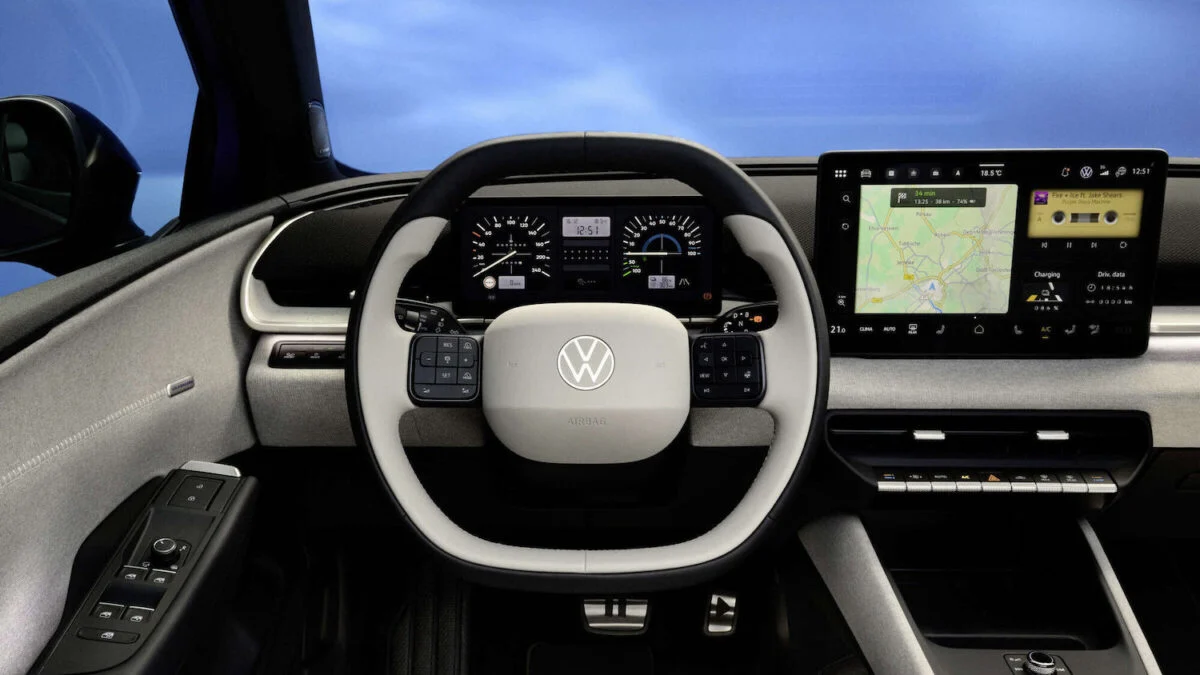
Companies are admitting it. Volkswagen flagged criticism last year and its recent spy photos of a compact EV show physical switches for hazards, temperature, and volume. Subaru, Mercedes-Benz, Hyundai and others are quietly grafting back knobs and buttons after mixed consumer feedback and user testing.
On a 68 mph stretch of Swedish highway a magazine timed real drivers
Vi Bilägare’s test is simple and brutal: do the tasks and keep your eyes on the road. The 2005 Volvo — no touchscreen — completed tasks in about 10 seconds; some modern cars took four times longer. Those extra seconds aren’t abstract; they are seconds of distraction and delayed reaction.
Are touchscreens safer than physical controls?
Short answer: not in many cases. The study found physical controls outperform touch-only interfaces for routine adjustments. Hyundai’s North American design boss, Hak Soo Ha, told Korea JoongAng Daily that drivers felt “stressed, annoyed and steamed” when forced to hunt for a function on a screen during a quick maneuver.
During a dinner rush, you want to change the temp without a strobe-search
This is where psychology meets ergonomics. When you’re pressed, your brain reaches for muscle memory — a knob, a button, an angle your hand already knows. Touch sliders and hidden menus are like velvet ropes: they look sleek, but they keep you from getting where you need to go quickly.
Why are carmakers removing buttons?
Design trends followed consumer electronics: the iPhone taught us flat, capacitive glass equals modern. Tesla amplified that lesson with an oversized display that centralized functions. Manufacturers chased aesthetics, software consolidation, and perceived simplification — and then hit the human problem: humans are tactile animals.
At the test-vehicle reveal: executives read the focus-group notes and pivoted
Volkswagen’s pivot is not solitary grandstanding. Hyundai admitted Americans didn’t warm to touch-heavy interiors and is reintroducing physical controls after research. Mercedes and Subaru are also shifting. That’s momentum: user feedback and safety data nudging design back toward direct manipulation.
Will buttons return to cars?
Yes — but not as a rollback to the past. Expect hybrid cabins where screens do software-driven features and knobs/buttons handle immediate, safety-sensitive tasks. Think of the dashboard as an orchestra: tactile controls keep the rhythm steady while displays provide the melody.
I’ve sat through demos where an elegant screen stole the room, and I’ve driven cars where a single real button saved a frazzled moment. You want a car that respects the split-second demands of real life, not just a showroom aesthetic. If designers can marry good software with a thumb-friendly interface, will you accept a cabin that finally remembers your hands?