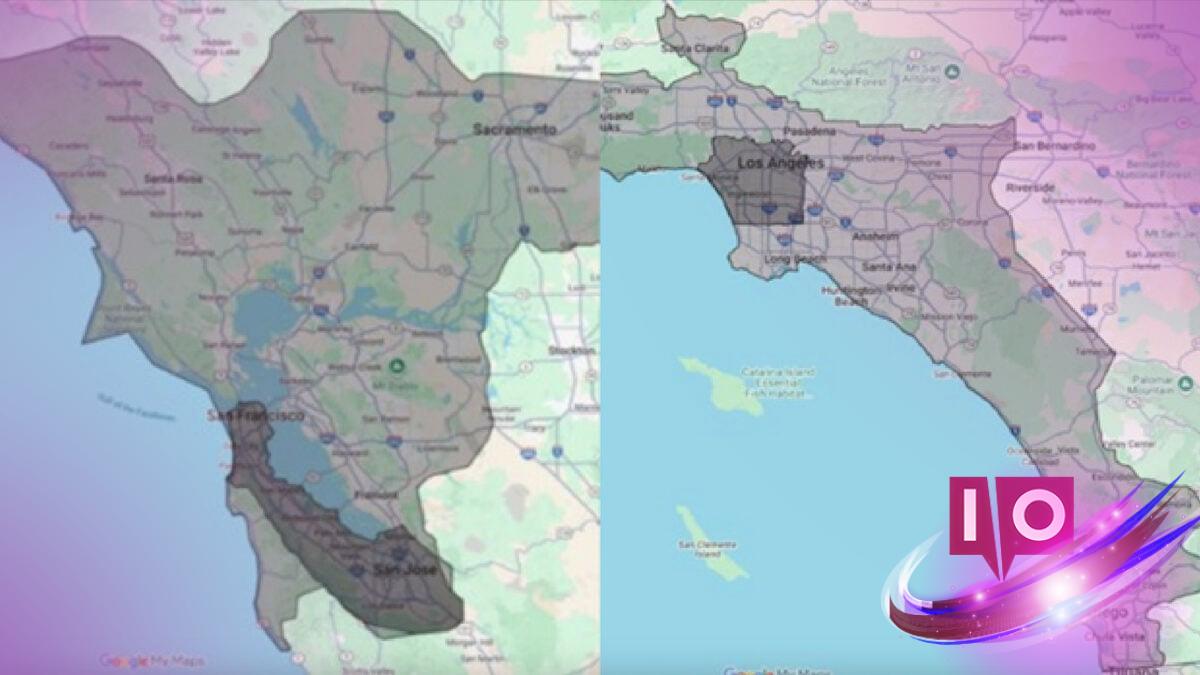
On Friday, the California Department of Motor Vehicles unveiled a document detailing newly approved operational areas for Waymo’s robotaxi service, setting the stage for a transformative shift in urban transportation.
The approved regions for Waymo’s driverless taxis include expansive geographies rich with urban population centers, suburbs, and even rural spaces. This extensive coverage spans parts of Alameda, Contra Costa, Los Angeles, Marin, Napa, Orange, Riverside, Sacramento, San Bernardino, San Diego, San Francisco, San Mateo, Santa Clara, Solano, Sonoma, Ventura, and Yolo Counties.
The new coverage areas touch on renowned Californian wine country and complete coverage across the Bay Area, while significantly enhancing accessibility in southern California. Remarkably, much of Orange and San Diego Counties are now designated as zones for Waymo, comprising millions of residents. If Waymo effectively rolls out its service in these regions, it could revolutionize daily commutes and leisure travel. Imagine commuting for hours seamlessly in Waymo vehicles or taking a day trip without the hassle of driving. Residents in outlying areas could even enjoy stress-free rides to Los Angeles International Airport.
Plus, iconic California highways—and freeways—might soon accommodate driverless taxis. Picture cruising the Pacific Coast Highway from San Diego to Malibu or retracing the steps of the first episode of *The O.C.* with a driverless ride from Chino to Newport Beach.
However, be prepared for potentially high costs. At an average of $11.22 per kilometer reported in a Waymo price analysis from June, traveling from San Diego to Malibu could set you back roughly $2,636 (about €2,482) based on current pricing. In contrast, a similar journey via a human-operated service like Lyft or Uber would cost about $200 (around €189), as indicated by the fare estimator on Rideguru.
While Waymo has not announced concrete plans for deploying its services across most newly approved areas, they have indicated a strategic focus on San Diego, where they plan to welcome riders by mid-2026. “We appreciate the DMV’s approval of our expanded fully autonomous operations,” a Waymo representative stated in a comment to CBS News.
What are the implications for everyday travelers? As these developments unfold, anticipate changes in how you navigate your daily routes and trips. The potential for convenience and mobility is immense, but it’s also vital to stay informed on continuing updates from Waymo.
Will the costs of rides vary in different regions? Yes, pricing is likely to fluctuate depending on the area and demand, so keeping an eye on Waymo’s announcements is crucial.
How long do you expect the rollout to take? While Waymo has indicated its immediate focus on San Diego by mid-2026, additional expansions could follow. Stay alert for news on other areas.
Can I use Waymo for long-distance travel? Potentially, yes! The coverage expansions suggest the convenience of long-distance travel without needing to drive, although initial costs may be significant.
What should you consider before using Waymo’s service? Factors include the cost per kilometer, your desired destination, and whether you may need to combine rides for longer trips. Planning can enhance your experience.
As Waymo continues to enhance its services, now is a great time to explore how these innovations could affect your travel patterns. For more insights and updates on this changing landscape, be sure to stay connected with Moyens I/O.