Tesla’s stock has been on a remarkable journey, recently hitting an impressive high of $489.88 early this month. It remains just shy of that record even now. Enthusiasts like Dan Ives from Wedbush believe this surge is tied to Tesla’s ambitious plans for robotaxis, with predictions suggesting the stock could climb to $800 by next year.
However, a report from The New York Times casts a skeptical eye on this rosy outlook, indicating that Tesla’s narrative may be built on shaky ground. In Austin, a key testing area for self-driving technology, only 30 Tesla self-driving taxis have been reported operational since June. In stark contrast, Waymo has deployed about 200 vehicles in the same city since March, suggesting a significant gap in progress.
The Times references a website, teslarobotaxitracker.com, run by local robotaxi fan Ethan McKanna, which tracks Tesla’s robotaxi efforts. It’s worth noting that all Tesla vehicles currently in operation feature a human safety monitor, unlike Waymo’s entirely autonomous fleet.
This isn’t the first report to highlight Waymo’s lead. Google’s DeepMind chief scientist, Jeff Dean, shared on Twitter that Waymo has accumulated 96 million rider-only autonomous miles, far surpassing what Tesla has achieved. This data serves as a crucial benchmark, bolstering Waymo’s claim to the forefront of autonomous technology.
In response, Elon Musk asserted that Waymo “never really had a chance against Tesla,” suggesting that future developments will prove his vision right. But here’s where things get tricky: Waymo is encountering significant challenges of its own. Recently, it had to halt services in San Francisco due to issues with its vehicles misreading stop signals, which might have resulted from the absence of human drivers.
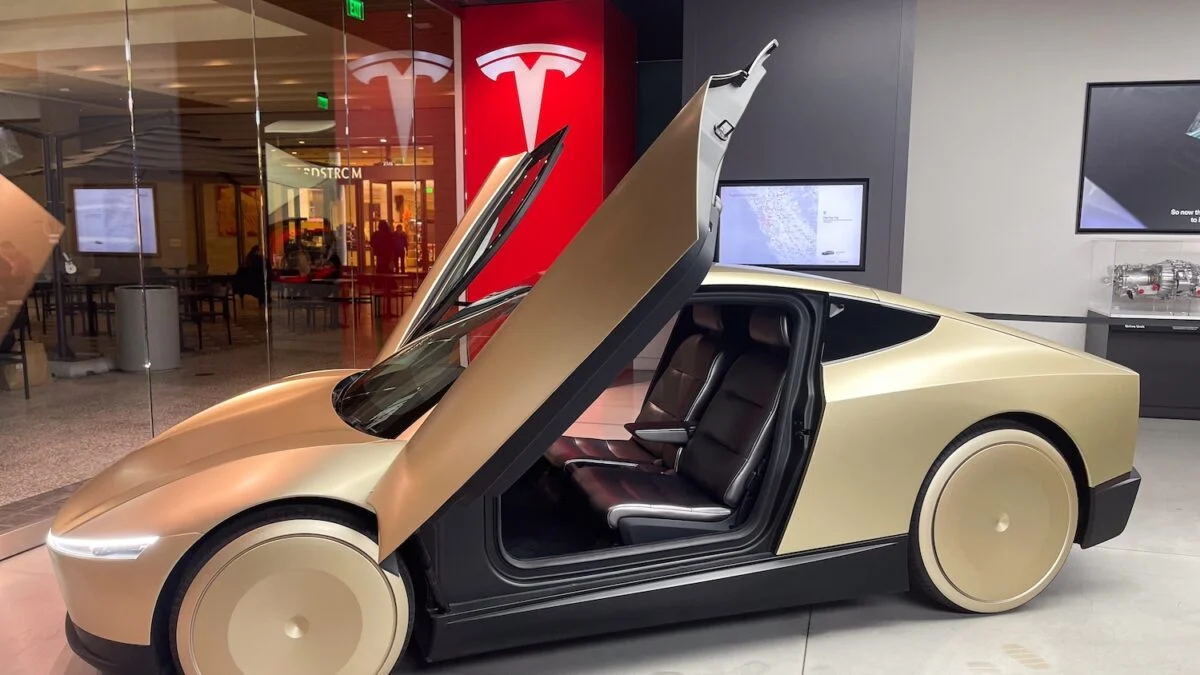
The excitement surrounding Tesla’s potential robotaxi service isn’t derived from the current Model Y-based ride-hailing system. Instead, it likely hinges on the much-anticipated Cybercab, a two-seater without a steering wheel, revealed by Musk in 2024 and expected to be available by late 2026. The vision is that individuals purchase Cybercabs for personal use, but also let them operate autonomously to generate passive income.
Elon Musk envisions a fleet comprising a million Cybercabs or a mix of those with Model Y taxis. This ambitious goal is essential for Musk to secure a hefty $1 trillion pay package, which hinges on deploying at least one million self-driving taxis.
The Times rightly quotes experts stating that Tesla lags behind Waymo. They also highlight doubts from analysts like Michael Tyndall from HSBC, who question whether driverless taxis can generate the elusive trillions Musk envisions. Achieving such revenue would require a mass shift away from personal vehicle ownership, a transformation that, according to many, is unlikely to happen anytime soon.
What is the real competition between Tesla and Waymo?
The rivalry between Tesla and Waymo isn’t just about technology. It’s a clash of visions for the future of transportation, where Tesla sees a world of self-sufficient Cybercabs, while Waymo focuses on its fully autonomous fleet.
Why does the robotaxi future seem uncertain?
Both companies face considerable hurdles in perfecting their technologies. Regulatory obstacles, public acceptance, and technical challenges still loom large, meaning the timeline for a widespread rollout of robotaxis is anything but certain.
How do analysts view Tesla’s robotaxi predictions?
Many analysts remain skeptical. They question whether Tesla’s ambitious claims are grounded in reality. With the complexities involved, a cautious approach seems more prudent than unfettered optimism.
Can Tesla really dominate the robotaxi market?
While Musk’s ambition is commendable, the reality is that the path is fraught with challenges. The future remains unpredictable, with Waymo’s proven track record showing that being first doesn’t always guarantee success.
As we watch this epic showdown unfold, one thing is clear: the road ahead for Tesla and Waymo is anything but straightforward. What are your thoughts on the future of robotaxis? Share your views in the comments below!