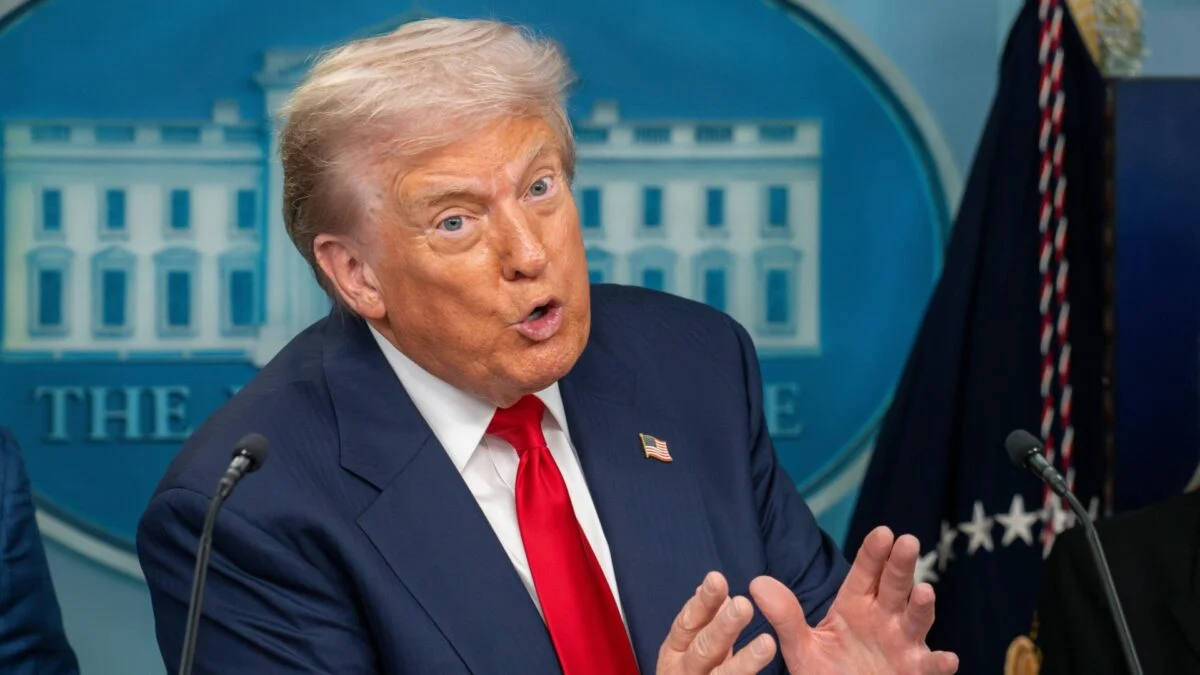
On a pivotal Wednesday afternoon, former President Trump declared his plans to dismantle the Corporate Average Fuel Economy (CAFE) standards established under President Biden. This announcement aligns closely with the prolonged lobbying efforts from key oil industry groups, including the American Petroleum Institute, who have sought to ease these regulations.
“Today, we’re taking one more step to kill the ‘Green New Scam,’” Trump stated during a press briefing. “We’re officially terminating Joe Biden’s ridiculously burdensome CAFE standards that impose expensive restrictions and create challenges for automakers.”
Biden’s administration had previously tightened the CAFE standards to require automakers to achieve an impressive 50 miles per gallon fuel efficiency for new vehicles by 2031. This initiative aimed to bolster the electric vehicle (EV) market and drive the U.S. toward achieving a net-zero carbon economy by 2050. The stricter regulations encouraged manufacturers to pivot towards investing in electric vehicles to meet these ambitious efficiency targets.
With Trump’s proposed rollbacks, the average fuel economy requirements will be dramatically reduced to 34.5 miles per gallon by 2031, as reported by the National Highway Traffic Safety Administration. This change would significantly ease the path for automakers to focus on producing larger, less fuel-efficient vehicles, raising concerns among environmentalists and climate activists.
Just months ago, Trump relieved automakers from penalties associated with not adhering to CAFE standards for 2022 model cars. Stellantis, for example, has incurred over $425 million (€392 million) in fines since 2022 for failing to meet those standards.
This action is part of a broader pattern of the Trump administration’s opposition to pro-clean energy policies. Since taking office, Trump has rolled back many initiatives aimed at promoting electric vehicles, including the elimination of the electric vehicle tax credit and the cancellation of numerous clean energy projects.
Joining Trump in this announcement were industry leaders like Ford CEO Jim Farley and Stellantis CEO Antonio Filosa, who celebrated the new measures. Farley described this shift as a “victory,” while Filosa echoed Stellantis’ recent pledge to invest $13 billion (€12 billion) in U.S. manufacturing operations.
“We believe in growth, and we are ready to invest even more,” Filosa remarked.
However, not all automakers are enthusiastically embracing these changes. General Motors (GM), previously supportive of the elimination of CAFE fines, seems to be taking a different direction. In a statement during the New York Times’ DealBook Summit, GM CEO Mary Barra emphasized that the company will continue its investments in substantial fuel economy and emissions improvements across its new vehicle lineup.
But will GM still commit to having all its vehicles be electric by 2035? Barra was noncommittal, stating, “It’s hard to say exactly where we’ll be in 2035, but we’ll be guided by the consumer. The world is transforming. I do believe fundamentally EVs have better performance, but there’s work that needs to be done.”
Should the rollback of CAFE standards raise concerns for the environment?
Absolutely, many environmental groups worry that this shift will stall progress made towards cleaner air and reduced carbon emissions from the automotive sector.
How will automakers adapt to these changes?
While some may return to manufacturing less efficient vehicles, others, like GM, emphasize a focus on innovation and improving efficiency standards regardless of the regulations.
What impact will Trump’s announcement have on the electric vehicle market?
Experts believe this could slow down the momentum built by recent EV initiatives, potentially affecting consumer adoption rates and investment in clean technologies.
What are the immediate reactions from the automotive industry?
Responses are mixed, with some executives viewing it as a chance to expand their product offerings, while others express concern over longer-term environmental impacts.
Finally, will this decision affect consumers directly?
Yes, changes in fuel economy standards could impact vehicle prices and availability, ultimately affecting consumers’ choices and costs at the pump.
This ongoing discussion about fuel economy standards highlights the critical divide in energy policy in the U.S. and the implications it holds for our environment and industry. As discussions continue, staying informed is essential. For more insights and updates on related topics, visit Moyens I/O.