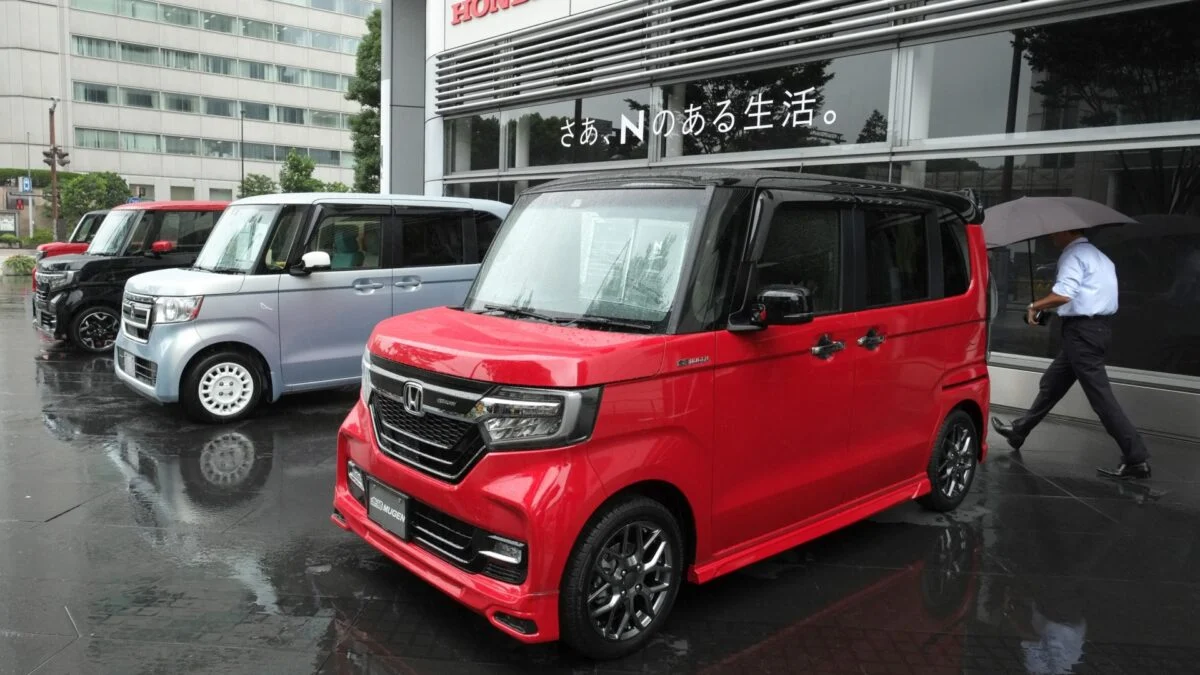
Have you ever found yourself wondering about the future of small cars in America? The relationship between Americans and compact vehicles is long-standing and complicated, characterized by fluctuating interest and market demands. As the federal government proposes changes to fuel economy standards, a curious push for small cars, particularly the Japanese kei cars, has emerged, but will it really lead to a mainstream shift?
Understanding this topic requires a closer look at the context. With a strong background in automotive trends and consumer behavior, I’ll unpack what these changes might mean for car buyers.
1. What Are Kei Cars and Why Are They Relevant?
Let’s start with kei cars—these tiny vehicles are defined by Japanese regulations, measuring no longer than 3.4 meters (11.15 feet) and equipped with engines that can’t exceed 0.66 liters and 63 horsepower. In contrast, the smallest gasoline-powered car in the U.S. today, the Mini Cooper 2-Door, is larger and more powerful, showcasing a significant size and power gap.
2. What Does President Trump Propose for Small Cars?
In a recent announcement, President Trump expressed a desire to see kei cars manufactured and sold in the U.S. He believes Americans are ready for them, citing encounters suggesting they would do well in the market. However, past attempts to introduce similar models have met resistance largely due to regulatory standards and American consumer preferences.
3. Are There Real Obstacles to Introducing Kei Cars?
Indeed, several hurdles exist. The National Highway Traffic Safety Administration (NHTSA) noted a necessity for change, arguing consumers should have a variety of options. Yet, when looking back on history, the standard American car has often been much larger and more powerful, making it difficult for a small vehicle like a kei car to find its footing.
Can Kei Cars Compete Against Larger Vehicles?
How does a kei car, often limited to a top speed of around 80 mph, measure up against powerful three-ton vehicles? The raw power and size difference present significant competitive challenges. The American market has seen ebbs and flows, often swinging towards larger vehicles in response to gas prices and economic uncertainty.
4. Historical Attempts at Small Cars in America
From the original Fiat 500 to the Subaru 360—America has seen its share of tiny cars. The Subaru 360, first imported in 1968, was notably criticized for inadequate crash safety but raised larger questions about what Americans truly want from their vehicles. Despite its good fuel economy and low price, it failed to meet diverse driving conditions across the U.S.
5. Are Americans Ready for Smaller Vehicles?
Fast forward to today—Americans still have budget-friendly compact options available like the Honda Civic and Toyota Corolla. Although these models are compact by American standards, they might still be considered midsized globally. Their popularity demonstrates a market for smaller vehicles, yet perceptions and regulations still lean heavily towards larger options.
Is the driving culture making a shift towards more compact cars? The enthusiasts importing kei cars into the U.S. are passionate, making the case for a demand that isn’t necessarily mainstream but exists nonetheless.
6. What Are the Financial Implications of Smaller Cars?
Trump’s recent proposals suggest that smaller cars would be less expensive, helping to keep money in Americans’ wallets. However, the rising costs of safety technology and features like automatic braking have made it challenging for automakers to meet affordability expectations. As U.S. Senators explore why new cars are becoming more expensive, the debate continues around whether smaller cars can maintain their safety standards without sacrificing affordability.
Could kei cars serve as a viable alternative to more costly options? While it’s enticing to consider their potential, navigating regulatory and consumer preference landscapes makes this a complex issue.
Exploring the dynamics of American vehicle preferences reveals a world of choices and considerations that go beyond mere size. For kei cars to break into the U.S. market, more than just political motivation is needed—they would require comprehensive consumer buy-in.
In conclusion, while bringing kei cars into the U.S. could be a step towards diversifying car options, overcoming cultural beliefs about vehicle size will take more than just regulatory changes. Keep exploring these automotive topics and more with Moyens I/O for the latest insights and discussions.