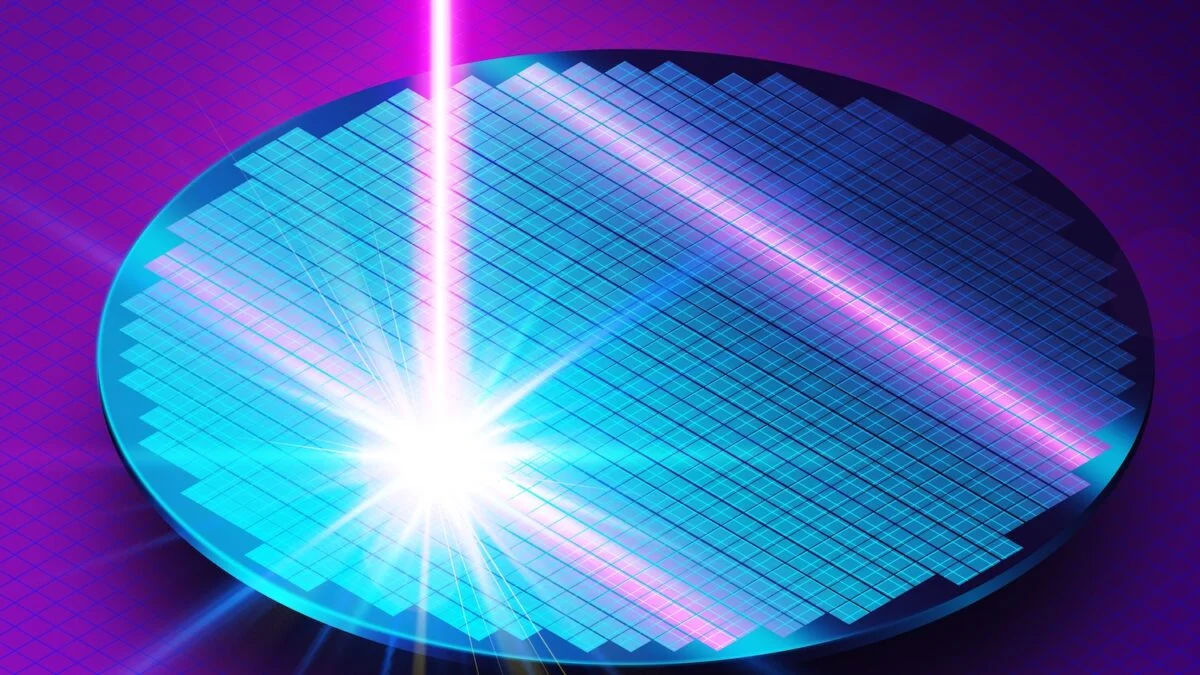
Imagine a machine so powerful that it costs $400 million, a true marvel of modern technology. This machine isn’t just an expensive gadget; it’s the backbone for companies that create GPUs. Without these graphics processors, we wouldn’t have AI, and without AI, the current economic landscape would be vastly different. AI captures investor money and fuels businesses, often engaging in activities that raise moral questions. Yet, this economy relies heavily on that very foundation—at least for now.
If you’re curious about this incredible $400 million piece of technology, there’s a riveting 55-minute YouTube video created by Veritasium, hosted by science communicator Derek Muller. The video offers one of the clearest explanations about ASML’s astonishing EUV lithography system. With nearly 20 million subscribers, Veritasium is a prominent, yet niche channel that has even gained access to an ASML clean room to bring this story to life.
As the views on this video approach ten million, it’s impressive—not bad for a topic like ultraviolet lithography. What sets this video apart is its respectful tone. There’s no patronizing attitude towards the audience, and it’s free from the typical gimmicks and jokes that often plague science content. You can feel that the creators genuinely want viewers to walk away more informed.
But will you truly grasp the complexities after watching? I admit, I don’t always fully get the nuances. For example, in the video, a character named Casper Mebius has a casual response to an ASML expert discussing the wavelength of a laser. I can’t say I’d have been that confident; I might have muttered something vague instead. Nevertheless, we must confront the stunning reality of this $400 million machine. From the unbelievable smoothness of its mirrors to the intricate process where tiny tin droplets are spun and blasted with lasers, the video helps you visualize concepts that seem almost like sci-fi. The visuals of GPU wafers undergoing lithography within the machine are another stunning highlight.
The stakes are high globally; the U.S. once prioritized preventing China from maximizing GPU power. However, lately, this goal seems to be wavering. Recently, it was reported that a team in Shenzhen managed to replicate the $400 million machine by recruiting ASML staff. The implications of this development are unsettling as we consider what it may mean for the future.
Looking down the road, this $400 million machine won’t always reign supreme in the tech world. As technology evolves, so does the idea of obsolescence. Moore’s Law implies that processor capabilities will continue to grow, and sooner or later, this marvel may end up as e-waste. So, take the time to appreciate this technological icon while it still holds meaning in our rapidly changing landscape.
What is the significance of the ASML machine in computing?
The ASML lithography machine is crucial for producing advanced microchips used in GPUs, making it indispensable for modern computing and AI technologies.
Why is the cost of the ASML machine so high?
The $400 million price tag reflects the cutting-edge technology and extensive research and development involved in its design and manufacturing, highlighting its significance in global tech production.
How has ASML’s technology impacted AI development?
ASML’s lithography systems enable the production of powerful GPUs, which are essential for training AI models, essentially driving advancements in the field.
What could be the implications of China replicating ASML’s technology?
If China successfully replicates ASML’s advanced lithography technology, it could change the balance of power in the semiconductor industry, impacting global competition and innovation.
How does this technology work practically?
The ASML machine uses advanced EUV lithography to etch circuits onto silicon wafers, a process crucial for creating the chips that power our devices. The precision involved can be likened to aiming at a dime placed on the moon!
There’s a wealth of information to explore regarding technology’s rapid advancements and the forces driving these developments. What do you think the future holds for these incredible machines? I’d love to hear your thoughts in the comments below!