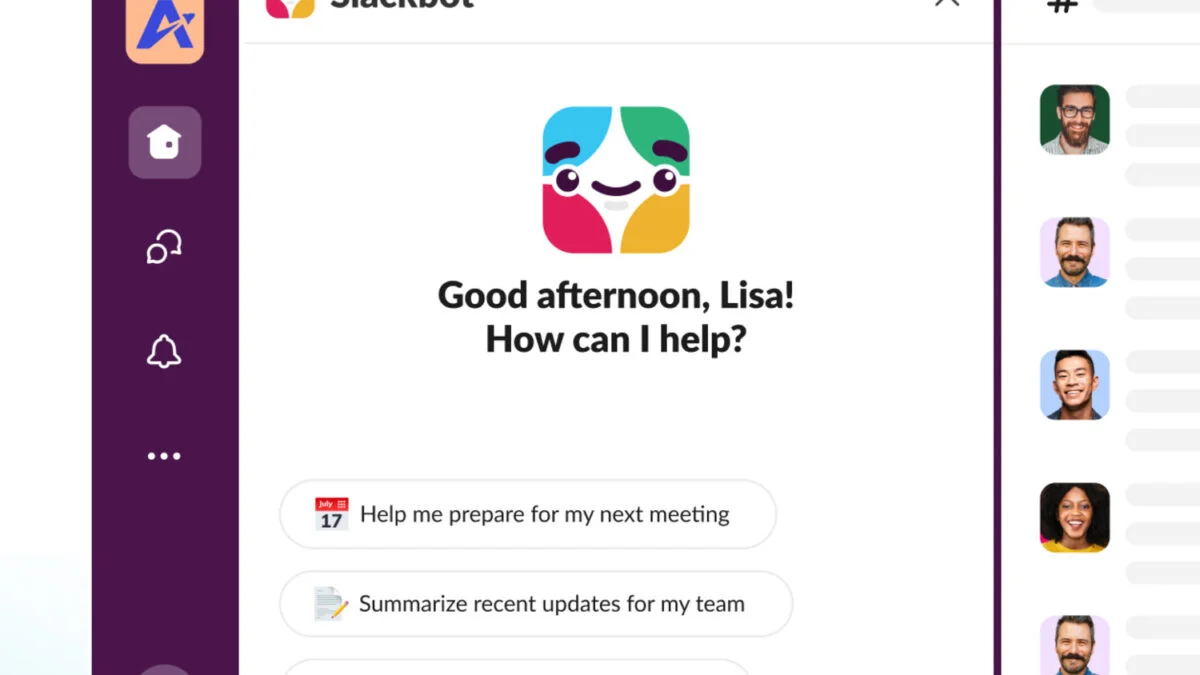
The moment I saw the notification, a chill went down my spine. Slack was changing, and not in a way I controlled. Now, it felt like an uninvited guest had moved into my digital workspace, rearranging things to its liking. Salesforce, Slack’s parent company, announced on Tuesday that Slackbot—previously a simple, command-prompting app—is evolving into an AI agent that will learn your habits and data from work chats. Is this digital alchemy or a deal with the devil?
The core promise is seamless integration. According to a recent blog post, “Slackbot is your deeply personal AI agent for work, built natively into Slack for every employee, with no setup or training required. What makes it different is simple: Slackbot starts with your context. And that context is what’s missing from the other tools out there.” This means Slackbot can now draft emails, pinpoint calendar events, and extract data from channels—all to serve you better, allegedly.
It’s also slated to play nice with other platforms like Microsoft Teams and Google Drive. These integrations should theoretically let you perform tasks across different apps without leaving Slack. For many, where Slack is mainly for quick comms while ‘real work’ happens elsewhere, this is essential.
The Unseen Observer in Your DMs
I overheard two coworkers joking about “training the bot” with sarcastic comments. Underneath the humor was real anxiety. Slackbot’s evolution means it’s privy to a substantial amount of your work. According to Slack, Slackbot is “informed by your messages and files,” but “it sees only what you can see, always respecting the permissions already in place.” But who else sees what *you* and Slackbot see? That’s less clear. Slack administrators can request access to direct messages and gain extensive visibility into user activity.
Can my boss read my Slack DMs?
Yes, potentially. Slack provides administrators with tools to access and monitor direct messages, raising concerns about privacy in the workplace.
Down the line, Slack says that Slackbot will work alongside other AI agents—like Salesforce’s Agentforce—to let you complete tasks by communicating solely through Slackbot. While Harvard Business Review suggests AI agents excel more at internal processes than customer interactions, Slackbot could leverage this. On the other hand, this might be overblown, leaving you wrestling with configurations for tasks you could’ve done faster manually. This new iteration of Slackbot, available to most Business+ and Enterprise+ customers, positions it as a digital Swiss Army knife. But will it slice or just cause digital papercuts?
Efficiency or Overreach? The Great AI Experiment
During a recent project crunch, our team joked that Slackbot was probably judging our late-night message chains. Joking aside, the line between helpful AI assistant and intrusive digital overlord is getting thinner. With Slackbot, information becomes readily accessible, theoretically boosting productivity. For example, finding files across different apps without leaving Slack. But this ease of access comes at a cost: increased data surveillance. Slackbot isn’t just a tool; it’s a digital sieve, filtering your work life through its algorithms.
What other platforms integrate with Slack?
Beyond Microsoft Teams and Google Drive, Slack integrates with a wide array of tools like Asana, Trello, and Zoom, aiming to centralize workflows.
The AI Agent as a Double-Edged Sword
Last week, our marketing director asked if anyone had tested the new Slackbot. It’s this kind of top-down pressure that makes adoption feel less like a choice and more like a mandate. Slackbot’s ability to learn and adapt might streamline workflows, but it also introduces complexities. It’s a digital black box—we input data and receive outputs, but the processes in between remain opaque. This lack of transparency raises questions about bias and accountability. If Slackbot makes a mistake, who is responsible?
How secure is my data within Slack’s AI ecosystem?
While Slack asserts that Slackbot respects existing permissions, concerns linger about who else can access your data and the potential for misuse.
The new Slackbot is rolling out now to Business+ and Enterprise+ customers. Will this be a productivity revolution, or will we be mourning the loss of digital privacy?