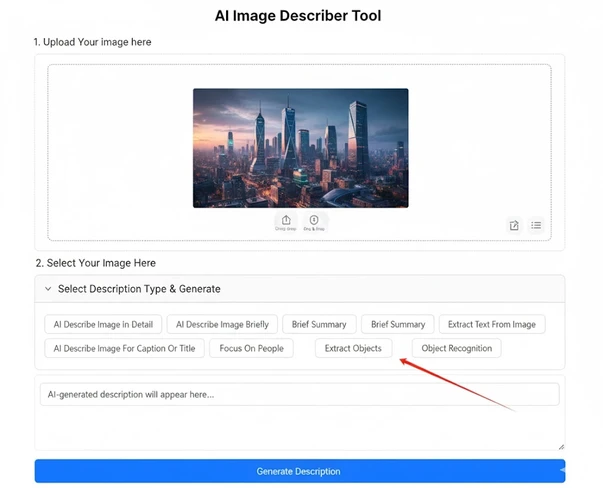
In a crowded art gallery, a blind visitor pauses before a vibrant painting, straining to grasp its colors and emotions through the echo of nearby conversations. This moment epitomizes the profound impact of AI image describer tools, fostering connection between those who see and those who perceive differently. As we stand on the cusp of 2026, it’s clear that these tools are redefining accessibility in our digital world.
Advancements in AI are making these tools smarter and more versatile. By offering precise, contextual descriptions tailored for various applications, they are essential for enhancing engagement and ensuring inclusivity across platforms. Let’s explore the most remarkable AI image describer tools of 2026—each uniquely crafted to elevate your digital experience.
Part 1: The Significance of AI Image Descriptions
Before the age of AI, crafting image descriptions was a tedious task, resulting in varying tones and levels of detail. This inconsistency not only drained resources but also impeded accessibility efforts. With AI image describer tools now emerging, the landscape has transformed dramatically.
Powered by multimodal machine learning, tools like GPT-4 Vision and Microsoft Azure Vision have mastered the art of analyzing images. They generate intricate captions that don’t just describe objects but also evoke emotions and convey context, making them indispensable in realms like marketing and accessibility design.
Industries have quickly adopted these innovations, significantly amplifying social media engagement, streamlining SEO practices, and ensuring reliable alt text for visually impaired users.
Part 2: Seven Noteworthy AI Image Describer Tools
From multi-functional powerhouses to specialized applications, these leading AI image describer tools of 2026 are paving the way for a more interactive and inclusive digital landscape.
1. PixPretty Image Describer Tool
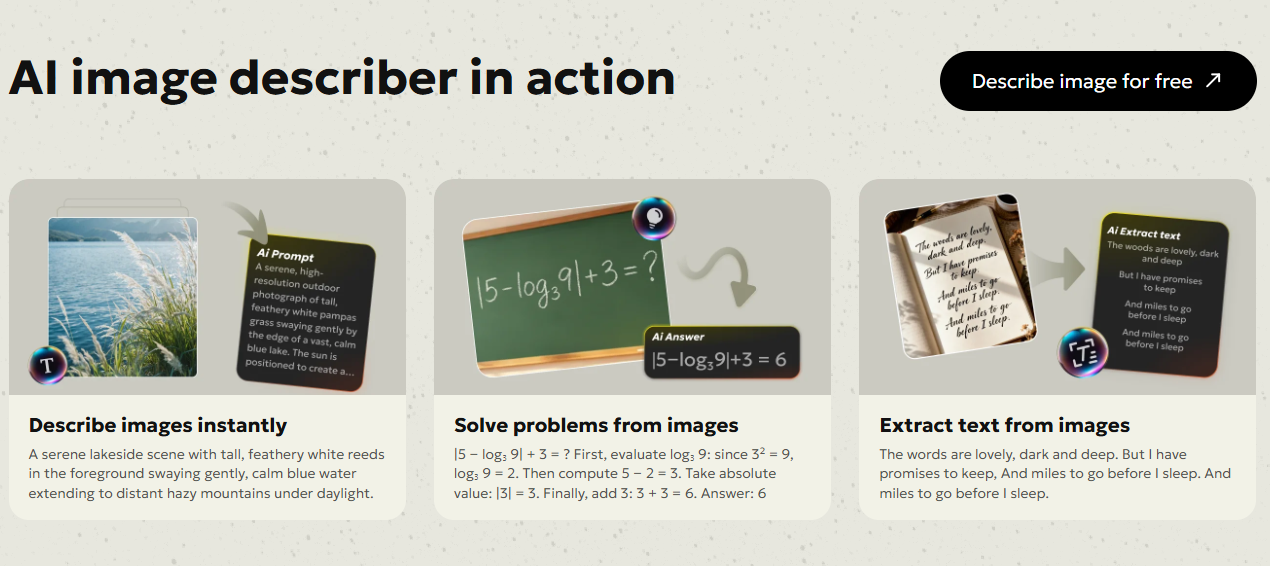
This tool excels in generating context-sensitive descriptions that highlight objects, scenes, and emotional nuances.
2. Vidnoz AI Image Describer
This free online tool quickly transforms images into rich, contextual text, catering perfectly to diverse content needs.
Unlimited free usage without the need for login.
Less effective for highly stylized marketing descriptions.
Fast processing with high accuracy for detailed, context-aware descriptions.
No built-in batch processing feature.
3. DocsBot AI Image Describer Tool
Targeted towards content creators, this tool generates context-oriented captions swiftly, perfect for blogs and educational materials.
SEO-friendly, increasing site engagement.
Limited creativity in captions for marketing purposes.
4. AltText.ai Image Describer Tool
This tool focuses on generating alt text, optimizing descriptions for both search engines and accessibility compliance.
5. Image Describer Tool
A versatile solution that accommodates varying resolutions, making it suitable for marketing and artistic purposes.
6. Pallyy Image Describer Tool
This AI tool is tailored for social media creators, offering customizable captions with an engaging tone.
7. Modelia Image Describer Tool
Optimal for e-commerce, particularly in fashion, it crafts both succinct and in-depth captions.
Part 3: Maximizing the Impact of AI Describers
To harness the full potential of these AI tools, here are some suggestions:
Utilize clear, high-quality images: High-resolution photos reduce ambiguity, allowing AI to work effectively.
Provide context: Inputting your desired tone can tailor descriptions to resonate with specific audiences.
Batch processing is your friend: This feature can streamline your workflow, especially for large tasks.
Adhere to accessibility standards: For alt text, ensure descriptions are concise and meaningful for screen-reader users.
Experiment with prompt variations: Different styles can lead to more engaging captions.
Always review: Factual accuracy and consistency matter immensely.
Avoid keyword stuffing: Natural language is more appealing; resist the urge to overload on SEO terms.
Part 4: Understanding AI Image Describer Tools
1. What are AI image description generator tools?
These are tools that automatically generate captions or alt text for images using advanced computer vision and natural language processing techniques. They interpret visual elements to deliver descriptive and meaningful outputs.
2. Who stands to gain from these tools?
Content creators, marketers, bloggers, and accessibility professionals can all benefit. These tools not only boost SEO but also enhance user interaction and accessibility for visually impaired audiences.
3. How do they contribute to SEO enhancement?
AI tools improve the visibility of images on search engines, driving higher organic traffic to websites through better-ranking features.
4. How do these generators interpret visual content?
AI platforms analyze components such as objects and context within images, resulting in nuanced and contextually relevant descriptions tailored to the content.
Final Thoughts
The evolution of AI image describer tools is reshaping accessibility, enhancing search capabilities, and streamlining content creation. These advancements not only save precious time but also promote accurate imagery descriptions, ensuring that everyone—especially those with visual impairments—can fully engage with visual content. As we progress further into this digital landscape, will you choose to embrace these innovations, or let them pass by unnoticed?