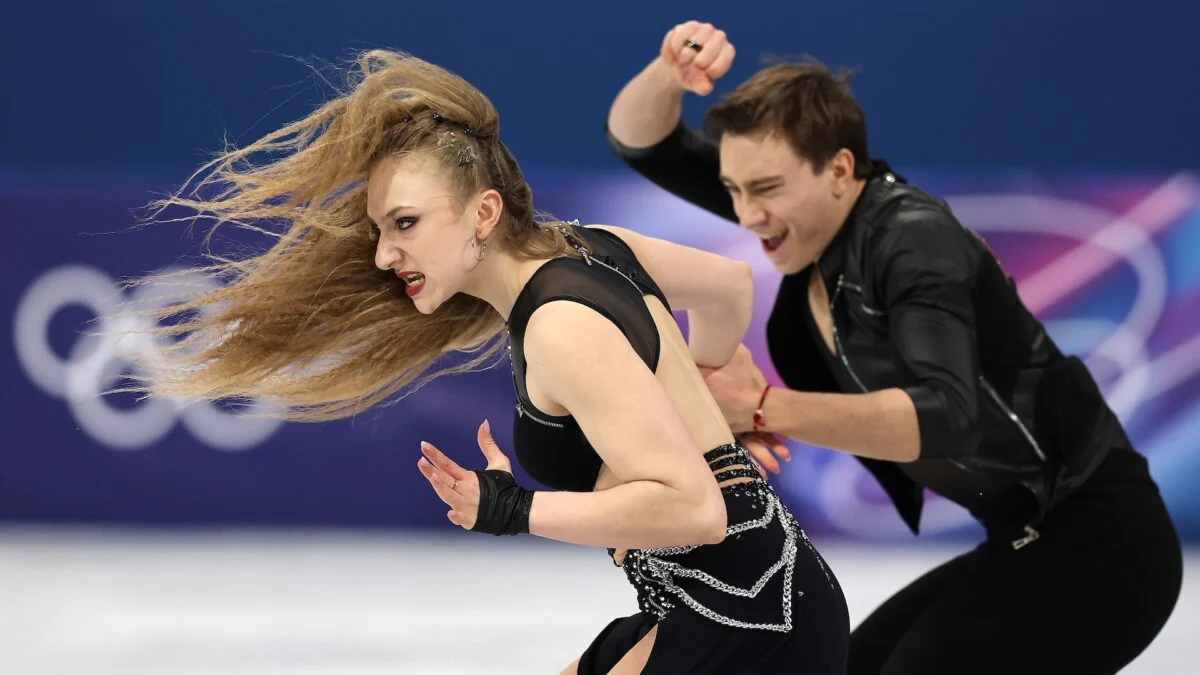
Imagine the bright lights of the Olympic stage, a rush of anticipation in the air as the audience waits for the next act. The dazzling spins and gliding motions of figure skaters are always mesmerizing, but this time there’s an unexpected twist. A Czech sibling duo steps onto the ice, not just to perform but to defy conventional boundaries—in front of a backdrop echoing the sounds of the ‘90s.
The ice dancing event in Milan, Italy, Monday night, was steeped in nostalgia, featuring tracks from iconic artists like Jennifer Lopez, Ricky Martin, and the Backstreet Boys. But Katerina Mrazkova and Daniel Mrazek broke the mold, introducing an unlikely choice: an AI-generated composition. What they initially planned as a homage to the anthem “You Get What You Give” by New Radicals—a song bursting with memorable lyrics—had morphed into something much more debatable: a synthetic tune created by artificial intelligence.
Here is the Czech pair dancing to their AI rip-off of You Get What You Give, replaced for the Olympics by an AI song with “original” lyrics that sounds pretty much the same
— Rodger Sherman (@rodger.bsky.social) February 10, 2026 at 6:44 AM
Rodger Sherman, a seasoned sports journalist, captured the sentiment perfectly: “The video is STUNNING. I have no idea how they thought they could get away with it.” It raises an intriguing question: What role does authenticity play in today’s performances? That’s a lingering concern, especially as AI technology begins to infiltrate creative spaces.
Shana Bartels first brought the skaters’ choice to light in her Patreon newsletter “Figure Skating for Baseball Nerds” last November, revealing that while the instrumental echoed the original song, the lyrics had been adjusted just enough to skirt legal ramifications. The performance was a delicate balancing act of homage and imitation, akin to a painter borrowing strokes from a master while creating their own canvas.
Those curious about the musical backdrop can catch a glimpse in a practice video from a couple of months ago, identified as “One Two, Thunderstruck.” The AI-generated song attempted to capture the iconic vibes of AC/DC’s original “Thunderstruck”—albeit with vocals lacking the punch of legends Bon Scott or Brian Johnson.
NBC, which holds the U.S. broadcasting rights to the Olympics, is especially vigilant about copyright issues, making it a challenge to find snippets from Monday’s performance on social media. However, the practice routine holds similar music and intriguingly blends the AI tune with snippets from AC/DC, creating an ironic clash of authenticity.
The sentiments around this technological intrusion have been sharp. One sound engineer lamented, “Are you kidding me with the AI music in Olympics figure skating? So you want the world to respect your art but don’t give a shit about the art of music that helps you do it?”
Another user cut directly to the bone, stating, “‘Figure skating music made by AI’ immediate skip, get fucked.” These reactions underscore a growing trend at the Olympics, where the focus has shifted from sheer athleticism to the complexities of rights and royalties. For instance, Spanish skater Tomas-Llorenc Guarino Sabate faced a last-minute change regarding music from the beloved Minions franchise, illustrating the maze of permissions skaters must navigate, often at critical moments.
American figure skater Amber Glenn also found herself grappling with copyright dilemmas this year. Canadian artist Seb McKinnon, known as CLANN, voiced his concerns over the unauthorized use of his music in Glenn’s routine. Although they eventually resolved their differences, the incident highlights the intricate web of rights athletes must manage.
Since the International Skating Union allowed music with lyrics in 2014, the tantalizing possibilities have grown. However, the ISU’s collaboration with ClicknClear for rights management has revealed the convoluted nature of musical permissions, burdening athletes who aim to create harmony in their performances.
After all the drama, Mrazkova and Mrazek finished their performance with a score of 72.09, placing 17th. Yet, one can’t help but wonder if this is the new era of artistic expression in a world where both music and movement live under the shadow of copyright laws. Are we watching the slow erosion of creativity in favor of convenience?