As I sat in a crowded café, the hum of conversation around me faded into the background. My eyes were glued to a video showcasing AI-generated clips—each scene more lifelike than the last. I couldn’t help but wonder: in the battle of creativity and technology, could the latest iterations of Veo 3.1 and Sora 2 truly transform storytelling as we know it?
In the world of AI-generated videos, realism meets creativity in a powerful collision. Two standout contenders are Google’s Veo 3.1 and OpenAI’s Sora 2. When gauging Veo 3.1 vs. Sora 2, it’s vital to assess factors like clip length, audio clarity, and scene consistency. This article will provide an evidence-based exploration of both models, examining their features, performance, pricing, and practical applications to clarify which is the best match for your needs.
Part 1. The Veo 3.1 AI Video Generator: A Game Changer
The Veo 3.1 AI Video Generator is Google/DeepMind’s upgraded tool, representing an evolution from the original model. This platform empowers creators to develop stunning short films from mere text prompts or reference images, seamlessly synchronizing audio with visuals and realistic motion.
Designed for filmmakers and marketers alike, Veo 3.1 places a premium on scene continuity, physical accuracy, and striking visuals, making it ideal for cinematic narratives, advertisements, and storytelling videos.

Standout Features:
- Audio-Visual Sync: Each clip comes alive with synchronized dialogue and ambient sound that matches the visuals perfectly.
- Scene Consistency: Fluid transitions across frames enhance the viewing experience.
- High Resolution: Outputs crisp visuals up to 1080p without requiring further adjustments.
- Scene Extension: Easily create longer videos by adding multiple scenes beyond the standard clip.
- Reference Images: Incorporate up to three images for a more cohesive video generation experience.
- Editing Tools: Tailor characters, backgrounds, and cinematic styles with user-friendly presets.
While there are pros and cons to every tool, Veo 3.1’s seamless integration of narrative elements makes it a top choice for many creatives.
Part 2. Meet Sora 2 by OpenAI
In late 2025, OpenAI released Sora 2, the successor to the original Sora, primarily through an invite-only app for iOS. This platform focuses on short-form content that marries audio-visual synchronization with enhanced realism and temporal coherence. Imagine a TikTok feed, but filled with your AI-generated masterpieces.

Key Features:
- Short Realistic Clips: Easily create up to 25-second videos, seamlessly integrated without needing scene extenders.
- Physics & Temporal Accuracy: It excels in depicting motion, object permanence, and real-world behaviors.
- Audio Integration: Isolates sounds to amplify realism in each video.
- Visual Coherence: Guarantees style and character consistency across shots for a unified look.
- Cameo Feature: Personalize films effortlessly with real-world likenesses or pets.
- Stylistic Flexibility: Perfectly adaptable for various styles, ranging from cinematic realism to anime.
I found that while Sora 2 emphasizes visual fidelity, it possesses a unique charm that allows for creative expression beyond the norm.
Part 3: Veo 3.1 vs. Sora 2 – The Great Comparison
Pushing boundaries in AI video generation, Google’s Veo 3.1 and OpenAI’s Sora 2 are the front-runners, yet they cater to different creative visions. Recognizing the distinct advantages each model brings can illuminate your choice.
1. Storytelling vs Realism
Veo 3.1 is your go-to for cinematic storytelling. With its ability to assemble multiple shots and maintain visual coherence, it’s like having a director’s assistant that breathes life into your narrative.
Sora 2, however, is a master of photorealism, ideal for short, intricate scenes where everything from lighting to motion feels authentic—a perfect tool for product demos or high-detail animations.
Bottom line: If you seek storytelling mastery, Veo 3.1 is your best ally; for realism, Sora 2 shines.
2. Visual Style and Aesthetic
Veo 3.1 produces films that evoke emotion and connection, while Sora 2 achieves a nearly photographic quality, capturing the essence of reality with unrivaled detail.
3. Speed and Efficiency
When time is of the essence, Veo 3.1 allows for swift rendering, ideal for producers focused on volume without sacrificing quality. Sora 2, with its commitment to detail, might slow your workflow but rewards you with sublime visuals.
4. Use Cases Unpacked
| Need | Best Choice |
| Immersive short clips | Sora 2 |
| Cinematic narratives | Veo 3.1 |
| Marketing & Advertising | Veo 3.1 (storytelling), Sora 2 (realistic products) |
| Educational Content | Veo 3.1 |
| Complex motion sequences | Sora 2 |
5. Choosing the Right Tool
- For Filmmakers: Veo 3.1 offers superior scene management, making it ideal for narratives or mini-series.
- For Designers: Sora 2 excels at realistic representations, perfect for product showcases and simulations.
- For Social Media Content Creators: Each tool has its merits—opt for Veo 3.1 for storytelling reels and Sora 2 for stunning short visuals.
Part 4: A Side-by-Side Test
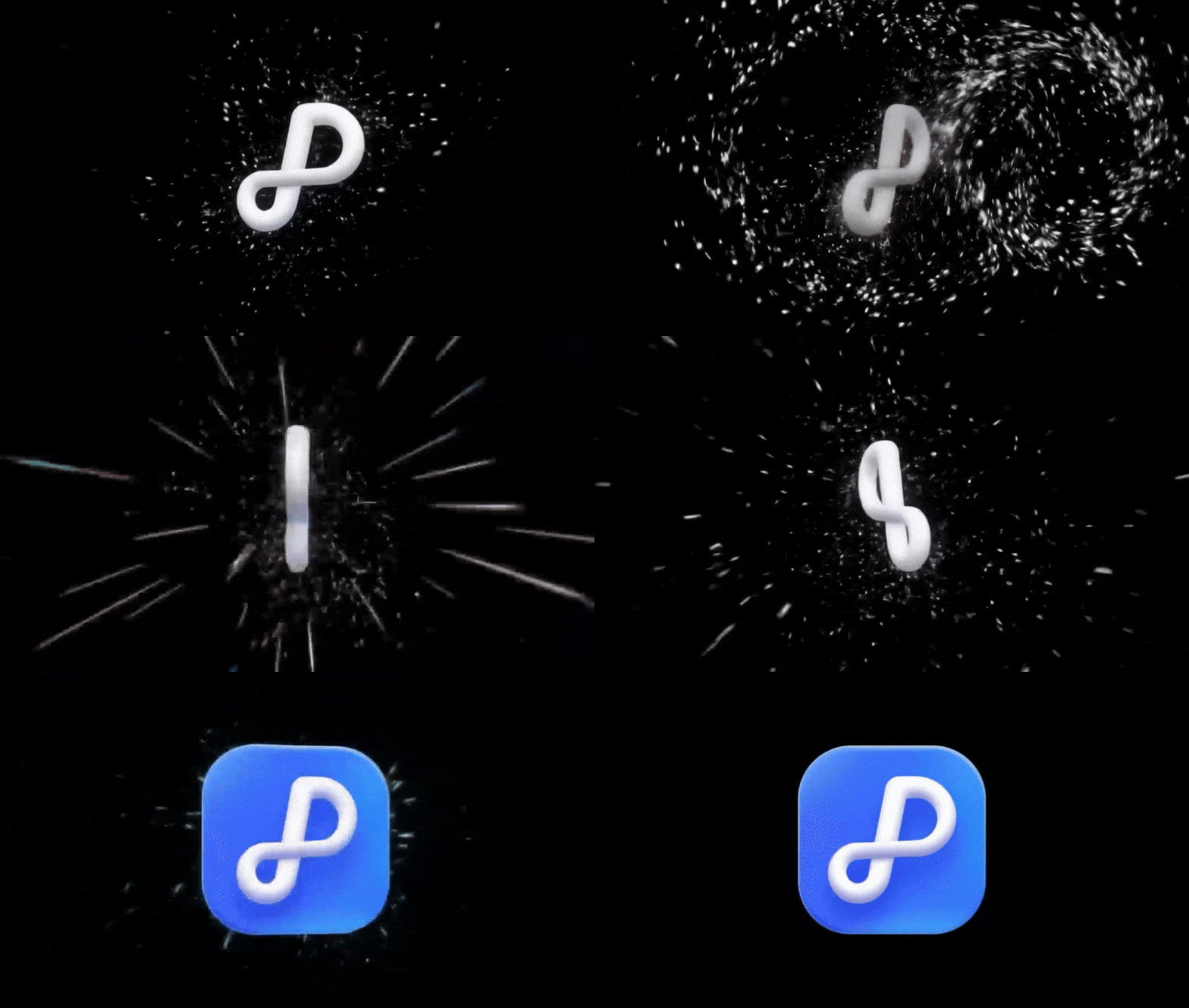
To see the nuances of Veo 3.1 vs. Sora 2 firsthand, I ran a test using the same prompt of animating a logo set against a dark backdrop. The results were revealing.
What I Discovered
Sora 2: It executed the logo animation flawlessly, with natural appearing and disappearing effects. The attention to detail made the animation feel polished.

Google Veo 3.1: While engaging, the logo’s emergence wasn’t as fluid, leading to minor visual clashes that lessened its impact.
Key Takeaways
- Visual Precision: Sora 2 maintained a greater sense of accuracy, ensuring visual coherence throughout.
- Animation Dynamics: Veo 3.1 sometimes struggled with transitions, impacting fluidity.
- Efficiency Variances: Despite being quicker on platforms like Flow and Gemini, Sora 2 offers visuals that command attention.
Feature Enhancements:
- Veo 3.1 introduced seamless first-and-last-frame generation and enhanced multi-image referencing.
- Sora 2’s storyboard control for Pro users allows detailed adjustments in shot timing.
Part 5: Choosing Your Ideal AI Video Generator
Selecting the right AI video generator hinges on your specific goals and workflows. With the latest advancements from Google Veo 3 vs. OpenAI Sora, both tools provide powerful capabilities, but each shines in different nuances of video production.
Google Veo 3: Analyzing Its Strengths and Weaknesses
Veo 3.1 emphasizes cinematic storytelling and expanded clip lengths, enabling intricate narratives and diverse shooting sequences.
Pros:
- Perfect for narrative-focused content, marketing initiatives, and educational endeavors.
- Fast generation times on platforms such as Flow and Gemini.
- Built-in cinematic styles streamline production.
Cons:
- 1080p output may lack refinement; some video qualities, particularly close-ups, can appear rough.
- Occasional audio mismatches in extended video clips.
- Multi-image referencing can falter in complex sequences.
Sora 2’s laser focus on photorealism highlights its ability to render intricate details like motions and lighting.
Pros:
- Exceptional for short, accurate visuals and product demonstrations.
- Storyboard capabilities provide meticulous control for professional users.
Cons:
- Longer generation times compared to Veo 3.1.
- Limited runtime per clip constrains multi-scene storytelling.
- Requires precision in prompts for optimal results.
What Users Want to Know About Veo 3.1 and Sora 2
1. Are there free options for using Veo 3?
Yes! Several platforms, like EaseMate AI, leverage Google’s Veo 3 to facilitate rapid, cost-free video creation from text or images.
2. How does Veo 3 compare to its predecessor, Veo 2?
In brief:
- Veo 3: Excels in photorealistic animations, rapid action sequences, and audio synchronization.
- Veo 2: Suitable for simpler, stylized animations without sound.
3. Which is superior: Veo or Pixellot?
Veo offers distinct advantages over Pixellot:
- Superior image quality and clarity.
- Enhanced event detection capabilities in sports contexts.
Conclusion:
When examining the facets of Veo 3.1 vs. Sora 2, it’s apparent they fulfill different roles. Veo 3.1 thrives in narrative-driven content creation, offering fluidity and emotional depth. Sora 2 excels in producing strikingly realistic visuals, a trait perfect for product demonstrations and short clips. Which of these powerful tools will you choose for your next project?