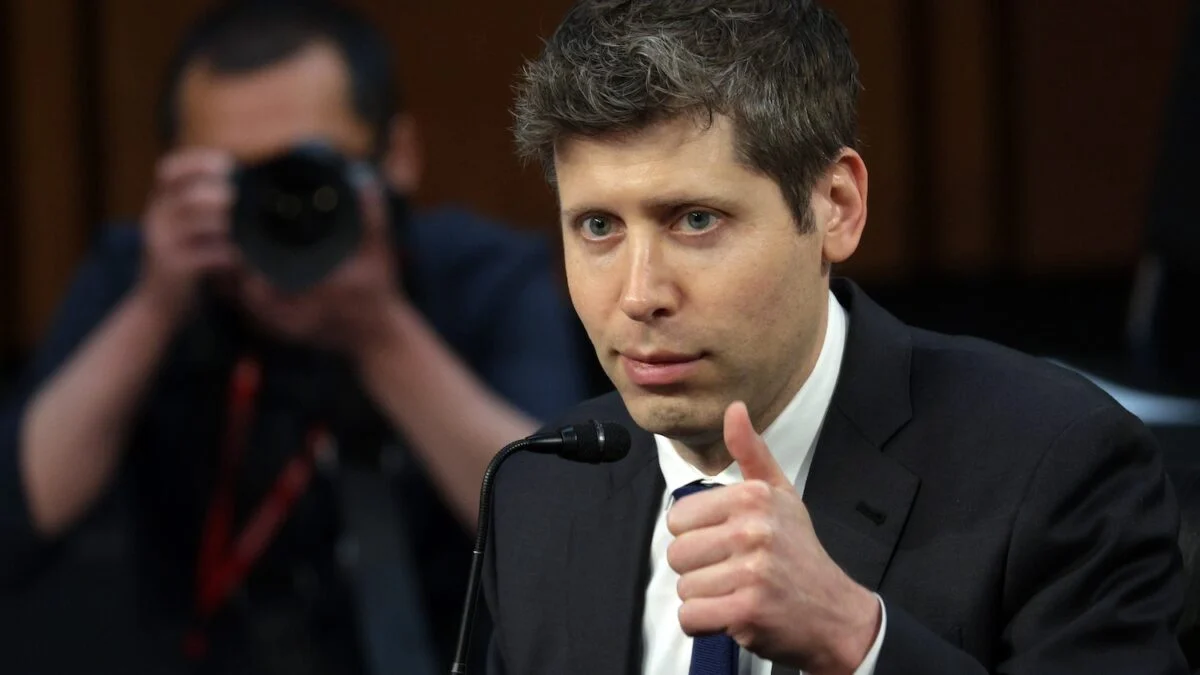
I saw the X notification and froze: Sam Altman had announced OpenAI would place its models inside the Pentagon’s classified network. You could feel the frame of the AI debate tilt in an instant. I remember thinking: the PR battle around AI just became a foreign-policy battlefield.
I’m going to walk you through what happened, why it matters to you, and how the companies involved are selling very different futures for the same technology. I speak from reporting and from watching scuffles between founders shape entire markets. You’ll get names, deals, and what this means for developers, contractors, and citizens who don’t want their tools turned into instruments of war.
At a late-Friday X post, Altman announced the deal — What he actually said and why timing matters
Sam Altman wrote that OpenAI had “reached an agreement with the Department of War to deploy our models in their classified network.” That phrase alone landed like a physical nudge: a small message on a social feed with very big consequences.
You need to parse two signals in that line. First, OpenAI now has formal access to classified infrastructure, which changes how its models are audited, updated, and—critically—used. Second, Altman framed it publicly, signaling the company wants to own the narrative that it is partnering with the U.S. government on national-security AI work.
How did OpenAI secure access to the Pentagon’s classified network?
Short answer: public announcement, undisclosed agreement language, and a White House-friendly optics moment. The exact legal rubric hasn’t been released, which means you should expect a slow stream of clarifications and hard-to-see tradeoffs embedded in nondisclosure terms.
At the Pentagon, Anthropic got labeled a supply-chain risk — What that label does to competition
Hours before Altman posted, the Pentagon flagged Anthropic as a “supply-chain risk to national security.” That administrative line carries a blunt commercial effect: companies that work with the Pentagon are now discouraged, if not barred, from commercial dealings with Anthropic.
You should treat that label as both legal pressure and political theater. Traditionally, “supply-chain risk” is applied to firms tied to adversary states. Applying it to an American AI startup reads like a new lever for reshaping market access—one the current administration has shown willingness to swing.
Why did the Pentagon label Anthropic a supply-chain risk to national security?
The public rationale is thin. Anthropic’s red lines on mass surveillance and fully autonomous weapons clash with Pentagon expectations, and political operatives tied to the administration framed the company’s stance as unacceptable. The classification also reflects a broader willingness to use procurement rules as geopolitical tools.
Anthropic’s CEO Dario Amodei says the company won’t license its tech for certain kinds of surveillance or autonomous kill systems. That position won applause from some ethicists and unease from senior defense voices. The effect: Anthropic is now boxed into a public role that trades on moral posture while trying to remain a viable commercial vendor.
First, the good part of the Anthropic ads: they are funny, and I laughed.
But I wonder why Anthropic would go for something so clearly dishonest. Our most important principle for ads says that we won’t do exactly this; we would obviously never run ads in the way Anthropic…
— Sam Altman (@sama) February 4, 2026
At a CEO photo op in India, Altman and Amodei refused to clasp hands — What friction reveals
The founders would not hold hands for the cameras. That tiny refusal is a visible sign of a much deeper break.
You should read the stunt-level tension as commercial strategy: Anthropic cast itself as the cautious, rule-writing competitor; OpenAI positioned itself as the pragmatic partner willing to serve state needs. The ad campaigns, the public barbs, and the refusal to be seen together are all moves in a market where reputation and government access are now corporate assets.
Consider the business scoreboard: Anthropic’s Claude Code has spooked enterprise buyers and pushed a productivity narrative that Wall Street can’t ignore. The company recently surpassed OpenAI in total cash raised, and that bankroll buys noise and influence—but not, apparently, untroubled access to defense contracts.
time traveler from 12 months from now just sent me this
— Christopher Mims (@mims.bsky.social) February 27, 2026 at 1:25 PM
At the moment U.S. forces opened strikes, public trust tilted — How geopolitics changes product perception
The Pentagon’s action in coordination with Israel arrived within hours of Altman’s announcement. The overlap is not elegant timing; it’s a political flashpoint.
Polls from AP-NORC, YouGov, and Gallup suggest Americans were already skeptical of the administration’s moves on national security. When a private tech company signs a visible pact with a government launching combat operations, public perception of that company changes fast.
Anthropic has said it will challenge the Pentagon’s designation in court and will not immediately cut off customers; the defense side gave contractors six months to replace Claude Code. Meanwhile, OpenAI’s agreement is being framed—by figures like former State Department official Jeremy Lewin—as patriotic and practical, even if the fine print may leave the company little power to limit how the Pentagon uses its models.
Will this change how contractors choose AI tools?
Yes—procurement teams will now weigh political risk as heavily as performance. You buy software not only for features but for geopolitical baggage: can your vendor keep you out of a public fight or will it drag you into one?
Altman’s public stance has mimicked some of Anthropic’s moral language, but the two companies’ choices are legally different. Anthropic framed “red lines” against surveillance and lethal autonomy; the Pentagon called that unacceptable. Altman’s apparent willingness to sign operational access agreements for classified networks positions OpenAI as the company comfortable operating inside defense systems.
I’ll give you one metaphor and one more: this deal is now a neon sign over a new category—“AI that works for the U.S. war effort”—and both firms must live under it or beside it. For employees, investors, and customers the choice is beginning to feel like picking a side in a neighborhood where fences suddenly matter: one side loudly waves flags, the other posts proclamations about conscience.
If you’re building with ChatGPT, Claude, Codex, or Claude Code, ask your vendor how the Pentagon agreement changes data flows, model updates, and your contract’s termination rights. Ask who can see your prompts and who can require functionality changes. These are not theoretical risks; they affect IP, compliance, and mission creep.
Anthropic is signaling it will continue to court customers not aligned with Pentagon demands while challenging the blacklisting in court; OpenAI is signaling operational cooperation. You can choose which posture you prefer, but the market will punish ambiguity.
So here’s the visceral question I’ll leave you with: should private tech companies decide how America fights, or should we decide what limits those companies must live within?