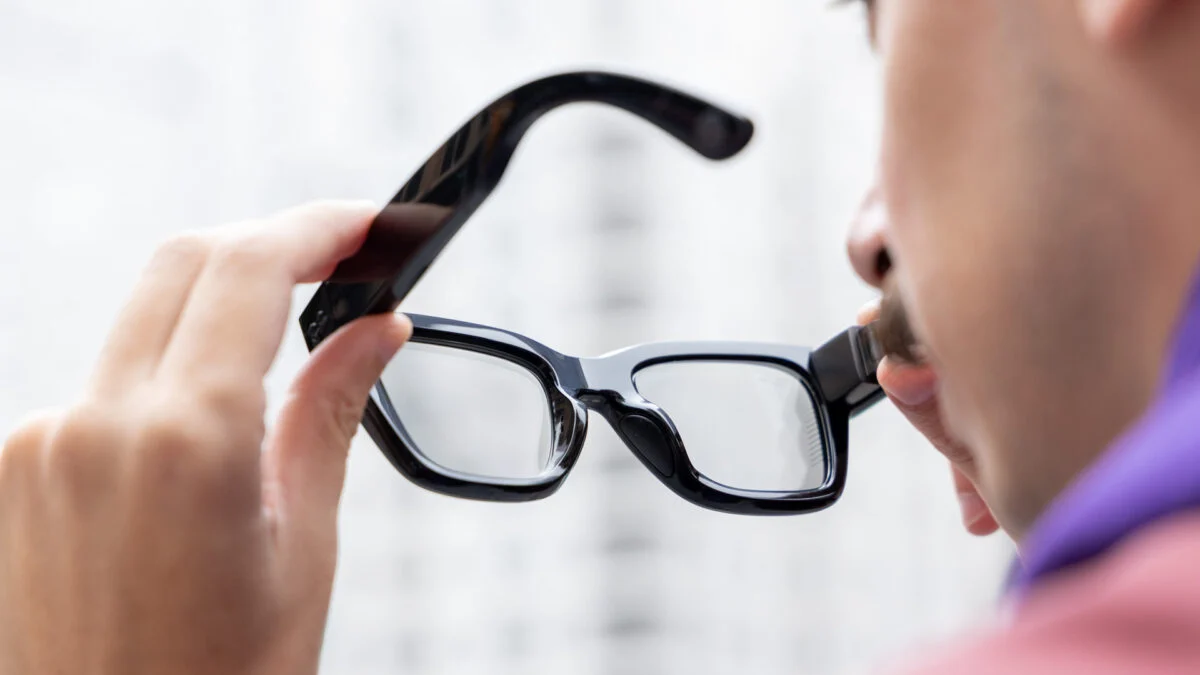
She stepped behind the curtain, thinking the recording was off. I watched the clip—someone in another country pausing, annotating, moving on. You feel the private dissolve into a file the moment you realize a stranger has already seen what you thought was only yours.
At a dressing-room mirror, someone forgot to turn their Ray-Bans off.
I’ve read the reports so you don’t have to guess what happens next: footage from Meta’s Ray-Ban smart glasses can end up in the hands of human reviewers. Swedish investigations by Svenska Dagbladet and Göteborgs-Posten found that intimate, private, and shockingly mundane moments—people using bathrooms, getting undressed, reading texts—are being labeled by contractors for AI training.
On a reviewer’s screen in Nairobi, someone’s credit card slid into view.
Meta outsources work to companies like Sama, where annotators tag everything visible so machine vision improves. The data comes raw; there’s little filtering before humans see it. Contractors describe seeing full messages, payment cards, and private encounters—material no one expects will be routed to a remote workforce.
Are Meta Ray-Ban glasses recording what I do?
You can read Meta’s own AI terms, which say the company may “review your interactions with AIs, including the content of your conversations with or messages to AIs, and this review can be automated or manual (human).” That clause gives Meta the legal room to send content to people who judge and label it—again, often without additional redaction.
At the bedside table, a pair of glasses captured a partner changing clothes.
A contractor told the Swedish outlets they watched video where the glasses were set down and a spouse walked in and undressed. Another reviewer described footage of people recording themselves during sex—some deliberate, some accidental. The fallout isn’t hypothetical: more than seven million pairs of these smart glasses have reportedly been sold, amplifying the odds that someone you know has been recorded (CNBC).
At your phone, a text can flicker into view when you glance down.
Labelers say they see messages when wearers look at their screens. You and I both know how fast a private detail can become a training pixel. Meta’s suggested remedy? Don’t share sensitive information with the device—or don’t record it. That advice reads like telling someone not to leave their front door open rather than locking it.
Who watches the footage from Meta’s smart glasses?
Contractors at third-party firms—Sama is named in the reporting—review the footage. Publications such as Futurism and Gizmodo have traced the problem back to Meta’s policies and to the logistics of improving computer vision. Contractors say refusing to label sensitive clips risks losing work: “You are not supposed to question it. If you start asking questions, you are gone,” one worker told the Swedish reporters.
At your settings page, Meta offers a shrug wrapped in legal language.
The company’s terms state content may be reviewed “through automated or manual (i.e. human) review and through third‑party vendors in some instances” to improve services. The practical advice amounts to: don’t capture things you wouldn’t want reviewed. That’s not comfort to bystanders who never consented to be recorded in the first place.
I think about the ordinary ways we give away privacy—silent permissions, fleeting taps—and how quickly those permissions become material for training machines. This isn’t just a surveillance problem; it’s a consent problem amplified by scale and corporate processes.
Imagine your life as a room where you can never be sure whether the curtains are closed—like a fly on the wall, footage lands where it will. In the same way, the intimate scenes we’d expect to remain private sometimes end up exposed, a confessional left open for strangers to catalog.
Meta didn’t respond to a request for comment by publication time; the core question remains: who decides what parts of your day belong to you, and what parts belong to someone training an algorithm to make money off your moments?