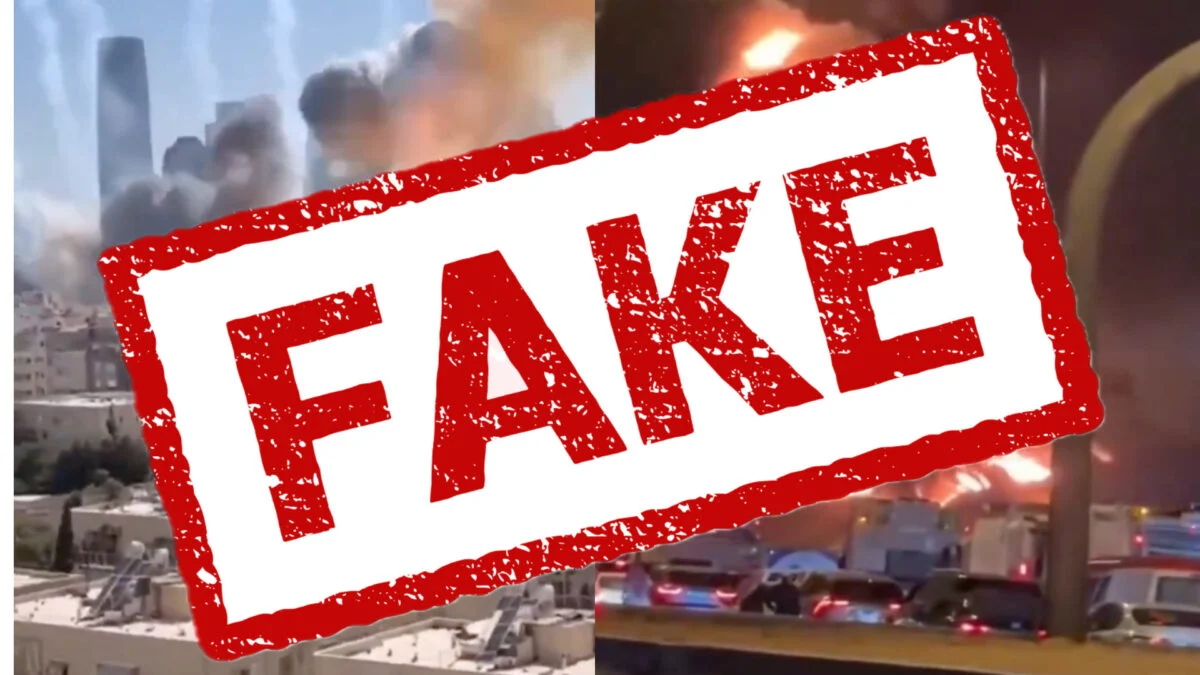
I woke up to a feed full of explosions. You can feel the room tilt when every clip is a claim of war—and half of them are fake. I sat there, thinking: who profits when reality becomes a cheap script?
I’m going to cut through the noise. You need to know what X’s new rule actually does, who it bites, and what it leaves wide open. I’ll point to the platforms, the tools, and the incentives so you can judge what’s performative and what might slow the next viral fake.
U.S.-Iran War fakery
Observation: My timeline filled with a supposed downed U.S. pilot image and rocket barrages over Tel Aviv within hours of the strikes.
Here’s the thing: those images and clips weren’t just miscaptioned—they were manufactured. Some posts even carried Google’s SynthID watermark, a sign the pixels came from a generator, not a camera. Snopes flagged missing fingers in one viral portrait; BBC trackers flagged oddly shaped cars and stilted audio in a clip of Tel Aviv. The signal-to-noise ratio was collapsing.
You’ve seen this before: once a believable artifact drops, it ricochets through accounts, channels, and bots faster than any correction can catch up. The feed became a carnival mirror, flattering nothing and distorting everything.

Will X demonetize AI-generated videos?
Nikita Bier, X’s head of product, answered part of that. Starting now, he said, anyone who posts AI-made war footage without an explicit disclosure will be suspended from Creator Revenue Sharing for 90 days; repeat offenses mean permanent removal from the program. That targets financial incentive—accounts that chase ad revenue and creator payouts—but it doesn’t strip content from timelines or stop non-monetary motives.
Mislabeled videos
Observation: A clip claiming to show the U.S. embassy burning in Riyadh was actually a month-old YouTube short, and another viral clip was straight out of a video game.
Pieces of genuine footage are being recycled into false narratives, and wholly fabricated clips are being presented as breaking truth. X’s new rule mentions generative AI signals—metadata, SynthID marks, Community Notes—but it leaves ambiguous whether misattributed or repurposed non-AI content will be penalized. That means a game engine explosion that generates views can still reward its poster, while a synthetic video is the one that gets demonetized.
How does X detect AI-generated content?
X says it will flag posts using Community Notes, model metadata, and other signals from generative tools. That’s a start, but it’s not a full-proof detector: bad actors can strip metadata, upload through intermediaries, or paste AI clips into longer real footage. Meanwhile, Grok—the xAI model—has been asked point-blank whether clips are real and often replies affirmatively, which teaches users to trust an unreliable arbiter.
Hotbed of disinformation
Observation: Since Elon Musk bought Twitter, formerly known as a place with verification and gatekeepers, the site has become a repeat offender for viral fakes.
Musk’s policy changes after 2022 reopened doors for previously banned accounts and removed legacy verification cues that helped readers assess trust. The creator revenue program he launched created a marketplace where attention equals income. When the platform rewards virality, it also rewards deception. xAI’s Grok chiming in as a quasi-fact-checker only adds confusion; one user even argued a clip must be real because Grok said it was.
AI fakes spread like a virus through retweets, shares, and the psychological pull of urgency. That’s the vector most moderation systems struggle to kill.
Musk’s own incentives
Observation: Musk has publicly predicted a future where most consumer media is AI-generated.
He’s said on Joe Rogan and elsewhere that “most of what people consume in five or six years… will be AI-generated content.” If you read that as product strategy, it explains why X’s policy targets monetization rather than outright removal: the platform benefits if the economy of attention migrates into synthetics. Matt Walsh even asked why X doesn’t ban all unlabeled AI—Bier’s answer so far is narrower, aimed at monetized posts.
What about the political actors sharing fakes?
Observation: High-profile figures and partisan accounts amplified false clips, then deleted them—Fox hosts, governors, repeat disinformation posters.
Demonetizing financially motivated sharers is sensible, but it won’t stop people who aim to influence opinion, panic markets, or tilt geopolitics without caring about payouts. Labels and reduced revenue change some incentives; they don’t stop state actors, influence operations, or trolls whose payoff is chaos. If your goal is persuasion or market moves, losing creator revenue is a cost you might accept.
Can Grok be trusted to verify war footage?
No. Grok is a language model and a promotional tool for xAI. It has no reliable independent verification pipeline and it often hallucinates or affirms claims. Trusting it as a gatekeeper for life-and-death footage is a mistake—human verification and cross-checking with outlets like BBC, Snopes, or direct on-the-ground reporting still matter.
What this policy does do is make the transaction explicit: post AI war footage without disclosure and you risk creator revenue. It doesn’t stop virality, it doesn’t stop political actors, and it doesn’t remove the content from public view. For many, that will feel like a paper bandage on a gasoline leak.
I’ve pointed out the platforms and the signs—the SynthID watermark from Google, Snopes’ finger-counting tells, BBC trackers, YouTube timestamps, and the Community Notes process on X. You now know where to look and what questions to ask when a clip arrives in your feed. Will the policy slow the next wave of war fakes, or is it just a cosmetic change that leaves the amplification engine intact?