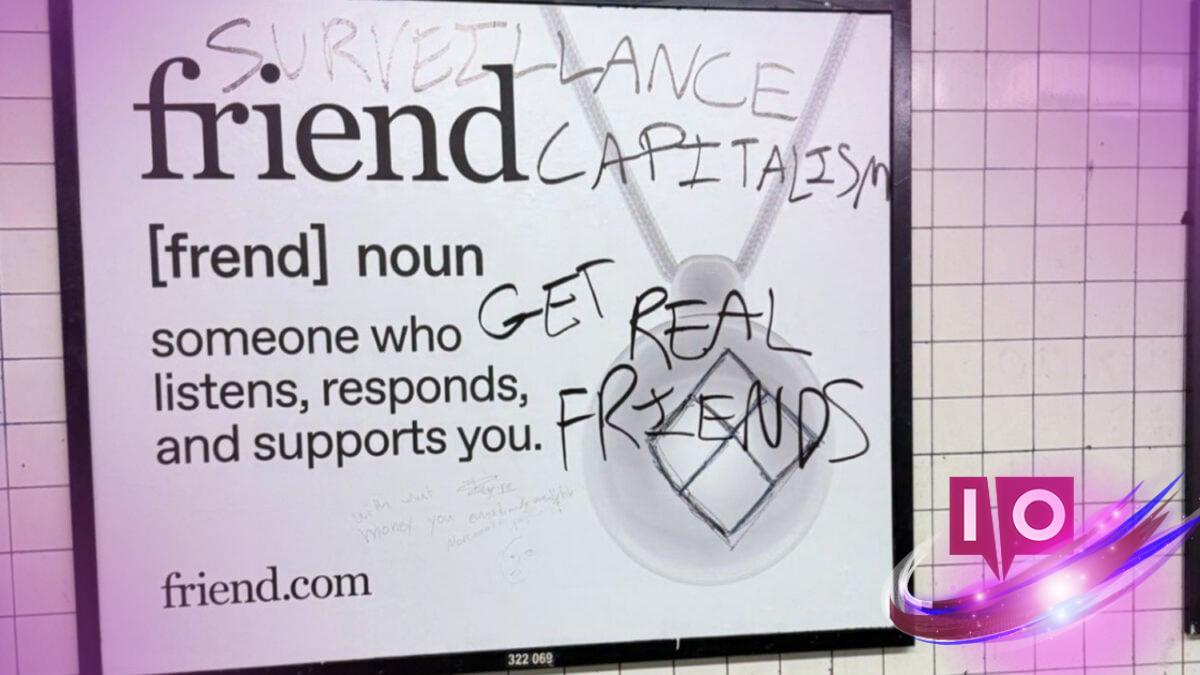
In an era where artificial intelligence is rapidly evolving, one particular device has landed itself at the center of public disdain: the Friend AI. After a controversial million-dollar advertising campaign throughout New York City’s subway, the company is transitioning from its original wearable pendant design—an ever-listening piece of technology—to a more traditional web-based chatbot. This shift aims to engage lonely individuals in a digital faux-relationship, potentially leading them to reconsider the pendant in the future.
Despite its contentious reception, Friend has made headlines with claims of significant user numbers. CEO Avi Schiffmann recently touted that 200,000 individuals had hopped onto the new chatbot platform. However, it’s essential to approach these figures with skepticism. Schiffmann’s measurement of “users” can include anyone who simply initiates a chat, raising questions about the actual engagement and whether users will evolve into customers willing to invest in the pendant, priced at $129 (approximately €120).
Why did Friend choose to pivot away from selling a pendant? The answer is surprisingly straightforward. The friction associated with purchasing and wearing an AI device has been a point of concern for years. Technology that is always listening, much like the failed attempts of Google Glass in social settings, often faces public backlash. Transitioning to a web interface allows more people to access the service without the stigma tied to a physical product.
Every single available bus shelter in LA is now a friend ad pic.twitter.com/mnRylr8ElE
— Avi (@AviSchiffmann) October 7, 2025
The marketing strategy employed by Friend raises eyebrows as well. Schiffmann has invested heavily, spending $1.8 million on securing the domain name friend.com and approximately $1 million on subway ads. This aggressive approach has attracted attention, albeit not all of it positive. Instead of mere public interest, it appears that Schiffmann is seeking notoriety, which he himself acknowledges. When confronted with vandalism on his advertisements, he commented that no one vandalizes irrelevant ads, even expressing amusement when someone defaced one with “Fuck AI.”
How are users really responding to Friend AI? Observations suggest many are treating it cautiously. Schiffmann’s definition of a “user” can be questioned, as it merely requires one interaction—sending a single message. In a recent investor update, he noted only 434 users had activated a Friend device, indicating a tougher road ahead for converting digital interactions into tangible sales.
Vandalized friend ads at W. 4th subway station pic.twitter.com/ay1UOcVc68
— CodeIsTheEnd (@CodeIsTheEnd) September 28, 2025
What potential does the Friend AI chatbot hold for social interaction? While Schiffmann likens the experience to engaging with a god, critics argue that unless the service fosters meaningful conversations, it risks being just another empty digital companion. Interestingly, when given the opportunity to engage with real people, Schiffmann expressed fatigue with New Yorkers, claiming interactions were problematic. The disconnect here is palpable, as many consumers might feel similarly about AI companions.
Is valuing algorithm-driven interaction over human connection a reasonable exchange? In an age where technology is increasingly shaping relationships, the fundamental question remains whether we derive genuine connection from chatting with an AI instead of a human.
As this story unfolds, it remains to be seen how Friend AI will navigate this landscape filled with skepticism and a desire for authenticity. For those curious about the intersection of human emotion and artificial intelligence, compelling questions linger. Can AI truly replicate the intimacy of real relationships?
In the evolving landscape of human-technology interactions, understanding the implications is crucial as we redefine connection in the age of AI. Continue exploring related insights and stories at Moyens I/O.