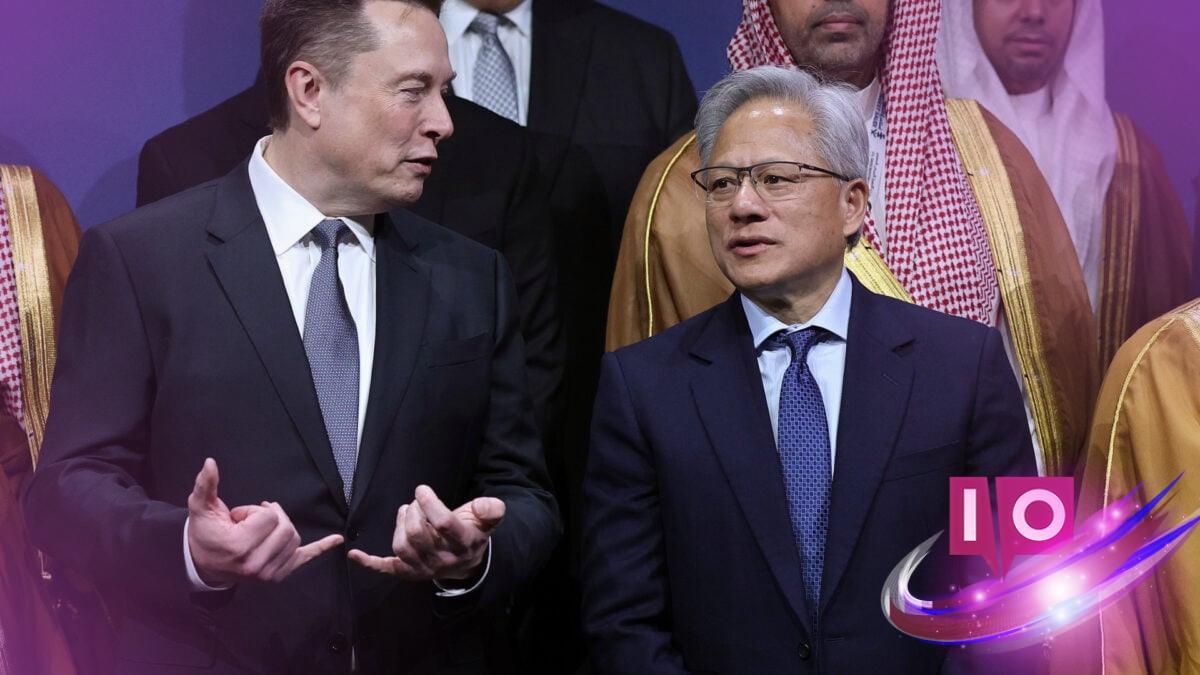
Elon Musk recently stirred up conversation at the US-Saudi Investment Forum held at the Kennedy Center in Washington, D.C. He boldly asserted that his Optimus robot could end poverty, claiming that a future without work—and ultimately, money—was on the horizon. Jensen Huang, CEO of Nvidia, shared the stage and humorously asked Musk to give him a heads-up when currency becomes obsolete.
Musk’s vision for the future is striking. He confidently stated, “AI and humanoid robots will actually eliminate poverty,” emphasizing that Tesla would not be the only company to contribute to this revolution. “The only way to make everyone wealthy is through AI and robotics,” he added, fueling both excitement and skepticism.
As he often does, Musk painted a picture of a world where work is optional in the next decade or two. He touched on the concerns some have about AI taking over jobs, making his position clear: those fears may be unfounded. “My prediction is that work will be optional,” he said, casting a long-term vision.
But he took it a step further by asserting that in a future dominated by robots, money won’t be relevant. Citing Iain Banks’ Culture series, Musk claimed that in an ideal future, money simply would not exist. “If there’s continued improvement in AI and robotics, money will stop being relevant at some point,” Musk stated, hinting at a radical shift in society.
The laughter in the audience grew when the moderator turned to Huang, asking for his thoughts. Huang, known for his differing perspective, previously asserted that AI would lead to more busyness rather than less. He acknowledged the transformative force of technology but maintained that increased productivity would result in more ambitious goals and not less work. “I’m guessing that Elon will be busier as a result of AI—so will I,” Huang remarked, pointing out that more efficient technology often leads to tackling more projects.
Huang also humorously noted that he hopes Musk will notify him before currency becomes irrelevant. “You’ll see it coming,” Musk replied, accompanying the joke with his customary confidence.
Musk’s assertions about his Optimus robots being the key to eradicating poverty deserve scrutiny. While the notion of improved efficiency is appealing, it raises significant questions about wealth distribution. Who will fund individuals living without work? Would it be the government, necessitating a fundamental overhaul of economic systems?
One can’t ignore Musk’s history of minimizing the struggles of those affected by poverty. He often frames homelessness as a symptom of personal failure, ignoring that many who lack housing are employed. Consequently, his promises to create a leisure society feel hollow. He seems more focused on profit than on addressing systemic issues.
While Musk’s ideas echo popular notions from 20th-century futurism, they lack a robust mechanism for implementation. Can a society based on technology remove the necessity for work without adopting a radical collectivist approach to resource allocation? This remains uncertain as Musk’s vision seems primarily market-driven, implying that even with advanced robots, the wealthy will continue to control capital.
The discussion concluded with a reminder of reality as the moderator hinted at the conversation with Saudi Crown Prince Mohammed bin Salman and former President Donald Trump that would follow. This juxtaposition of idealism alongside practical governance highlights the unlikeliness of imminent utopias as envisioned by Musk.
So, what does this all mean for the future? We’re in a time of accelerating technological change, yet the complexities of wealth, labor, and society remain unresolved. Innovations propel us forward, but let’s remain aware of the implications they carry.
Is it truly feasible to have a world where work is optional? While Musk’s vision sparks hope, we must ground ourselves in the current economic realities and structures. For further insightful discussions on technology and the future, don’t hesitate to explore related content at Moyens I/O.
How will AI and robots impact future job markets? The potential of AI to reshape employment is profound. While some predict job loss, others foresee new opportunities in emerging fields.
What are Iain Banks’ Culture series and its relevance to technology? Banks’ works depict a post-scarcity society, serving as inspiration for thinkers like Musk who discuss AI’s potential to change economic structures.
Can we realistically eliminate poverty using robots? The concept hinges on how resources are managed and whether society can agree on new distribution systems.
Is it possible to have a leisure society without government intervention? Current economic models would likely require significant changes to enable such a radical shift.
What are the potential social implications of widespread automation? Increased automation could enhance productivity, but it may also lead to greater inequalities if not managed properly.