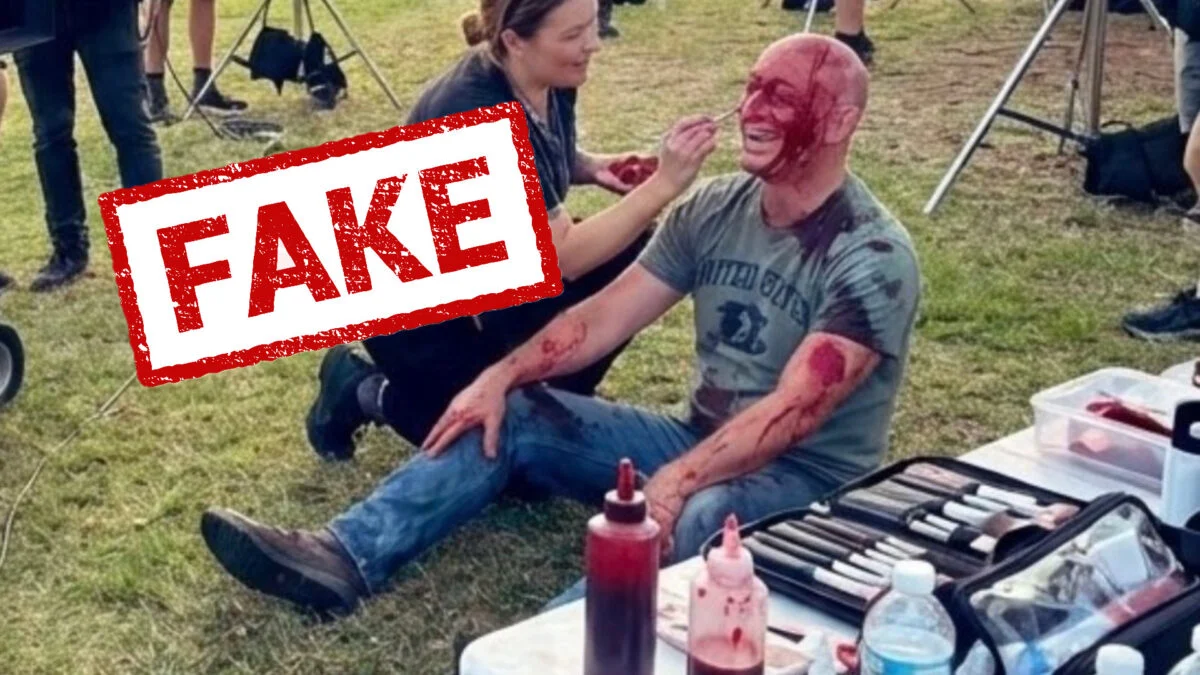
Social media has become a battleground for misinformation, especially following the recent terror attack during a Hanukkah celebration at Bondi Beach, Australia, where 15 lives were tragically lost. In the digital chaos, an AI-generated image emerged, gaining traction among those eager to push baseless claims about the attack.
This unsettling image inaccurately portrays one of the victims apparently applying fake blood before the incident. The reality, however, tells a different story. Unfortunately, many tools meant to help verify image authenticity misleadingly endorse this fake image as real.
Arsen Ostrovsky, an Israeli lawyer recently relocated to Australia, was among those interviewed by Nine News. Ostrovsky, seen bandaged and bloodied, shared striking images from the days following the attack, one of which was manipulated into the viral hoax.
Identifying the Fake Image
How can we confidently say this image is a fabrication? Several red flags reveal the truth to the vigilant eye.
For instance, aberrations in the background, such as merging cars and oddly shaped hands, stand out as telltale signs. Some versions of the image circulating online seem to crop out these details, likely to obscure its artificial nature. Even the text on Ostrovsky’s shirt is jumbled, while the fake blood stains diverge from the marks visible in genuine media appearances.
Unveiling the AI Watermark
Google has been pioneering an invisible watermark technology, known as SynthID, for AI-generated images. Just recently, they introduced a feature allowing the public to check for these watermarks using their Gemini platform.
Tests conducted by Gizmodo confirmed that this misleading image possessed the SynthID watermark. While not definitive proof of authenticity, it suggests that the image originated from a Google tool.
Unreliable Detectors and Misleading Claims
AI image checkers have shown glaring limitations, as many erroneously affirm the legitimacy of the fake image. Personal interactions with the AI assistants Grok, ChatGPT, Claude, and Microsoft’s Copilot led to the same false consensus—that the image was genuine, despite it being artificially created.
Why does Grok assert the image is authentic?
Grok has claimed no evidence exists to support the notion that the image is AI-generated, citing apparent consistency in shadows and textures.
What about ChatGPT’s assessment of the image?
ChatGPT also dismissed the AI claims, interpreting the image as a standard behind-the-scenes shot from a filming session.
Has Claude made any claims regarding this image?
Claude likewise characterized the image as a genuine photo depicting a makeup artist applying special effects.
The Impact of Misinformation
Evidently, the rapid circulation of this harmful image perpetuates speculation that the Bondi Beach attack was staged. Ostrovsky himself acknowledged this disturbing trend, expressing grief over the false narratives being spun around his injuries.
Victims of the attack included innocent individuals like a 10-year-old girl and an 87-year-old Holocaust survivor, with funeral arrangements already being made. Such tragic events should not be overshadowed by sinister conspiracy theories.
Government reactions have followed with calls for stricter gun laws, as all firearms used in the attack were obtained legally. Prime Minister Anthony Albanese raised valid concerns regarding the screening processes for gun license holders.
How have authorities responded to this misinformation?
Officials are actively addressing the spread of misinformation, urging for a more informed discourse around tragic events, rather than conspiracy-driven narratives.
What further steps can be taken to mitigate misinformation on social platforms?
Creating a community ethos that emphasizes critical thinking and fact-checking at the grassroots level could indeed disrupt the cycle of disinformation.
Ultimately, amidst this wave of digital noise, it becomes imperative to prioritize empathy and discernment—standing firm against harmful fabrications. Have you ever encountered misinformation that left you questioning reality? Share your thoughts in the comments below.