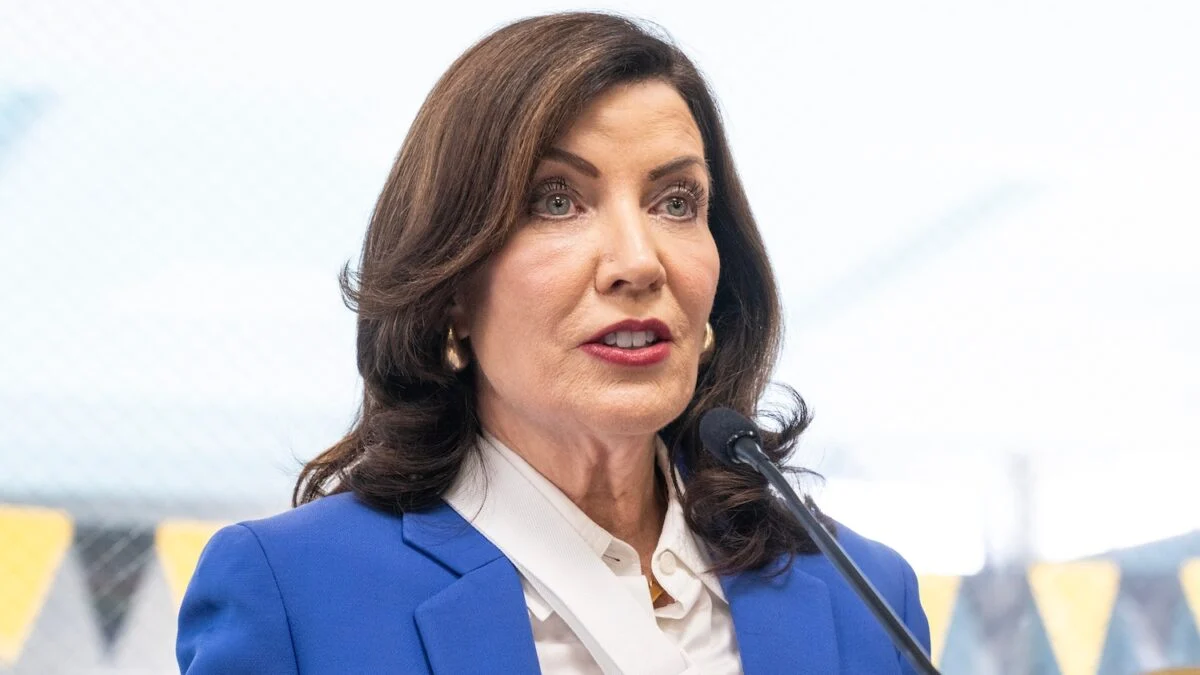
On a seemingly ordinary Friday, New York became the focal point of a legal showdown in the world of artificial intelligence. Governor Kathy Hochul signed the Responsible AI Safety and Education (Raise) Act, a move that not only aims to enhance AI safety standards but also takes a jab at Silicon Valley insiders like Marc Andreessen, who have been influential in shaping tech policy during Trump’s tenure.
Just days prior, Trump issued an executive order intended to prevent states from enacting their own AI regulations. This conflict between state and federal authority sets the stage for a legal battle that could redefine how AI is governed in the U.S.
What Does the Raise Act Entail?
The newly minted state law mandates that AI companies grossing over $500 million annually must implement formal safety procedures. These frameworks are designed to prevent ‘critical harm’ associated with AI applications. Companies are forced to report safety concerns within 72 hours and face hefty fines for non-compliance, making New York’s approach tougher than California’s SB 53, which allows a generous 15-day reporting window.
Federal Pushback: Trump’s Executive Order
On December 11, Trump announced an executive order titled “Ensuring a National Policy Framework for Artificial Intelligence.” This order promotes AI as a priority for federal governance and introduces an “AI Litigation Task Force” at the Department of Justice, aimed at challenging state laws that contradict federal initiatives. However, critics view this as largely ineffective, with some legal experts suggesting that Trump’s interpretation of constitutional law is questionable at best.
How Are Legal Experts Reacting?
In a recent Axios article, legal analysts pointed out the dubious foundations of Trump’s executive order, specifically his peculiar interpretation of the Dormant Commerce Clause. This clause is traditionally invoked to prevent states from enacting unfair trade laws, not to hinder states from addressing regulatory gaps left by the federal government.
What Lies Ahead for New York and AI Regulation?
Regardless of Trump’s executive order’s legal backing, the friction between state and federal regulations is poised to increase. New York’s proactive stance represents a clear commitment to promoting safety in artificial intelligence, and the stakes are high. As these legal battles unfold, both tech companies and policymakers will be watching closely, pondering the broader implications for AI governance across the nation.
Will New York’s AI law impact tech companies nationally?
Yes, New York’s stringent regulations could set a precedent, influencing how other states approach AI governance and potentially prompting tech companies to adapt their practices nationwide.
What penalties do companies face for non-compliance?
Companies that fail to report AI safety issues within the stipulated 72-hour window can expect significant fines, a stricter approach compared to regulations in other states.
How does this situation affect consumers?
Consumers can expect enhanced safety standards in AI applications, as companies will be more accountable for reporting and addressing potential risks.
Is there a chance for legal resolution between state and federal law?
While tensions are high, there is a possibility that courts could find a middle ground or clarify the limits of state versus federal power in regulating AI.
The intertwining paths of state law and federal authority always make for a dramatic narrative. As New York braces for possible legal clashes, only time will reveal how this story will unfold. Are you keeping up with the latest developments in AI and tech policy? Share your thoughts in the comments below!