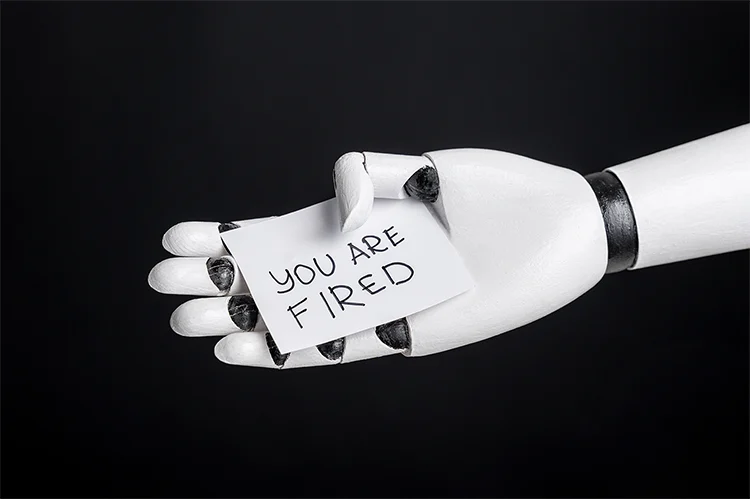
This year, the job market saw a significant shakeup, with companies slashing approximately 1.1 million jobs—the highest number since the COVID-19 pandemic. Many have speculated that these layoffs are tied to advancements in technology, particularly artificial intelligence (AI). However, the data suggests that this assumption may not be as substantial as it seems. Reports from Challenger, Gray & Christmas indicate that only about 55,000 layoffs, or less than 1% of total job losses, can be directly attributed to AI.
The technology sector has certainly been the focal point for many of these layoffs, particularly among major firms. As Amazon prepared to cut jobs this summer, CEO Andy Jassy mentioned that AI might mean “fewer people doing some of the jobs that are being done today.” However, after a reduction of 14,000 positions, he later clarified that the layoffs weren’t predominantly driven by AI concerns.
It’s not entirely inaccurate to say that AI has influenced employment, but the reality is more nuanced. Companies like Salesforce have made headlines by claiming that AI now handles as much as 50% of certain tasks. Yet, the evidence indicates that AI isn’t necessarily causing layoffs; instead, it seems to be stalling new hires. Many companies aren’t just reducing their workforce; they are also refraining from taking on new employees, particularly in entry-level positions. A recent MIT study revealed that 95% of organizations pioneering AI initiatives reported no financial return on their investments.
The layoffs are indeed real, but labeling AI as the primary culprit might just be a convenient distraction for corporations. Many have reported overhiring during prosperous times, and as profit margins shrink, they are now scaling back. Additionally, economic challenges stemming from recent policies have adversely impacted various sectors. The manufacturing industry—with the potential for growth due to expanding data centers—has lost around 60,000 jobs this year. The driving force behind these job losses isn’t AI.
The Challenger report shows that of the estimated 55,000 jobs lost due to AI, twice that number was tied to restructuring, and four times more blamed market and economic conditions. Furthermore, almost six times as many layoffs stemmed from actions taken by the Department of Government Efficiency and its ripple effects. It serves as a poignant reminder that even when AI is mentioned in discussions about job cuts, those decisions often arise from boardroom calculations aimed at boosting stock prices.
What is driving the layoffs in 2025?
The surge in layoffs in 2025 stems mainly from economic restructuring and market conditions. While AI is sometimes cited, it represents a small fraction of job losses.
How many jobs are truly lost to AI?
According to data from Challenger, Gray & Christmas, only about 55,000 jobs have been directly attributed to AI, which is less than 1% of total job cuts for the year.
Are entry-level jobs affected by AI?
Yes, many companies are hesitant to fill entry-level positions, believing that tasks traditionally performed by humans can now be managed by AI technologies.
Did overhiring contribute to job losses?
Many firms overhired during boom periods and are now scaling back as profit margins tighten, contributing significantly to the current wave of layoffs.
What impact has the economy had on job cuts?
The ongoing turbulent economic landscape has exacerbated layoffs across industries, often leading companies to cite restructuring rather than AI as the primary reason for job losses.
In 2025, using AI as a scapegoat for layoffs seems to be a trend. Whether or not AI plays a role, it’s essential to look deeper into the reasons behind job losses. There’s much to explore in how technology reshapes our work lives. What do you think about the role of AI in today’s job market? Feel free to share your thoughts in the comments below!