
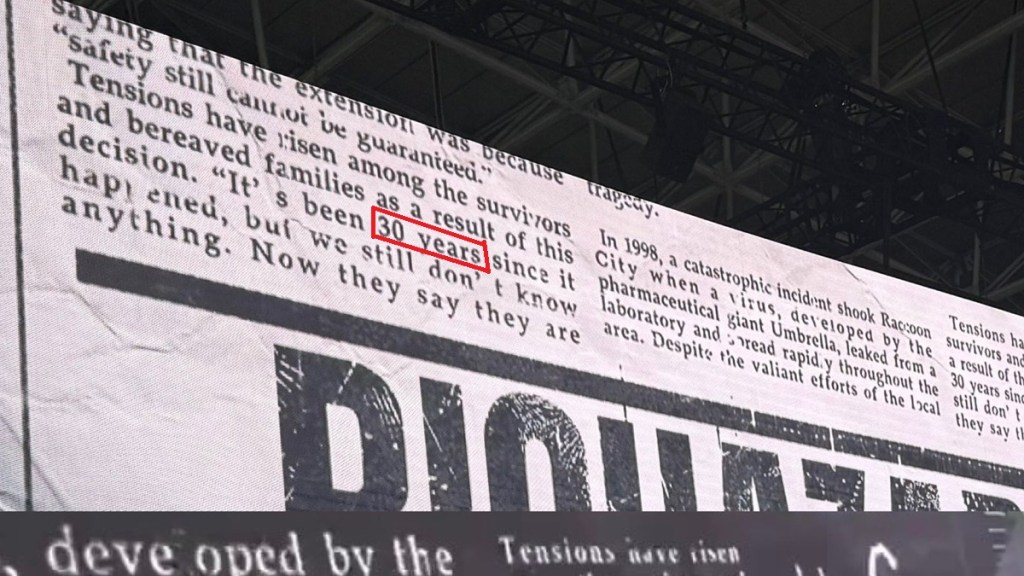
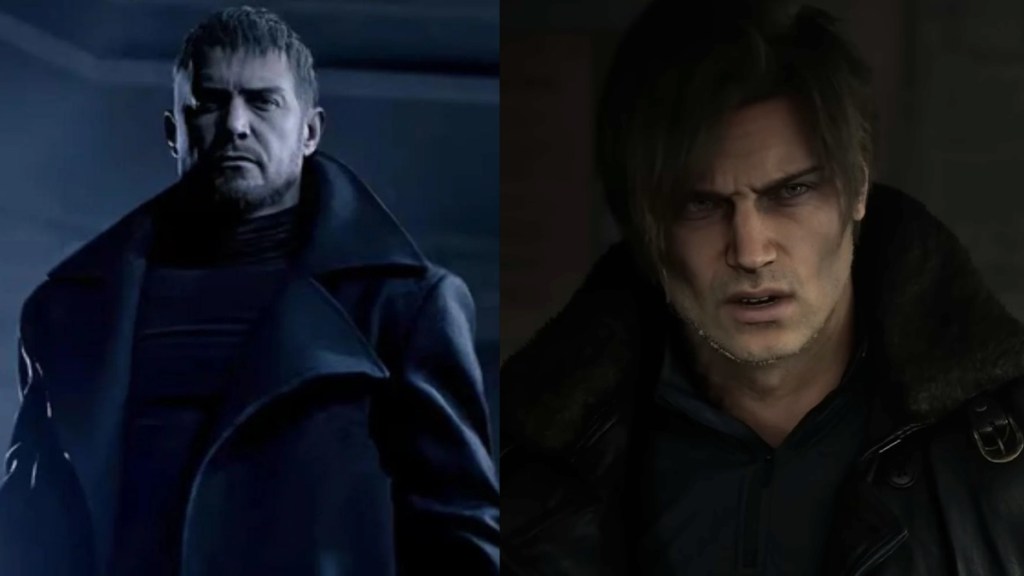
I found a brittle clipping wedged behind a stack of strategy guides; the headline still smelled of old ink. You stare at Leon in the trailer and feel the years written across his face. The tiny date at the bottom of the paper hands you an answer: the story is stamped 2028.
What Year Does RE9 Take Place?
On my desk a yellowed newspaper reads “30 Years Since Raccoon City.”
I’ll be direct: Resident Evil 9 takes place in 2028. Capcom hides the confirmation in plain sight — a paper clipping inside Requiem references “30 years since the Raccoon City catastrophe,” and Raccoon City’s collapse is canonically 1998. The timing also lines up with the franchise’s 30th-anniversary release, which is as deliberate as release calendars at Steam, the PlayStation Store, and Xbox storefronts.
Leon’s face wears history like a faded headline, and the game leans into that — aging characters, weathered uniforms, and a tone that assumes you remember what happened in 1998. Capcom, with press coverage from outlets such as IGN and GameSpot and features on Moyens I/O, matched release messaging to the timeline on purpose.
When does Resident Evil 9 take place?
Short answer: 2028. If you want a citation inside the game, that newspaper clipping is explicit; if you want industry context, Capcom timed the launch for the series’ anniversary and marketed it across platforms including Steam and PlayStation.
How Many Years Have Passed Since the Last Resident Evil Game?
A sticky note above my monitor reads “RE8 — 2021.”
Simple math gives us the tempo: Resident Evil Village takes place in 2021, and Requiem plays out in 2028 — that’s a seven-year gap. In narrative terms, Ethan’s arc begins in 2017 with Resident Evil 7: Biohazard and closes in 2021 with Village; Leon re-enters the picture seven years after those events. The gap is long enough to change faces, loyalties, and the political maps Capcom sketches for its villains.
How many years between RE8 and RE9?
Seven years. That interval explains the older-looking returning characters and clears space for new trauma, alliances, and hardware — both story hardware and the real-world release cycle on PlayStation, Xbox Series X|S, and PC.
Resident Evil Games Full Timeline
I keep a dated list tacked over my desk; the years feel like landmarks on a ruined atlas.
Want the full sequence to compare events, character ages, and where Requiem sits? Here’s the timeline used by fans, journalists, and by Capcom’s own lore team — useful if you read story beats in analysis on IGN, GameSpot, or community breakdowns on forums.
- Resident Evil 0: July 1998
- Resident Evil: July 1998
- Resident Evil 2: September/October 1998
- Resident Evil 3: September/October 1998
- Resident Evil Outbreak: 1998
- Resident Evil Code Veronica: December 1998
- Resident Evil Umbrella Chronicles: 2002-2003
- Resident Evil 4: 2004
- Resident Evil Revelations: 2005
- Resident Evil 5 Lost in Nightmares DLC: 2006
- Resident Evil 5: 2009
- Resident Evil Revelations 2: 2011
- Resident Evil 6: 2013
- Resident Evil 7 Biohazard: 2017
- Resident Evil Village: 2021
- Resident Evil Requiem: 2028
- Resident Evil Village: Shadows of Rose DLC: 2037
For players buying launch-day editions: RE9 appeared at $69.99 (€65) on major storefronts such as Steam, PlayStation Store, and Xbox marketplaces. If you follow coverage from outlets like IGN or GameSpot, those timelines are where journalists and lore-hunters start their thread-counting.
I’ve walked through the clipping, the platforms, and the dates with you — now the only thing left is your verdict: will Leon’s aged face change how you read the series’ history?