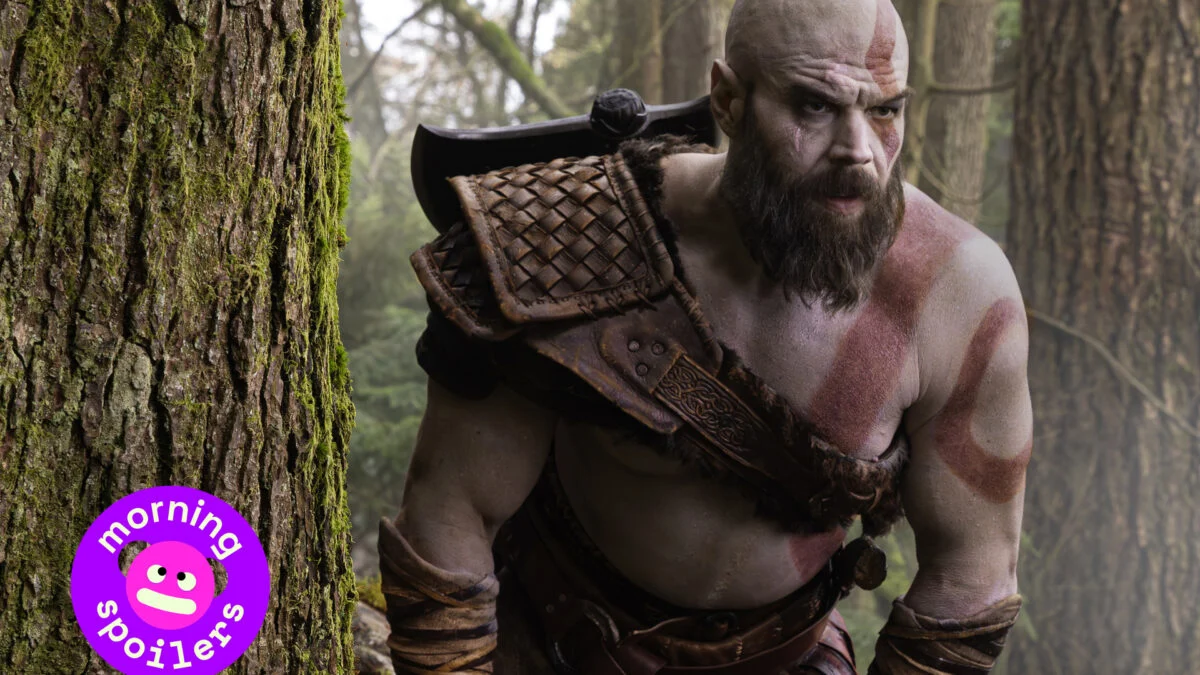
I scrolled past the Amazon first-look and felt the room tilt. You could taste the backlash before the comments finished loading. I want to walk you through what that reaction means—for Kratos, for creators, and for how trauma gets rewritten on TV.

God of War: a public reaction in three acts
On my timeline, the first image hit and then the critique arrived faster than edits. Fans reacted to Ryan Hurst’s Kratos costume the way people react to a familiar face in a new frame—you notice the differences first, then decide if they matter.
Ryan Hurst, who plays Kratos in Amazon’s adaptation, pushed back on the loudest takes with a measured post: “don’t believe everything you see on the internet,” a reminder that a single image is a signal, not the full story. That came via his Instagram and was reported by ComicBook; Santa Monica Studio and PlayStation still own the character’s DNA, while Amazon Prime is assembling the stage.
Why are fans upset about the God of War first look?
The immediate anger is a mix of ownership and expectation. Gamers and players feel protective—Kratos is PlayStation’s scarred, gruff landmark—and a televised version invites change. The reveal was a cold slap: visceral, brief, and emotionally noisy. Fans fear tone shifts that could strip away what made the character resonate.
Will the God of War TV series change Kratos’s design?
Designs often iteratively evolve between asset, costume test, and final shoot. Studio-provided concept art or single-frame reveals rarely represent the finished product; costumes are adjusted on set, VFX refines proportions, and directors shape the performance. If you’re tracking authenticity, look for statements from Santa Monica Studio, the showrunner, and the wardrobe team—not the inevitable meme threads.
Carrie: a theatre of modern cruelty
At previews and on set reports, you still hear the weight of the original Sissy Spacek moment—but the new series purposely moves the bullying forward into now. Mike Flanagan took elements from Stephen King’s book and threaded them through contemporary headline-making behavior.
Matthew Lillard, who filmed a six-month run in Vancouver and plays the principal, explains that the show pulls in real-world harassment tactics across social media, school culture, and household denial. Flanagan’s Carrie is a fractured mirror that returns the viewer’s face altered by what they’ve seen happen online.
How will Mike Flanagan’s Carrie differ from the 1976 film?
Flanagan isn’t recreating Brian De Palma’s iconic sequence; he’s mining the parts of King’s novel that the 1976 film left out. Expect three narrative vantage points—parents, faculty (where Lillard appears), and students—which lets the series contextualize modern abuse, cancel culture, and viral cruelty. Casting choices like Summer Howell as Carrie and Samantha Sloyan as the mother suggest a focus on character and slow-burn escalation rather than pure shock.
Short takes you should know
Drew Goddard says he’s still in the “writing cave” on The Matrix 5. I trust the cave metaphor for intense development work, but Goddard hasn’t announced a schedule yet.
Delroy Lindo told The Hollywood Reporter he’s spoken with Ryan Coogler about possibly appearing in Black Panther 3, and that any role would have to be worth his time.
Karl Urban still hopes Judge Dredd will return; he told The Playlist he’d play the part again “in a heartbeat” if asked.
David Robert Mitchell’s Flowervale Street has retitled to The End of Oak Street, starring Ewan McGregor and Anne Hathaway—an ’80s-set IMAX thriller budgeted at $85M (€79M) that somehow includes dinosaurs and a Twilight Zone vibe, per Warner Bros. CEO Michael De Luca.
The trailer for The Deep Dark shows French miners waking something old and angry; and John Michael Higgins pops up in a new episode of Ghosts.
If you want a fast reading strategy: watch for official statements from platform holders (Amazon, PlayStation), the creators on Instagram or Twitter/X, and reputable outlets like ComicBook and Screen Rant for context. That filters the noise and highlights which creative choices are performative and which actually matter.
Which of these reactions tells us more about fandom insecurity than creative failure?