
I opened my feed and the same clip kept looping: Leon, hatchet in hand, turning chaos into choreography. You laughed, you gasped, and you shared it — the room felt smaller and louder all at once. I knew then that Resident Evil Requiem had done more than land; it had landed with swagger.
I reviewed Requiem and scored it highly after playing for weeks. I’ve watched streams, scrolled forums, and tracked reactions — the consensus from players matches what critics wrote: this is a hit. If you want a short, intense experience that sticks with you, this game is delivering.
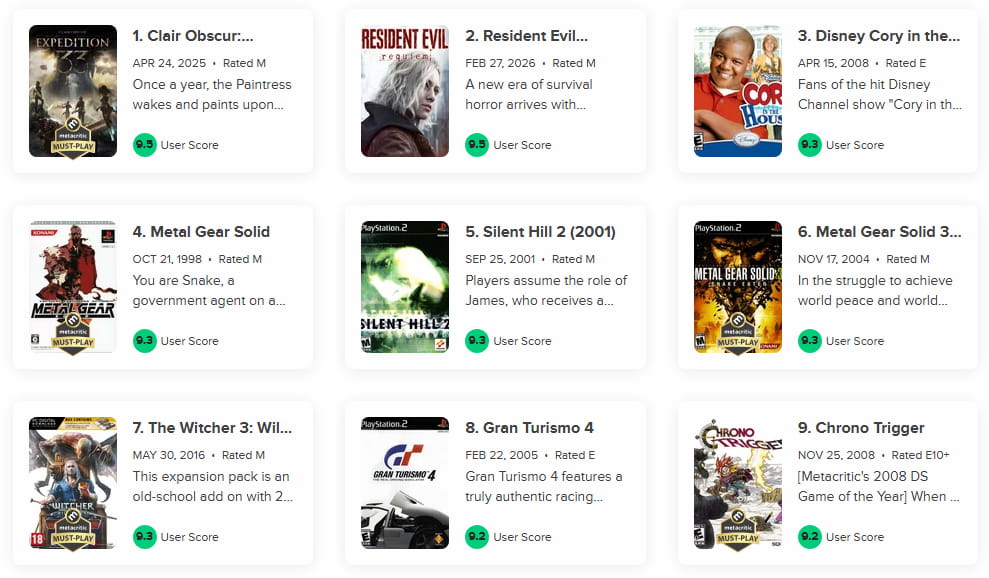
At my desk this weekend, the Metacritic numbers stopped me cold
Player reviews vaulted Requiem into the upper echelon of user-rated games on Metacritic, sitting just shy of last year’s breakout, Clair Obscur: Expedition 33. That kind of crowd endorsement is rare; when both press and players line up behind a title, the signal is strong.
Capcom didn’t just ship a sequel; they provided a craft that resonates across streams, reviews, and communities. I’ve seen fans praise the pacing, the sound design, and the way resources make every choice matter — points that echo across outlets like IGN, GameSpot, and of course Metacritic.
How long is Resident Evil Requiem?
Most first runs clock between 9–13 hours. That brevity is part of the design: it tightens tension and makes each encounter count. If you replay for both protagonists or chase collectibles, you’ll add more hours.
On Steam I watched the live counters climb and hang high
The peak on Steam topped 344,000 concurrent players this weekend and hovered near 200,000 on a Monday morning — numbers anyone who follows Steamcharts will tell you are meaningful for a single-player-focused title. That kind of sustained attention is rare and valuable.
High concurrent play feeds algorithmic visibility: more streams on Twitch, more clips on YouTube, more traction on Reddit threads and Twitter/X. The social spikes you see now will keep discovery humming for weeks.
Is Resident Evil Requiem worth playing?
If you prize atmospheric horror and memorable character beats, yes. Grace’s segments feed dread and careful play; Leon’s chapters offer cathartic action and comedy beats that land repeatedly. Together they form a two-act play that keeps you invested from start to finish.
In my sessions, the characters created two very different moods
Grace’s arc is all precision and dread: slow footsteps, careful resource management, and moments that make you hold the controller like a fragile thing. Leon’s chapters are the opposite — loud, brash, and oddly comforting. Watching those tonal shifts play out felt like holding a velvet-gloved fist: pretty on the surface and dangerous when it lands.
Social media went nuts for the contrast. Fans clip Leon one-liners, meme his hatchet mastery, and cheer his “daddy energy.” On the other side, streams of Grace’s stealthy escapes make for heart-in-throat highlights. Those reactions match the scores — community enthusiasm translates into sustained player counts and positive word of mouth.
Why is Leon so popular in Requiem?
Leon combines franchise nostalgia, well-timed humor, and exaggerated competence. He’s both skilled and performative: moments that read as pure spectacle play perfectly for clips, which fuels meme culture across Twitter/X and TikTok. That exposure feeds back into interest from players who want both scares and spectacle.
Capcom’s design choices — dual protagonists, tight runtime, and moments designed for sharing — are working. Critics praised it, players confirmed it, and platforms from Steam to Metacritic amplified the conversation. I’m glad the series is thriving; I want more entries crafted this sharply and with this much personality.
So tell me: after the memes and the scores, will you play for Grace’s scares, Leon’s swagger, or both?