
I remember standing at the edge of a glass room, watching a child’s small body pressed against a bright, indifferent pane. You felt that pinch too—the single absence that rewired the protagonist’s life into a fight. I’ve followed this story the way a detective follows a single, stubborn thread.
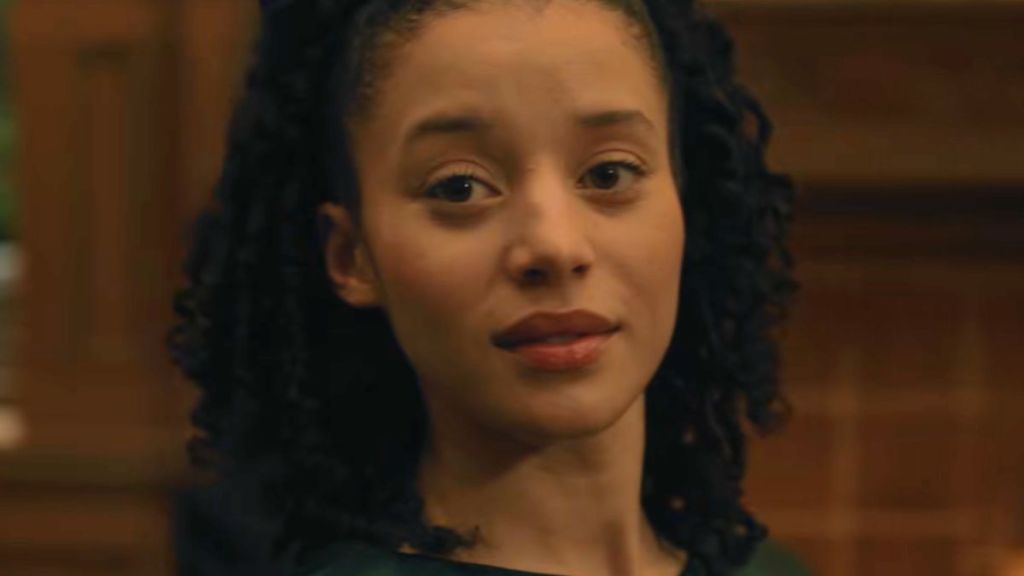
At a fan forum thread that never cools, Does The Testaments feature Hannah Bankole?
I’ll be blunt: yes. The Testaments puts Hannah Bankole at the centre of its story, but not under the name you remember. Raised by foster parents inside Gilead, she is called Agnes on-screen—her original name erased by circumstance and the new household that raised her.
You should expect a slow burn. Agnes starts the story believing the system that took her; she has no memory of the life before Commanders and ceremonies. As the series moves forward, small fractures appear: questions, confusion, a hunger that echoes June’s refusal to give up. That hunger runs through the plot like a thread through a sweater.
The adaptation leans on the work of Margaret Atwood’s mythology and the production weight of MGM Television, with distribution conversations touching platforms such as Hulu and Disney+ depending on region. If you follow industry chatter on Deadline or Variety, the casting choices were positioned to push the show toward a darker, character-led drama rather than a pure procedural rescue story.
On a paperback spine at a bookstore, Who is Hannah in The Handmaid’s Tale?
Hannah is June Osborne and Luke Bankole’s biological daughter—born before Gilead collapsed normal life. She was taken at age five and placed with a high-ranking Commander’s household. When June finally reached her, Hannah did not recognize her mother; the separation had already changed who she believed herself to be.
That absence is the wound that drives June. You can trace June’s decisions through that single loss. Margaret Atwood’s original book and the television adaptation use Hannah as both a symbol and a living person—her fate keeps stakes personal and political at once.
In The Testaments, Hannah’s origins remain the emotional backbone. Her rediscovery of identity functions as a counterpoint to June’s relentless search and to the larger collapse of Gilead’s façade; Agnes’s memories begin to surface like a lighthouse in fog.
Does The Testaments feature Hannah?
Short answer: yes—Hannah appears, but mostly under the name Agnes. She is central to the sequel’s plot and to the emotional throughline that continues from The Handmaid’s Tale.
Who plays Hannah in The Testaments?
The role of Hannah/Agnes is played by Chase Infiniti, who replaces Jordana Blake from earlier seasons. Infiniti’s résumé includes the television series Presumed Innocent and a part in a recent Leonardo DiCaprio-backed film titled One Battle After Another, positioning her as an actor capable of carrying emotionally heavy material. Industry outlets like The Hollywood Reporter and Variety highlighted the casting as a deliberate shift toward a performance-driven arc for the character.
Who is Hannah in The Handmaid’s Tale?
She is the child stolen from a pre-Gilead family, the single, small person who makes June defy fear. Her absence explains June’s obsession, and her reappearance—albeit as Agnes—creates a new axis for the sequel’s moral questions.
At the watercooler the morning after a premiere, What to watch for in Hannah’s arc
If you’re measuring stakes, watch three things: the tension between memory and indoctrination, the performance choices by Chase Infiniti versus the younger portrayals earlier in the series, and how the writers handle reunion scenes without turning them into easy catharsis. If the show leans into complexity, Hannah/Agnes will be used to test Gilead’s remaining power rather than simply to heal June.
I’ve followed set reports and interviews; the creative team signals they want a layered portrait, not a quick rescue. Expect slow reveals, character-driven conflict, and scenes that force you to pick where your sympathy sits—on the woman who refuses to stop searching, or on the young person shaped by a system meant to erase her.
Which version of Hannah will you defend once the credits roll and the conversation starts again?