
I watched the election ticker blink red across my municipal dashboard. You feel your zoning plan unravel when a coalition demands a new tax break. The room tightened—this was the first time my city had pushed back.
I’ve been building Cities: Skylines maps since launch, and I’ll tell you straight: the game changed when the mod scene stopped treating the simulator like a sandbox and started treating it like a society. The original Cities: Skylines, still vibrant after the sequel’s ups and downs, just picked up a fan-made mod called Politics & Elections that makes citizens vote, parties form, and policy actually matter beyond checkbox sliders.
The mod arrives via the Steam Workshop, crafted by creators in the community (you can find it on the Steam page). It leans on Paradox and Colossal Order’s engine—so the base game’s fidelity remains intact while politics grows teeth.
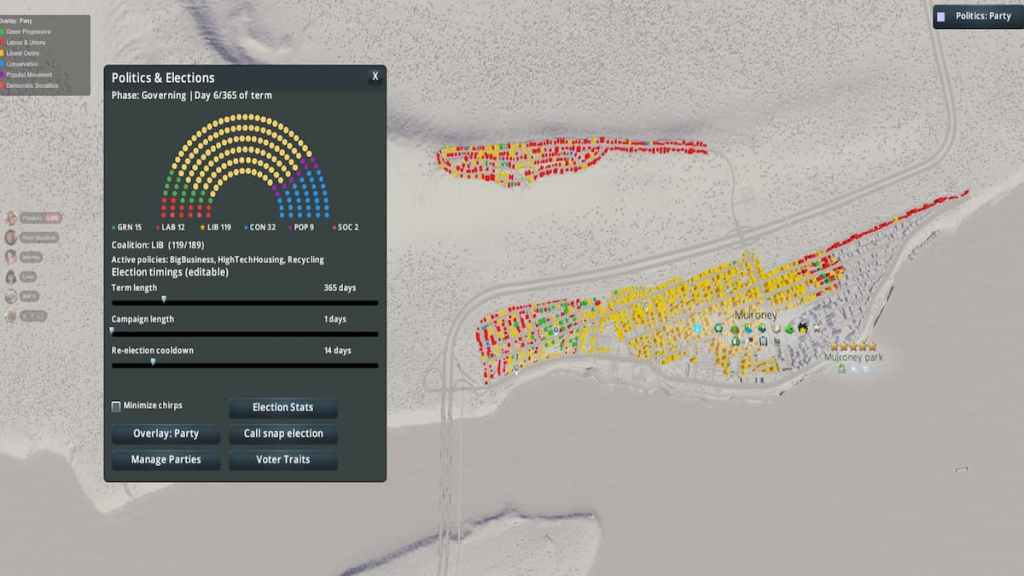
City councils swing services when budgets tighten.
Here’s what the mod does in practice: citizens form parties, campaigns run, and seats get won or lost. You can’t simply treat policy as a toggle anymore—you’ll negotiate, appease, or resist coalitions. The mod tracks grievances like high taxes, crime, unemployment, and pollution, then lets voter preferences shift the political landscape.
I’ve tested tax hikes and watched a fiscally conservative bloc grow; I pushed industry without cleanup and green parties rose overnight. The city is a living organism—each law, each landfill, each budget line changes how it breathes.
How do I add the Politics & Elections mod to Cities: Skylines?
Go to the Steam Workshop entry for the mod, click Subscribe, and enable it from the game’s Content Manager. You’ll also want to load any dependencies the author lists—most pages show them under Required Items. I recommend loading a sandbox save while you learn the mechanics; that’s how you avoid a surprise coalition taking your metropolis hostage.
Local voters react faster than you might expect.
In many towns, a single protest or news story can swing opinion by the next council meeting. Within the mod, citizen satisfaction is dynamic: deficits push people toward spending-conscious parties, pollution boosts green platforms, and poor health makes healthcare a campaign wedge.
You’ll build parties with names, platforms, and leadership. Parties can merge into coalitions and force formal policy changes you can’t just bulldoze away. The ballot box becomes a pressure valve—you’ll feel that in the budget and in the chanting outside City Hall.
Can you roleplay political parties in Cities: Skylines?
Absolutely. Parties are fully customizable: you can recreate real-world systems, mock up rivals, or run a satire of contemporary politics. If you’ve modded with tools like the Asset Editor or used the Workshop for custom buildings, this will feel familiar—the interface is intuitive for mod veterans and welcoming for newcomers.
Games that try political simulation tend to pick one tone and stick with it.
Tropico, for instance, frames you as a tropical ruler; Urban Empire attempted parliamentary politics but faltered in follow-through. What Politics & Elections does well is fold politics into routine city management: it’s not a separate mini-game but a recurring pressure that shapes choices.
That has implications: modders can now prototype features developers rarely ship. If a studio wants a more textured civic system, they’ll find a working model on Steam Workshop and a community ready to test it.
Does Cities: Skylines have elections without mods?
Not in any meaningful way. Base Cities: Skylines lets citizens react to policies, but it doesn’t make them choose representatives who then force policy changes. This mod fills that gap, giving you real political friction inside a familiar simulation.
Tools and platforms in play here are the Steam Workshop for distribution, Colossal Order’s engine for stability, and community creators like JChad for modular design. If you follow Paradox’s publisher updates or keep an eye on mod charts, you’ll see the feature set evolve quickly.
You can take this as a sandbox experiment or a testbed for design ideas. I prefer to treat it like a civic stress test: run the numbers, see which neighborhoods revolt, and try to broker a coalition that keeps the hospitals open and the factories humming.
If you want a city where policy choices bite back, download the mod and let the citizens vote—will you play politician, mediator, or opportunist?