
I was three rows deep at NVIDIA’s GDC demo when the feed hiccuped and everyone in the room froze with it. You could feel the frustration — people who’ve trusted the cloud suddenly reminded how fragile streaming still feels. That single pause is exactly why NVIDIA’s GeForce NOW updates matter right now.
I’ve followed GeForce NOW from beta to paid tiers, and I want to walk you through what changed, how it will land on your headset or laptop, and why it matters for the games already in your library.
I scrolled through my mixed library and lost track — NVIDIA GeForce NOW Introduces Better Game Discovery and Account Linking
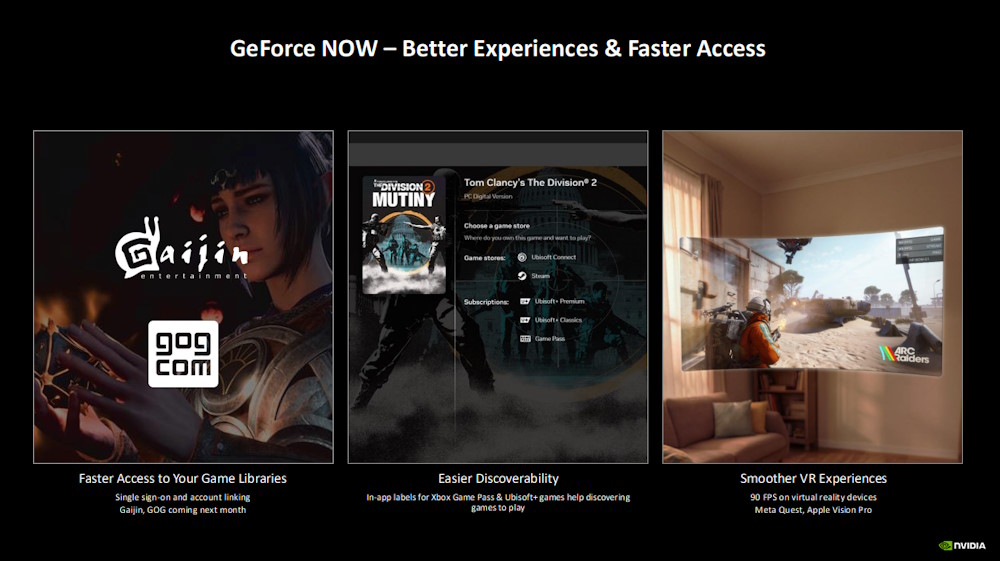
You and I both know the mess: a game you own sits on three stores and two subscriptions, and you still aren’t sure where you can play it. NVIDIA’s answer is practical: in-app labels that mark games playable through linked services such as Xbox Game Pass and Ubisoft+.
When you link an account, those labels appear on the game art so you can stop guessing. It’s a small UI change with a big behavioral nudge — less fumbling, faster play. The labels feel like a librarian tagging books so you can grab the one that matters.
Account linking expands beyond current partners. Gaijin single sign-on came first; next up is GOG library syncing. Once GOG support arrives you’ll see purchases mirror into GeForce NOW instead of juggling installers and multiple launchers.
How do I link my GOG account to GeForce NOW?
Linking will arrive as an option inside the GeForce NOW settings. You’ll sign into GOG through NVIDIA’s flow and grant library read access; titles you own that are supported for cloud play will be flagged. Keep your GOG credentials ready and expect a quick confirmation screen after authorization.
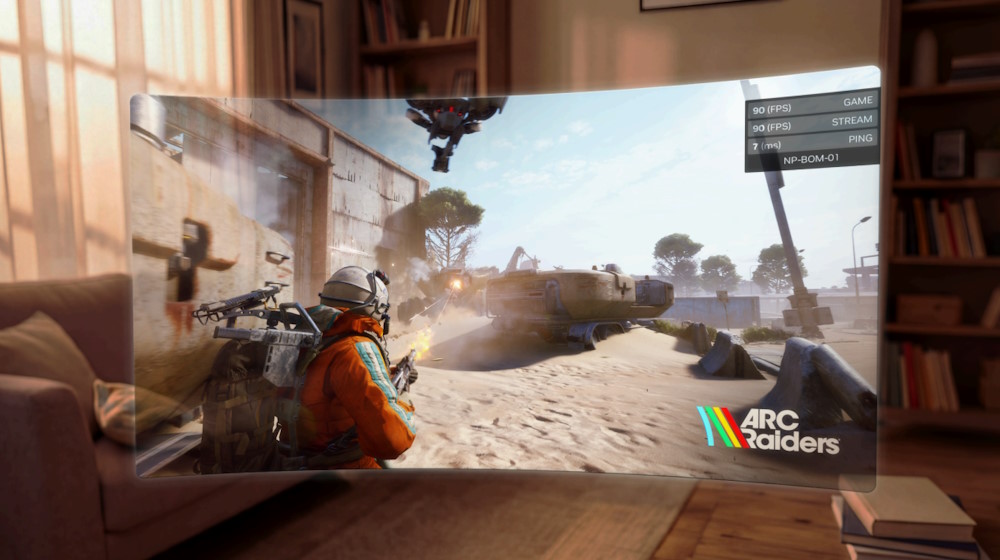
At GDC I tried a headset demo that suddenly felt smooth — Virtual Reality Streaming Upgraded to 90 FPS
NVIDIA raised the VR streaming ceiling: supported headsets can stream at up to 90 frames per second for Ultimate members starting March 19. That’s a jump from the previous 60 FPS cap and it’s targeted at reducing judder and input lag in fast-paced VR scenes.
The technical note matters: Apple Vision Pro and Meta Quest headsets are explicitly supported. If you’re using one of those devices and you’re an Ultimate subscriber, expect a more responsive session when the backend and your local network cooperate.
This change is more than a number — it’s like widening a highway so more cars can move without bottlenecks; the payoff is smoother motion and fewer nausea-inducing stutters for players sensitive to frame drops.
Will GeForce NOW’s VR streaming run at 90 FPS on Apple Vision Pro and Meta Quest?
Yes: NVIDIA lists Apple Vision Pro and Meta Quest among supported devices. The higher frame rate is gated to Ultimate members and depends on the specific game’s support and the streaming node’s load. Your experience will improve most when the game is optimized for that framerate and your connection is stable.
I watched a trailer loop at Riot speed — New Games and Xbox Titles Join the GeForce NOW Library
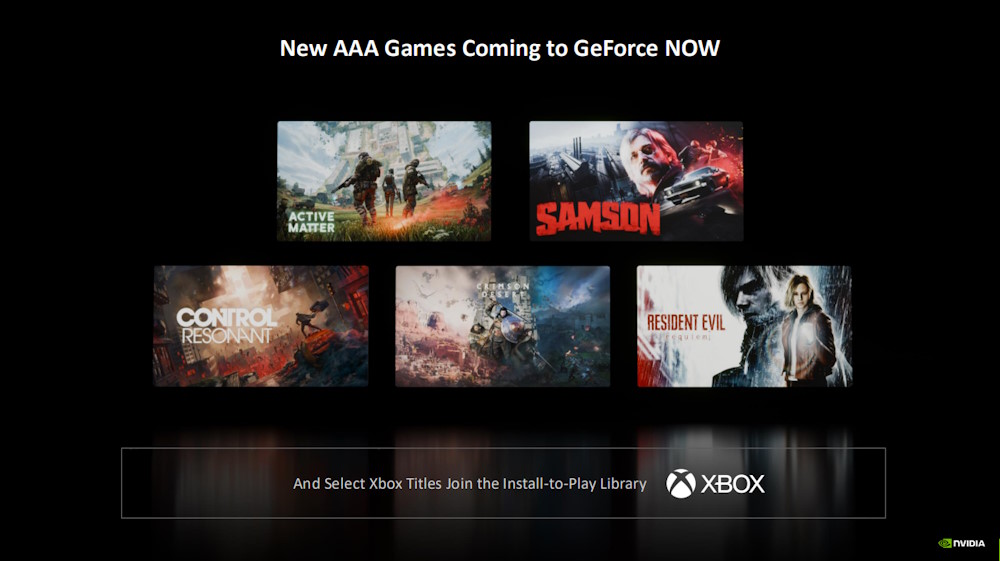
NVIDIA confirmed several titles launching directly in the cloud, including Remedy’s CONTROL Resonant and Samson: A Tyndalston Story. Those are joined by select Xbox Install-to-Play entries like Brutal Legend and Contrast.
Install-to-Play lets you download and install owned titles on a cloud instance while streaming stays active for other games — handy if a title needs local save access or mods. Xbox Game Pass integrations and expanded library curation mean you’re more likely to find the game you want right away when you open GeForce NOW.
Which new games are coming to GeForce NOW?
Highlights include CONTROL Resonant, Samson: A Tyndalston Story, Brutal Legend, and Contrast. NVIDIA positioned these as part of a steadily growing catalog that mixes AAA launches with curated Install-to-Play options tied to Xbox and partner storefronts.
A colleague demoed a mod that ran smoother after a few clicks — Other Features Announced by NVIDIA at GDC 2026
NVIDIA used GDC to pitch tools that affect builders and creators: DLSS 4.5 with Dynamic Multi-Frame Generation, RTX Remix improvements, and faster AI video workflows built for RTX GPUs.
DLSS 4.5 promises higher frame rates with better temporal stability and less ghosting; NVIDIA said rollout starts March 31. The Dynamic Multi-Frame Generation approach aims to push frame pacing closer to a monitor’s refresh and tighten perceived input response.
RTX Remix gained advanced particle VFX with randomized behavior and richer environmental interactions — the kind of update modders and studios can use to modernize older titles. NVIDIA also showed an RTX-accelerated ComfyUI variant for AI video generation that trims VRAM use and shortens render times, supporting new FP4 models for creators using GeForce RTX hardware.
These tools are pitched at devs and creators who use Unity, Unreal Engine, and modding communities. Expect to see new mods and community projects that show off ray tracing, AI frame generation, and asset remasters in the months after GDC.
There’s a clear play here: smoother playback, simpler access to your purchases, and developer tools that push framerate and visuals forward. But will these changes flip the balance toward cloud-first gaming, or will most players stick to local PCs and consoles?