I froze the first time my eye snagged a cramped wine label in Logue Town and realized it was a family name from the manga. The room went quiet—everything that had felt incidental suddenly read like intention. If you know where to look, Netflix’s One Piece Season 2 is full of tiny detonations that change how the story lands.
Spoilers Warning:
This article contains spoilers about One Piece Season 2. Read if you want every little secret peeled back.
On set, a wine label made me stop paying attention to the dialogue. Manymayer and Figarland family mentioned
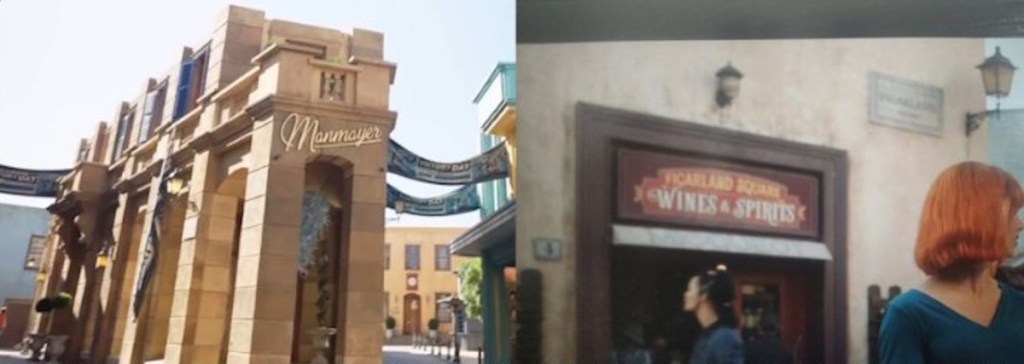
The Celestial Dragon houses show up as signage and real estate: a large Manmayer building, a Figarland wine shop. I mention this because those names carry weight in Eiichiro Oda’s canon—Shanks traces to Figarland, and manga readers know future characters like Gunko and Shamrock are tied to those houses. That single prop flips Logue Town from background décor into a political map.
A quiet line in an execution scene made history audible. Roger calls Garp “the Hero of God Valley”
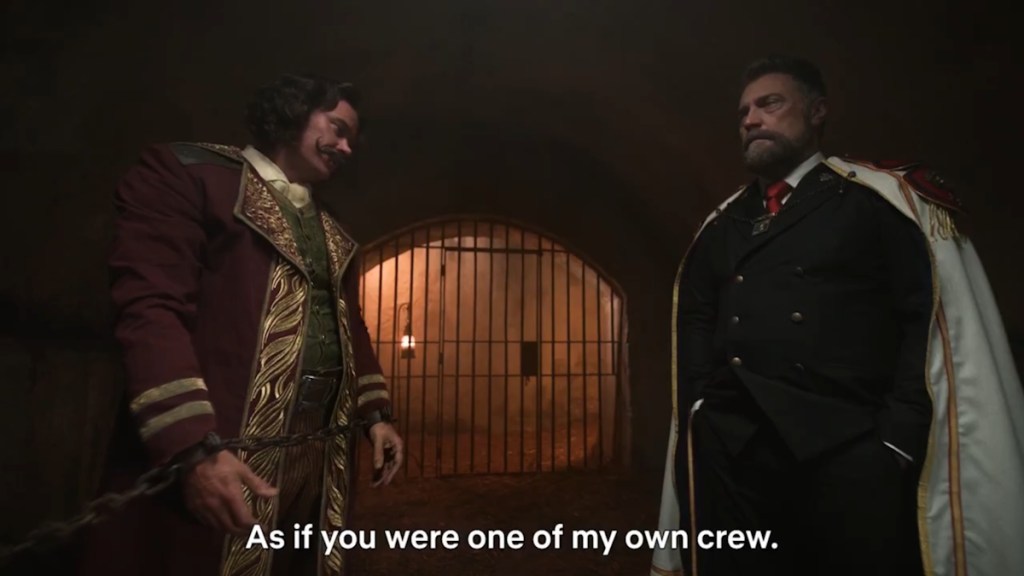
Watching Roger and Garp, I found myself rewinding the moment Roger names him. That phrase is a compact history lesson: the God Valley incident, the Rocks pirates, and the World Government’s cover-up all sit behind it. On-screen, it’s a throwaway line; off-screen, it signals that the show’s writers are conversant with recent Shonen Jump revelations and willing to fold them into the script.
I paused the frame when a silhouette moved behind Dragon. Sabo’s secret cameo
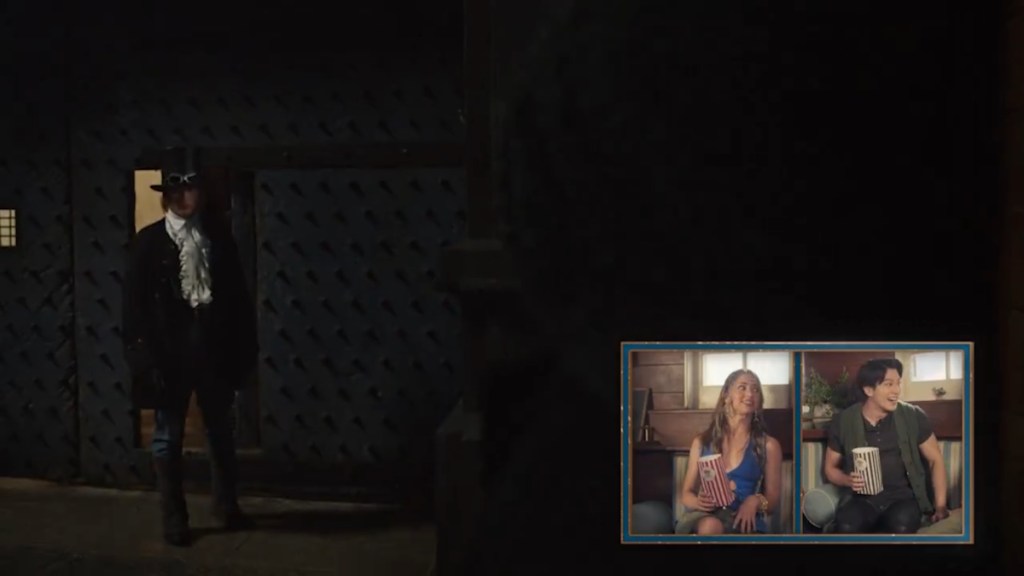
Sabo appears for a sliver of time while Dragon watches Luffy—no fanfare, just presence. That cameo works on two levels: it rewards manga readers and plants a seed about the Revolutionary Army’s proximity. For fans tracking Reddit threads and X sleuths, it’s the sort of blink-and-you-miss-it moment that fuels community chatter.
A torn poster on a wall stopped my scrolling. Pedro’s bounty poster
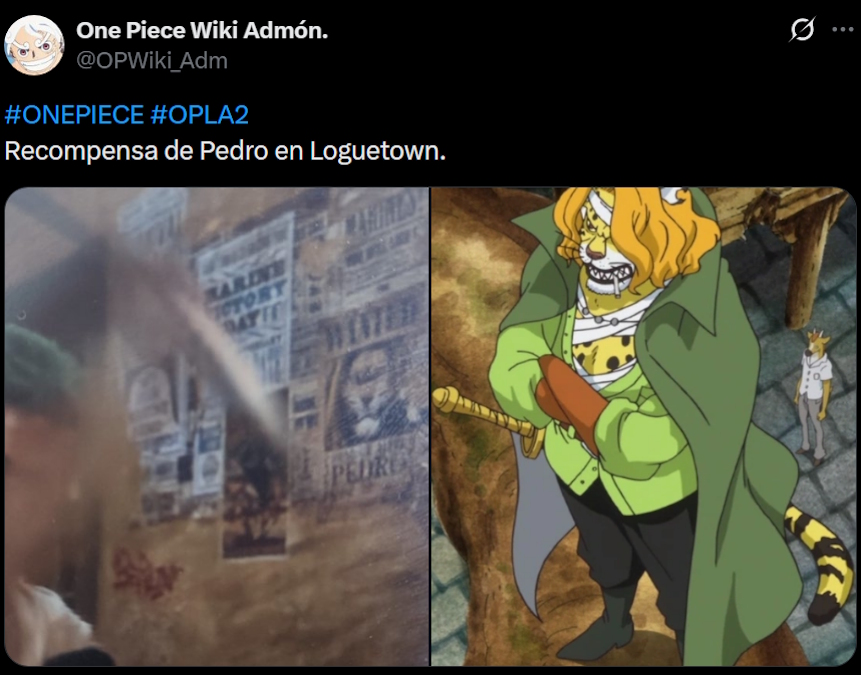
Pedro’s poster is a small, emotional nod to fans of Zou and Whole Cake Island. That prop is shorthand for sacrifice and memory: the Mink’s name on a wall reminds viewers that the production cares about honoring character arcs beyond the immediate episodes.
A slurred name at dawn made me smile. Luffy mentions Dadan in his sleep
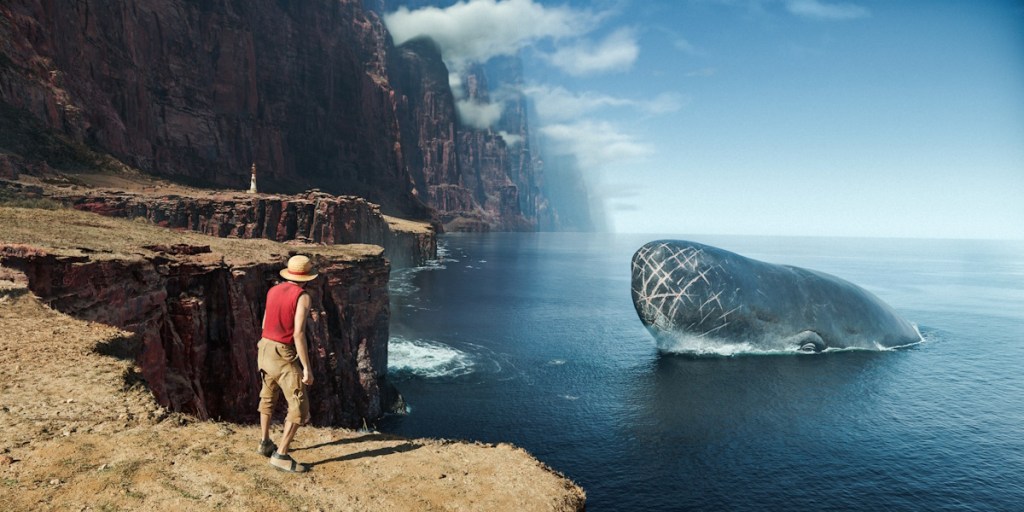
When Luffy mumbles “Five more minutes, Dadan,” it’s compact character work: a boyhood tether that explains why he behaves the way he does. That line is also a promise to fans—Sanji’s and Luffy’s backstories are being threaded in slowly, like careful stitching in a costume.
A sudden burst of movement pulled every eye to the screen. Luffy recreates the iconic Nika dance in live-action
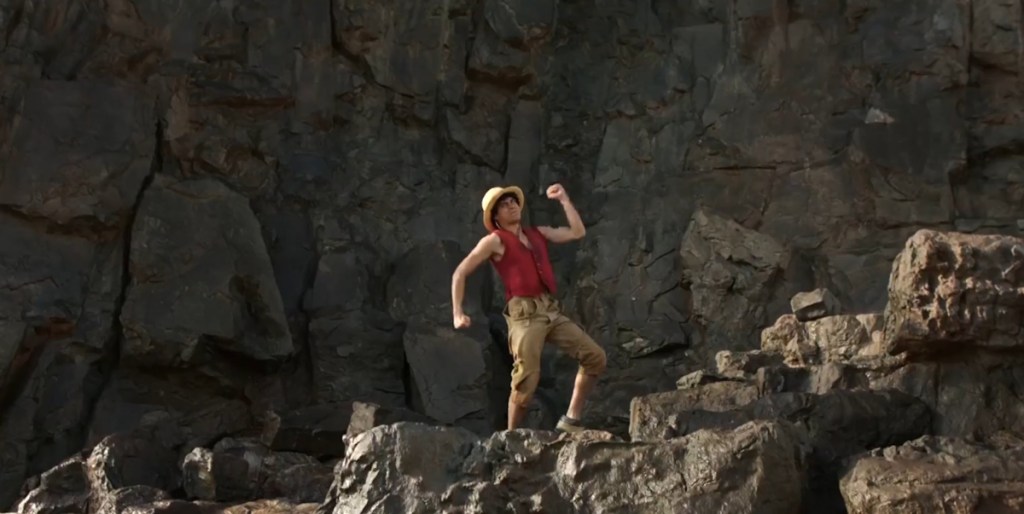
When Luffy sings Bink’s Sake and starts the dance, you feel a narrative switch—playfulness that carries mythic weight. That dance is now a symbol; the live-action team used it as an emotional hook to tie Laboon and Luffy to a larger mythos.
A name carved into a storybook made me rewind the credits. Brook’s early cameo
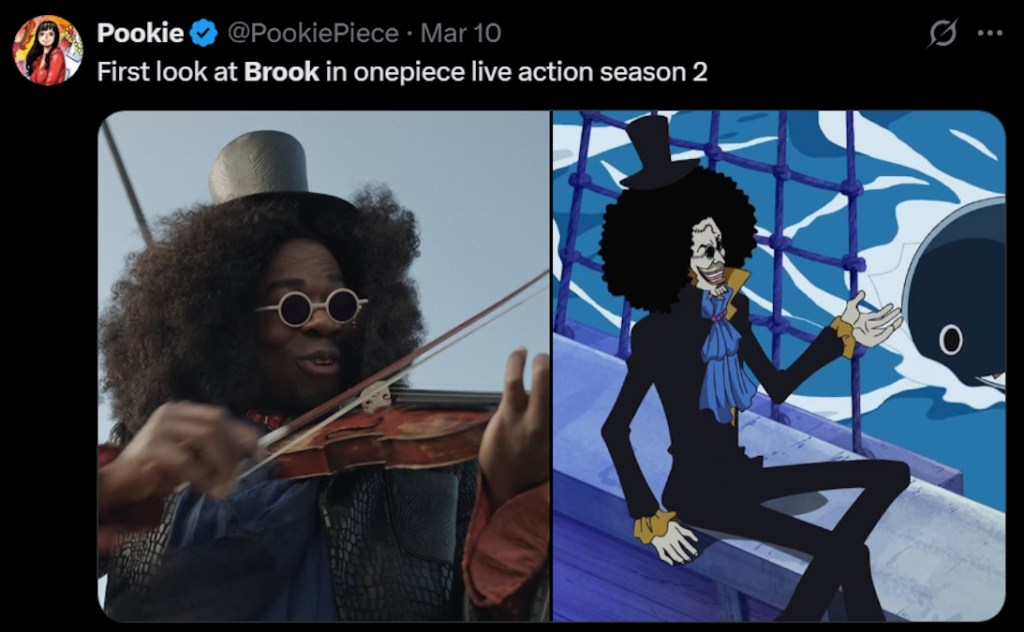
The show hints at Brook’s story through Laboon’s scenes, even before Thriller Bark. That’s a clever structural choice: it creates a breadcrumb trail to future seasons, delivering gratification to readers of Shonen Jump while keeping newcomers intrigued.
A joke at lunch hid a canonical detail. Usopp teasing how the anime version of Crocus lives
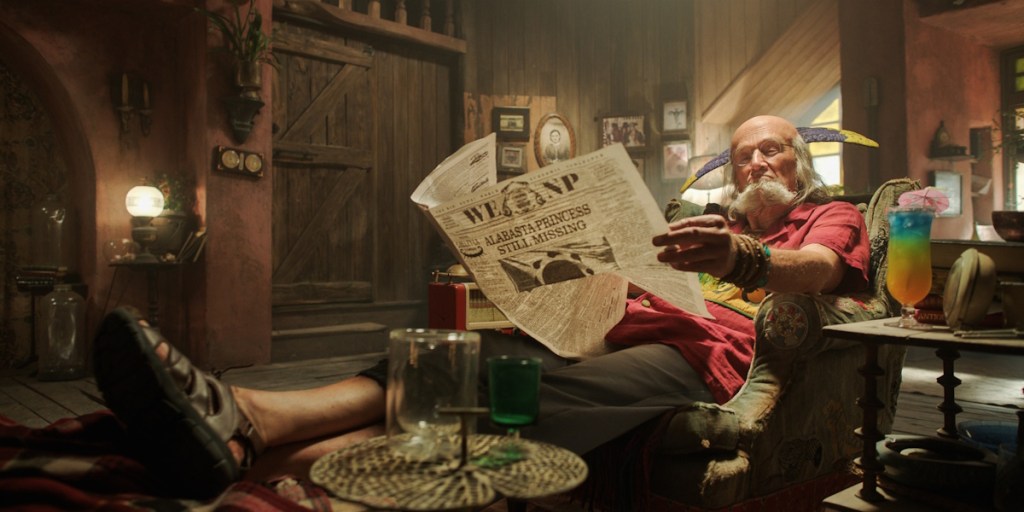
Usopp’s aside about Crocus living inside Laboon is more than a joke; it echoes the manga gag where Crocus actually takes up residence in the whale. The live-action team could have skipped that beat, but keeping it shows faithfulness to source material and respect for the comedic rhythms that define One Piece.
Three props in three scenes felt like an inside joke. Multiple Doskoi Panda references
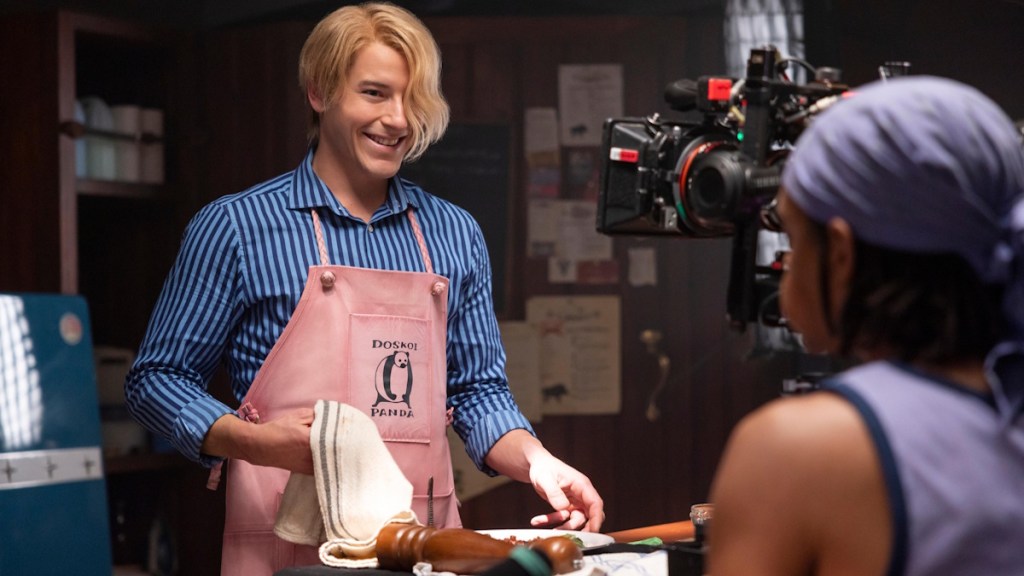
Pandaman and Doskoi Panda appear as a teddy bear, an apron, and a newspaper logo. These recurring motifs are Oda’s running gag made physical—Easter eggs that reward repeat viewings and meme-ready screenshots for fans on platforms like X and Reddit.
A pair of crude carvings stopped me longer than they should have. Statues of Nika and Prince Loki
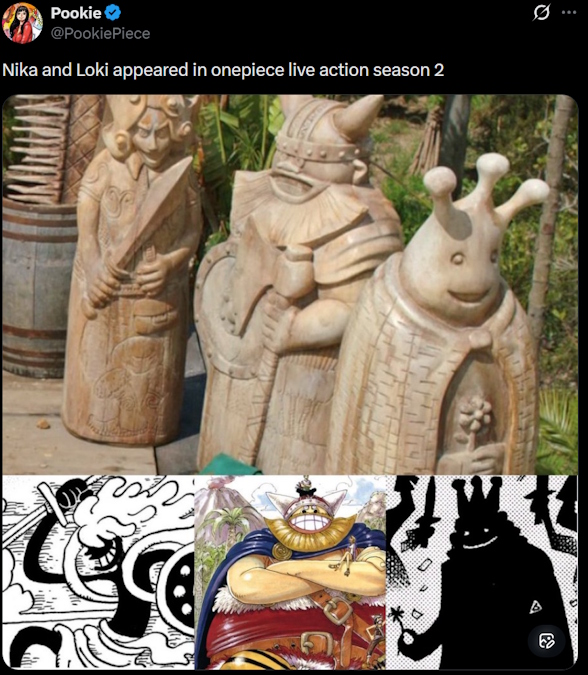
Dorry and Brogy praying to Nika—and a Loki silhouette—throws Elbaf and the Nika myth into the narrative earlier than many expected. That choice reframes fights and jokes as part of a larger folklore the show is hinting at, which will pay off if Netflix commissions more seasons.
A newsboard headline pulled a familiar name into the room. Queen Otohime and Jinbe references
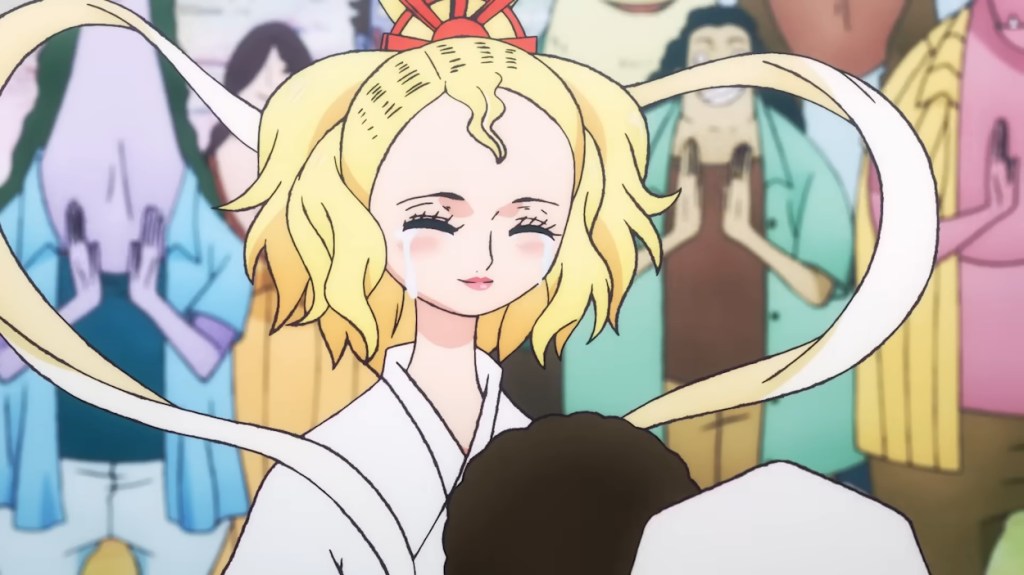
A council scene references Queen Otohime and the Fishman Island tragedy, and Wapol’s line name-checks a Fishmen Warlord—Jinbe. It’s a small structural move, but it previews characters and conflicts from arcs the show may adapt later. For fans tracking continuity compatibility with Shonen Jump and Toei Animation, this is reassuring.
A tall tale at a fire felt like habit. Usopp’s lie would soon become true
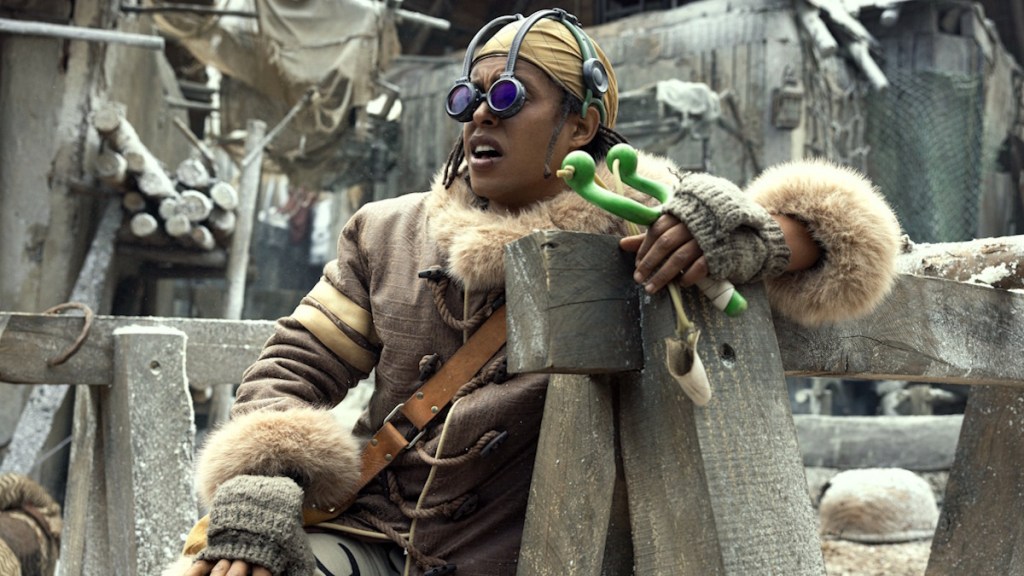
Usopp fabricates a hammer story to impress giants—and that kind of lie becoming reality is a One Piece motif. It signals future beats: Miss Merry Christmas, a mole-transforming antagonist, and a live-action season arc that could adapt Alabasta. The show plants this seed now so the payoff feels earned later.
A frying pan and a soft confession showed two timelines meeting. Sanji talks about his hidden past
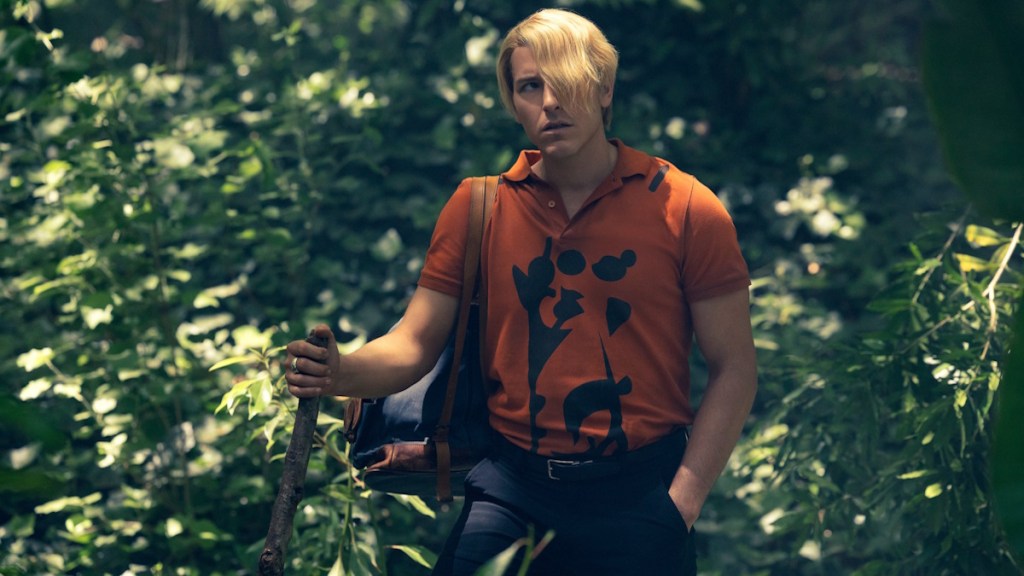
Sanji admits to cooking for a sick mother and mentions abuse—lines pulled from Whole Cake Island material but used here as a foreshadow. That emotional hint keeps Sanji’s arc coherent across seasons and proves the writers plan character arcs across a multi-season timeline, which is good news for fans who track continuity on platforms like Shonen Jump and fan wikis.
Why is Bartolomeo in season 2?
Bartolomeo appears because he’s canonically present at Luffy’s execution in the manga; Netflix chose to give him a bit more narrative flesh to justify his early presence. For viewers who follow One Piece fan sites and OPWiki, it’s an obvious, welcome expansion.
Is Luffy Gold Roger’s son?
No—Luffy is not Roger’s son. The live-action keeps that clear: Luffy is Monkey D. Dragon’s son, and any inheritance themes are political and symbolic rather than biological.
Is Sabo Luffy’s brother?
Yes. The show preserves the sworn-brother bond between Luffy, Ace, and Sabo, and Sabo’s brief cameo underlines his ongoing presence in Luffy’s life and the Revolutionary Army storyline.
I watch these episodes with tools like frame-by-frame playback on Netflix and fan transcriptions on Shonen Jump and X; that’s how small choices become visible. The live-action team borrows from Toei Animation’s tone and Oda’s eccentric details, then translates them into props, throwaway lines, and background silhouettes. Sometimes a single prop functions like a secret backstage pass that rewrites a scene’s meaning.
If you’ve been scanning credits, freeze-framing, or hunting screenshots on Reddit, what tiny detail did you catch that no one else has mentioned?