I hit play feeling equal parts suspicion and hope. For a few breaths the screen held its nerve — Logue Town breathed, and then the Grand Line swallowed us whole. I realized fast: this season wanted to prove a point.
I’ve watched all eight episodes back-to-back, and I’ll say this plainly: Netflix’s One Piece Season 2 makes a strong case that Oda’s carnival of chaos can work in live-action. You’ll feel that tension between reverent adaptation and cinematic invention the moment the Straw Hats step out of East Blue and into true danger.
Is One Piece Season 2 faithful to the manga?
On my screen the opening sequence of Logue Town landed with the same old mix of dread and whimsy I remember from the manga.
The new season takes the crew into the Grand Line and adapts the Arabasta saga arcs (except Alabasta itself), stitching a string of island-sized escapades together. The writers make smart choices: they keep the spirit of Oda’s long-form storytelling while pruning for pace. You get wars with Baroque Works, giants, talking reindeer, and the Drum Island origin — scenes that feel recognizably Oda, even when details shift.
Some changes are welcome easter eggs — Luffy singing Bink’s Sake lands as an emotional flag planted in the sea — and bringing Brook and Bartolomeo forward adds momentum. Other edits sit awkwardly: Wapol’s monster army, Miss Golden Week’s altered backstory, and Crocus living off Laboon all make you wince because they change tone or stakes without a clear gain.
The live-action team clearly consulted the source with respect; you’ll feel that in the choices that amplify character beats rather than erase them.
How does the live-action compare to the anime?
I rewound a climactic scene from the anime and then switched to the live-action cut to compare beats, sound, and the visceral pull of the fights.
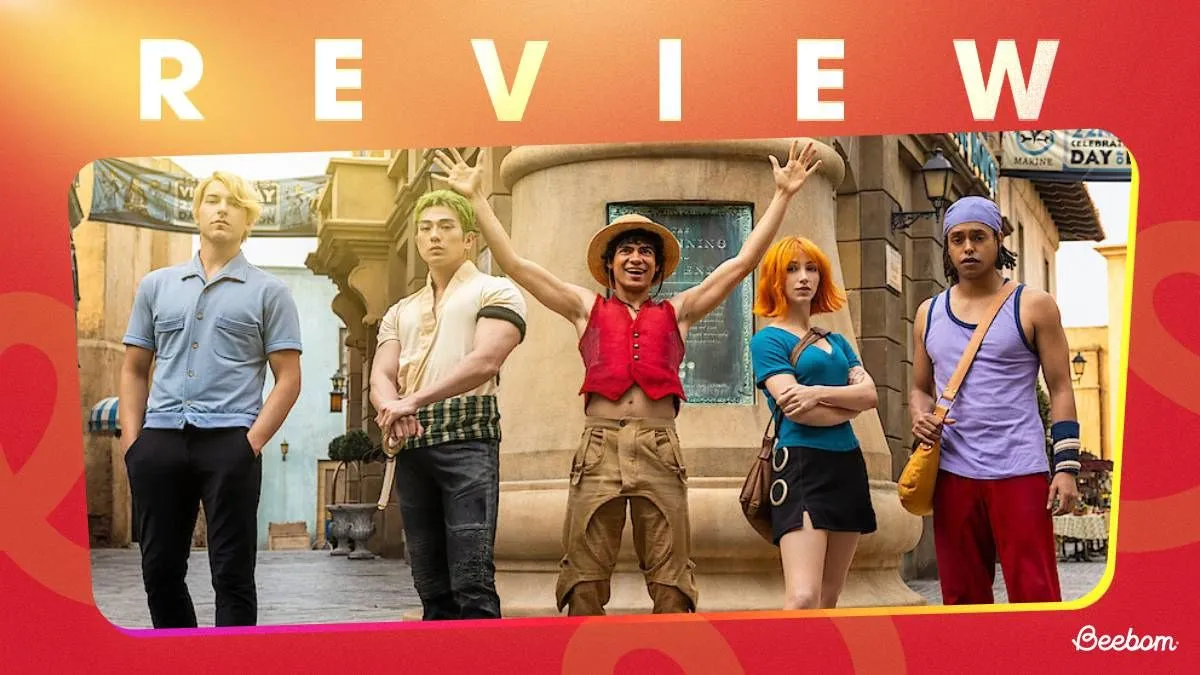
Casting is the season’s biggest victory. Taz Skylar (Sanji), Emily Rudd (Nami), and Jacob Romero (Usopp) deliver performances that capture mannerism, humor, and heart. Iñaki Godoy and Mackenyu are slightly less consistent, yet never wrong for the parts. New additions — Lera Abova as Nico Robin, David Dastmalchian as Mr. 3, Katey Sagal and Mark Harelik in Drum Island roles, Charithra Chandran as Vivi — add texture and sometimes steal scenes outright.
The production values are bold: Netflix and Tomorrow Studios leaned into practical sets, costumes, and VFX in ways that make Logue Town, Whiskey Peak, Little Garden, and Drum Island feel lived-in. Sonya Belousova and Giona Ostinelli’s score pushes the adventure along. The production is a carnival mirror of Oda’s eccentric visual gags, reflecting the manga’s absurdity without flattening it.
If you’re comparing to the anime, note the one real loss: the heavy, comic-book thump of major battles. The choreography and camera work favor clarity over the anime’s comic exaggeration, which sometimes reduces the wallop of a punch or devil-fruit spectacle.
Should you watch One Piece Season 2 on Netflix?
I watched episode after episode and found myself smiling more than nitpicking.
Season 2 is a near-perfect prelude to Alabasta: it builds stakes, introduces allies and enemies, and lands emotional beats — Chopper’s origin and Brook’s song to Laboon hit with sincerity. Yes, there are hiccups in pacing and a handful of creative choices that won’t satisfy purists, but those moments are small mortar cracks in an otherwise sturdy wall.
Season 2 is a braided rope of mini-adventures that pulls you island to island, and if Netflix and Tomorrow Studios keep steering with this blend of reverence and cinematic appetite, the live-action One Piece can stand next to the anime and manga as a different but worthy interpretation.
Watch it on Netflix, compare it on X/@onepiecenetflix with fans and critics, and judge for yourself — will this adaptation convince the skeptics or split the fandom further?