
I still remember my first hour with Crimson Desert: Kliff got one‑shotted by a patrol and I sat there, annoyed and fascinated. You feel the game pushing back—no prompts holding your hand, no safety net. That instant tells you everything about how Pearl Abyss expects you to play.
I’m going to cut straight to the point and answer the question you came for: does Crimson Desert let you change difficulty? Then I’ll explain why the choice to lock the setting matters for how you explore, fight, and grow in the world.
At a friend’s kitchen table I watched a streamer rage-quit after a boss — Are There Difficulty Settings in Crimson Desert?
No. Crimson Desert does not offer selectable difficulty levels. The game uses a single, fixed difficulty much like many FromSoftware titles and Rockstar’s major releases such as Red Dead Redemption 2. There is no separate “easy mode” toggle you can flip to make the opening hours gentler.
Are there difficulty settings in Crimson Desert?
The short answer is: the title ships with one default difficulty. Combat health, enemy damage, and progression pacing are tuned to that baseline. If you’ve played Elden Ring or games from FromSoftware, the feel will be familiar: you must adapt, learn, and raise your capabilities rather than lowering enemy toughness.
Is there an easy mode in Crimson Desert?
Not officially. If you want a softer run, your tools are in-game systems: upgrading gear, acquiring skills, choosing which regions to visit, and using mounts and resources wisely. Modding communities on PC or accessibility options on consoles can change things to some degree, but Pearl Abyss does not ship an “easy” difficulty switch.
I watched a group of players crowdsource strategies on Discord — Why the Lack of Difficulty Options Works
Designers who fix difficulty are making a deliberate choice. I’ve seen it in Zelda and Elden Ring: the world is balanced so certain areas serve as natural checkpoints for skill and gear. By forcing a single baseline, Pearl Abyss controls the pacing and sense of discovery.
This isn’t a punishment so much as design discipline. You’ll need time to improve Kliff’s abilities and kit before staking claims in higher-level territories. Bosses will remain dangerous until you outgrow them; the game wants you to learn patterns rather than dial down challenge.
Think of the combat loop like a strict teacher: it marks every mistake but teaches faster because it doesn’t make room for hand-holding. That teaching style can frustrate casual players, but it also creates moments that feel earned when you finally clear a tough encounter.
Pearl Abyss borrows the idea of visual and mechanical staging from studios such as FromSoftware and Nintendo. Limgrave and Caelid comparisons to Elden Ring are instructive: some zones are clearly welcoming, others are better treated as warnings. That makes the map feel vast and consequential rather than a checklist of fights.
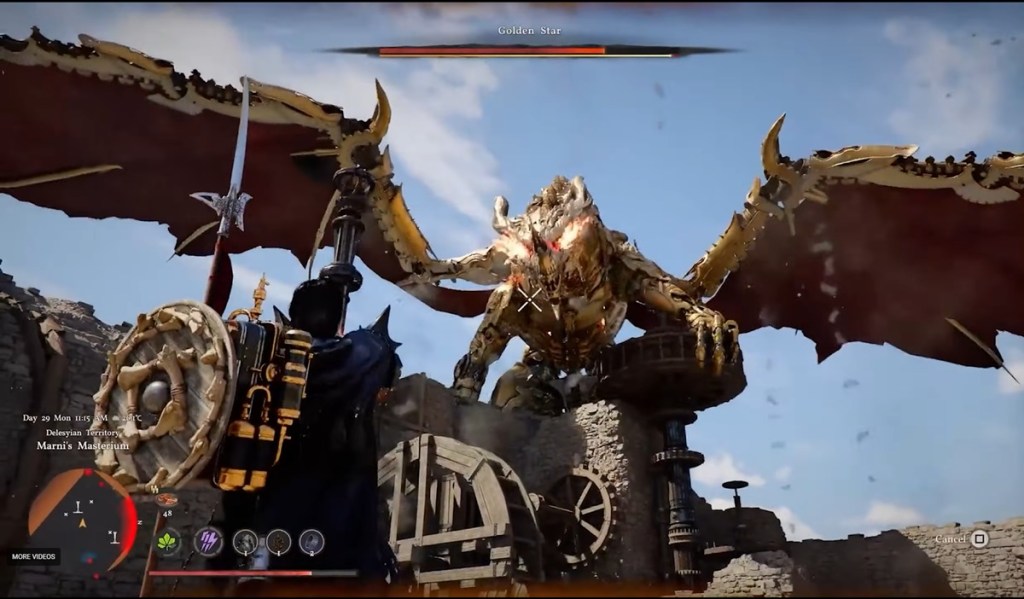
If you want to reduce friction as you play, use the systems that are already there: grind smart in early zones, prioritize upgrades that change your playstyle, and watch community guides on Discord, YouTube, or Steam forums. Third-party tools and mods on PC will probably appear quickly if the demand is strong enough.
Finally, remember the map is a sleeping beast: choosing where you fight matters as much as how you fight. That choice—go forward and die, or step back and prepare—is the core of the game’s tension.
If you’re preparing to buy or preload Crimson Desert, plan for a learning curve rather than a settings toggle; your best bet for an easier time is patient progression, smart upgrades, and community strategies. What’s your tolerance for challenge—will you accept the gauntlet or demand a safety net?