
I watched an Invasive Yian Garuga rip through a meadow and felt my plans unravel in a heartbeat. You know that cold knot in your gut when an egg you were banking on turns out to be ordinary. I’ve spent hours rebuilding those habitats so the next hatch is worth the gamble.
I’ve played Monster Hunter Stories 3 on Nintendo Switch and read threads on Reddit and GameFAQs until the picture was clear. I’ll walk you through the steps I use, what tools (Capcom’s updates, community trackers) matter, and how to make habitat work pay off for your roster.
How to restore habitats in Monster Hunter Stories 3
In the real world, damaged wetlands don’t heal overnight; they need steady, intentional returns of species.
You can’t restore habitats from the start. I recommend finishing the main-story encounter with the Invasive Yian Garuga — it’s the gate. After you beat that fight, the game gives you access to the Habitat Restoration screen and the ability to release monsties back into regions.
Your moves here are simple but strategic:
- Select the region on the Habitat Restoration screen.
- Note the region’s Element preference and its current Ecosystem Rank (C, B, A, or S).
- You can add up to five additional monsties to a region that aren’t native to it.
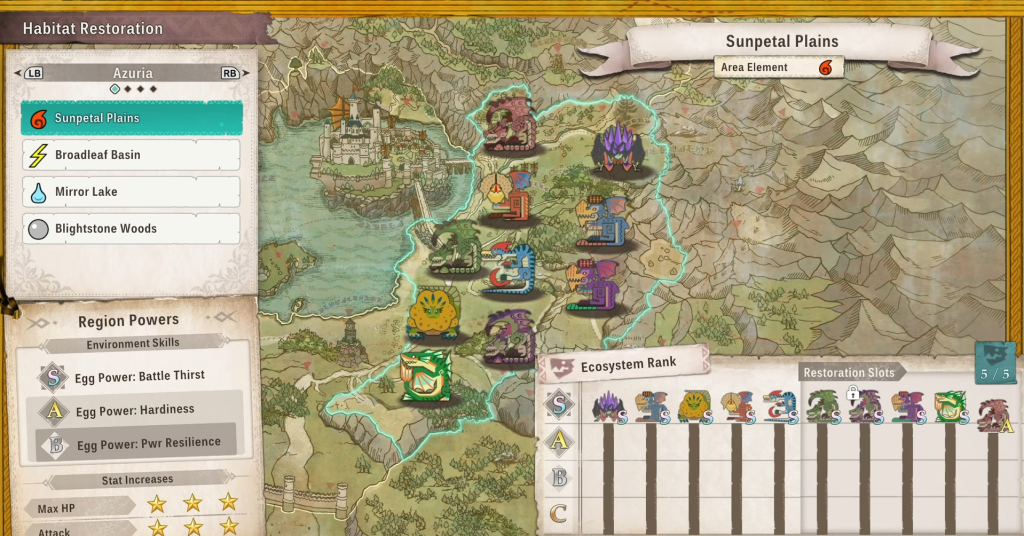
How do you restore habitats in Monster Hunter Stories 3?
Release monsties into regions after the Yian Garuga fight. Each release raises a region’s Ecosystem Rank; the higher the level of the monstie you return, the faster the rank climbs. Mutated monsters — endangered or native mutations you’ve found — give bigger rank bumps.
If you want a repeatable tactic: hunt higher-level monsters in a region, hatch eggs until you get good candidates, then return those strong or mutated monsties to the region you care about. The goal is to tip the ecosystem over into A or S so the eggs you find afterwards skew much stronger.
How to raise Ecosystem Rank in Monster Hunter Stories 3
Think of a neighborhood that becomes lively when a few families move back in: activity breeds more activity.
Releasing any monstie raises Ecosystem Rank, but there are smarter levers. Higher-level monsters move the needle faster. Mutations push it further still. I treat mutations as the heavy currency of restoration because they double the ecosystem’s potential.
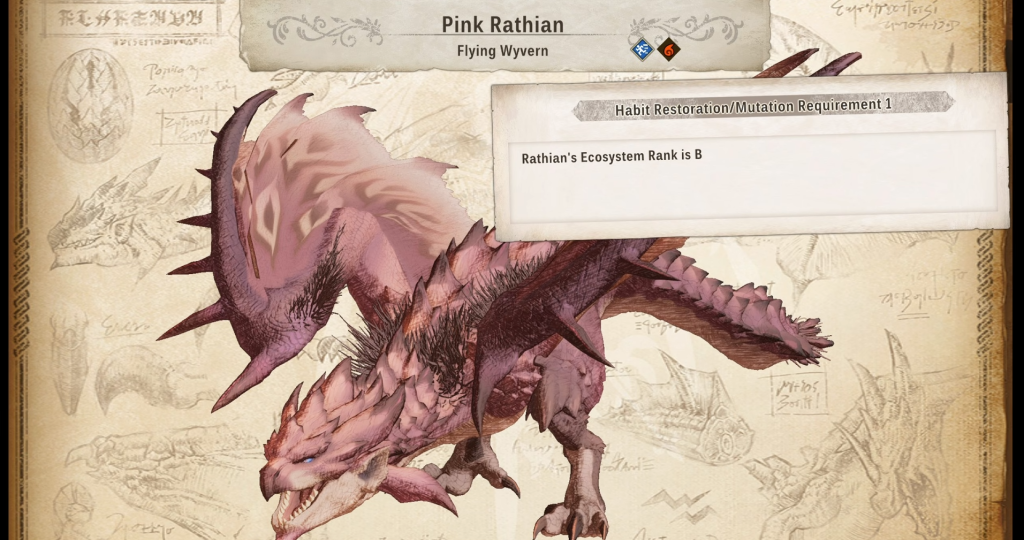
What benefits does a higher Ecosystem Rank give?
A higher Rank changes the odds and the options available to you:
- S-Rank ecosystems let eggs roll with a better chance of S-Rank genes.
- Eggs from higher ranks are likelier to hatch higher-level monsties, saving you grind time.
- Certain mutations only appear once a region hits A or S, which expands your breeding palette.
- Dual-Type monsties become possible, letting you cover more weaknesses in your party.
Mutations are especially valuable — a mutated monstie can be a second element in battle, and both element slots follow the region’s element profile. Think of the process as a gardener coaxing seeds back into a broken plot; the payoff compounds as the land heals.
Use community tools (Reddit threads, GameFAQs guides, and the occasional YouTube breeder playlist) to track which regions host which element pairings. Capcom’s patch notes sometimes change spawn behavior, so keep an eye on official updates. If you collect and release smartly, you’ll hit A and S ranks faster than random guesswork.
Restoring habitats isn’t just a checklist; it’s a way to tilt future hatches toward rare genes and desirable mutations. Are you going to wait for luck, or will you shape the ecosystem so luck has to work in your favor?