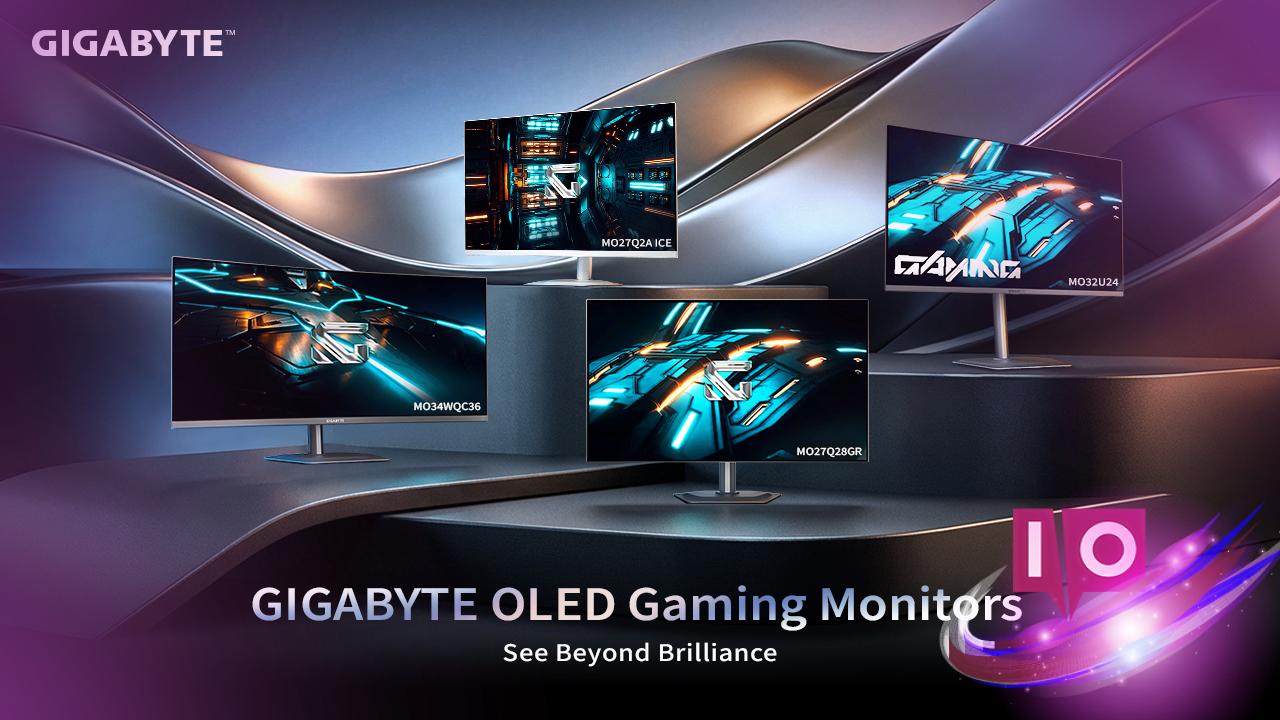
This article is written in partnership with GIGABYTE AORUS. Check out the MO27Q28GR here.
I was two rounds into a late-night ranked match when a shadowed corridor decided the map. You can feel the lag before you see it — a brief betrayal of motion that costs rounds and patience. When a monitor clears that noise, everything else in the room shifts.
I’ve been testing displays long enough to know which specs are marketing and which actually change gameplay. You’re about to read a clear take on where GIGABYTE’s MO27Q28GR fits: who should care, what it changes for competitive play, and what the glossy RealBlack finish really does to your image fidelity.
RealBlack Glossy OLED Panel
At a café with overhead lights, reflections will tell you whether a screen survives the real world.
The MO27Q28GR uses a RealBlack glossy WOLED panel that trades the diffuse matte finish most monitors use for a zero-haze optical layer paired with anti-reflective coating. I’ll be blunt: glossy screens have a reputation for mirror problems, but here the optical stack preserves deep blacks while cutting glare enough to keep highlights legible. If you prize shadow detail in stealthy shooters or cinematic contrast in single-player games, this is where OLED’s contrast advantage becomes visible in everyday lighting.
4th-Generation Tandem WOLED Technology
At my desk the color meters tell a different story than the spec sheet.
GIGABYTE moved to 4th-generation WOLED with Primary RGB Tandem OLED architecture, stacking emission layers to push brightness and efficiency. The result: HDR peaks reported up to 1,500 nits and about 20 percent lower power draw compared with older WOLEDs, while covering 99.5% of DCI-P3. I trust a panel that improves both sustained highlights and power behavior — that’s what differentiates glossy sheen from useful brightness.
How bright is the MO27Q28GR?
Measured brightness will vary by mode, but the combination of the tandem stack and HyperNits HDR can push HDR highlights significantly higher. GIGABYTE quotes up to a 30 percent boost in HDR effective brightness thanks to the HyperNits system, which keeps specular highlights lively without flattening blacks.
280Hz Refresh Rate and 0.03ms Response Time
During a head-to-head scrim, every frame is a small contract between you and the scoreboard.
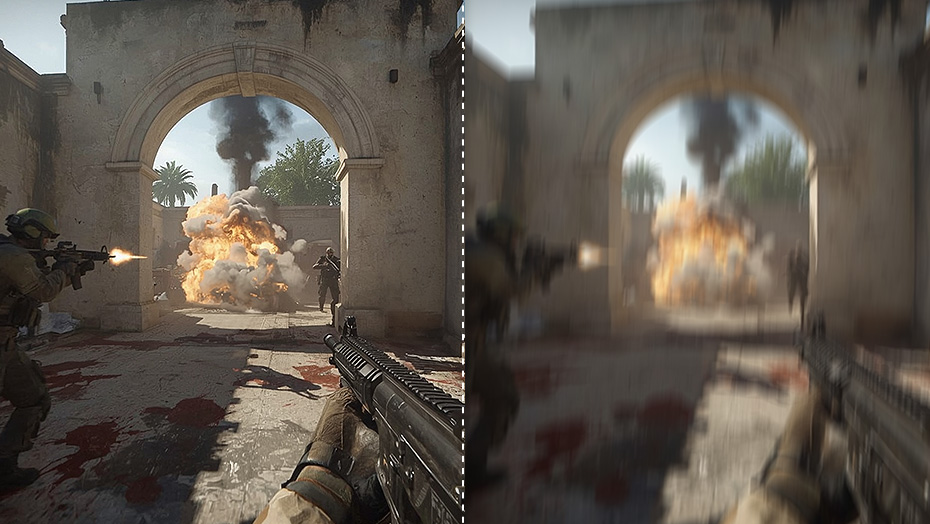
This monitor pairs a 280Hz refresh rate with a quoted 0.03ms response time, and supports AMD FreeSync Premium Pro as well as NVIDIA G-SYNC compatibility. For you that means reduced motion blur, less ghosting, and fewer micro-stutters when frame rates spike and fall. I treat those numbers as tools: they matter most when your GPU, like an RTX-series card from NVIDIA or an RX-series Radeon from AMD, can actually feed the panel consistently.
Is the MO27Q28GR good for esports?
If you play fast-paced shooters or competitive titles, the pairing of ultra-high refresh and rapid response makes this monitor a contender. Tactical Switch 2.0 and Game Assist overlays add the small conveniences players lean on in tournament play, while the low latency helps you read movement earlier and react faster.
HyperNits HDR Technology
On a bright afternoon, HDR highlights can either pop or wash out an image.
HyperNits focuses on brightness consistency across the panel, giving you stronger highlights without sacrificing color accuracy. I compared highlight rendering against other WOLED panels and found better control over specular brightness — HDR elements jump visually without crushing midtones. Think of it as a lighthouse in a fog guiding your eye to the important bits of the frame.
Gaming Tools and OLED Protection
At a tournament I watched a player leave HUD elements static for hours; small interface items end up where panels suffer most.
GIGABYTE built in practical features: Tactical Switch 2.0 for quick resolution and aspect swaps, Ultra Clear motion for motion clarity, and a suite of Game Assist tools like crosshairs and timers. For panel longevity, AI OLED Care automates maintenance routines to reduce image retention risk. I won’t promise eternal immunity — OLED physics still apply — but the software and thermal design lower the long-term chance of visible retention.
Will OLED burn-in be a problem?
No display is exempt from physics, but modern WOLED stacks plus active measures like pixel shifting, screen savers, and AI-driven care reduce risk for typical gamers. If you use static HUDs for dozens of hours every day, you should be cautious; if you rotate content and let the care routines run, the practical risk falls dramatically.
Where this fits in GIGABYTE’s lineup
In showroom rows, new models are judged against the ones that came before.
The MO27Q28GR ties GIGABYTE’s glossy panel experiments to high-refresh esports performance and more efficient WOLED hardware. If you’re weighing this against other AORUS monitors or similar offerings from ASUS and Samsung, consider whether you want glossy contrast and very high refresh over a matte surface with similar gaming timing. I’ll say this plainly: for mixed use — competitive matches by day, story-driven single-player at night — the balance here is compelling.
GIGABYTE’s MO27Q28GR feels calibrated for players who want deep blacks that don’t trade away responsiveness. It is a scalpel for motion when the match gets precise. If you were planning to refresh your rig around a new GPU from NVIDIA or AMD and need a monitor that can show every advantage, does this monitor change what you’ll buy next?