I wake up sideways, a hand checking the curve of unfamiliar metal. You feel the planet you left slipping into a private joke — and then a rock-shaped alien hands you a lifeline. For a beat, the fate of Earth is intimate and small.
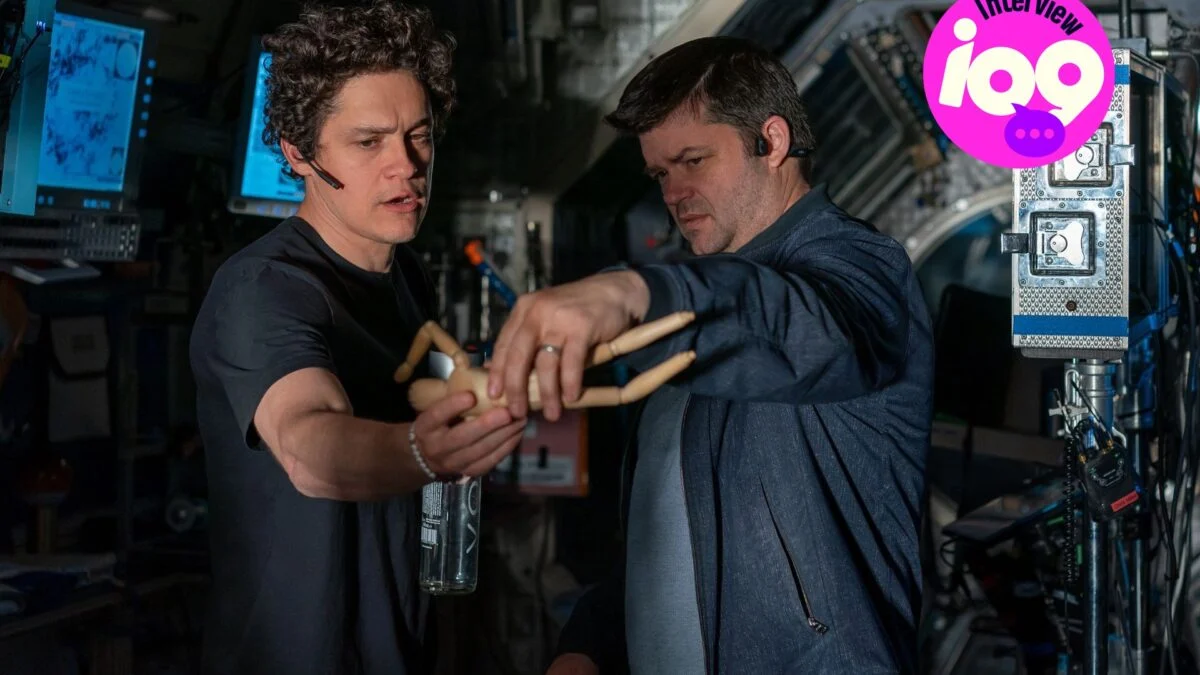
I spoke with Phil Lord and Chris Miller about the choices that pushed Andy Weir’s novel from page to screen. I’ll walk you through the edits that matter, the theatrical tricks they added, and why those changes make Project Hail Mary feel larger without betraying the book’s heart.
At a press screening, the theater fell quiet — Why the “Don’t Go Crazy” room is a deliberate gamble
I sat with people who had read the book and those who hadn’t. The room that Phil Lord calls the “Don’t Go Crazy” chamber is pure cinematic engineering: a 360-degree projection bank that lets Ryland Grace step into a forest, a beach, a memory. It doesn’t exist in Andy Weir’s text as a single set-piece, but it grew organically from the book’s anxiety about isolation.
Lord told io9 they needed visual anchors to justify long stretches on a single vessel. Chris Miller described it as a mental-health measure writ large: a way to offset cabin fever and suicidal ideation with immersive environments. The device performs dual work—practical and emotional—by giving audiences a sensory shorthand for Grace’s interior life.
Why it matters: When you can see someone choose a sunset over a blank wall, you don’t need internal narration to understand grief, nostalgia, or small comforts. The zen room is a cinematic balm for the mind.
How faithful is Project Hail Mary to the book?
Short answer: very. The film trims and condenses—some scenes vanish, timelines compress—but Lord and Miller preserved the novel’s scientific curiosity and human warmth. Ryan Gosling’s Ryland Grace and the rock-shaped alien, Rocky, are intact; the emotional spine of Andy Weir’s story remains visible.

At a press day photo call, chairs jutted from the wall — How variable gravity becomes a character
I watched Ryan Gosling cross a room that felt intentionally off-kilter. Lord and Miller reimagined the ship not as a single, neutral environment but as multiple gravity states: chairs on walls, floors that rotate, orientations that disorient. The idea was to make the ship itself an active presence.
Every room serving two gravitational realities does several jobs at once. It visually signals confusion when Grace wakes up, it keeps the mise-en-scène fresh across long stretches, and it heightens the uncanny—because the audience constantly reads space for meaning. If a set can ask questions, these rooms ask them at every beat.
What the change buys the film: The ship’s geometry becomes shorthand for mystery, and it rewards viewers who are paying attention with small, sustained jolts. The ship becomes a rotating Rubik’s Cube.

What changes did the movie make to Project Hail Mary?
Major changes are surgical, not theatrical: a visual “Don’t Go Crazy” suite, rooms with variable gravity, cinematic visualization of microscopic threats, and fewer interior monologues. Lord and Miller found ways to translate exposition and thought into images—so the film reads as an equal partner to Andy Weir’s book rather than a copy.
They also made narrative choices that affect pacing and surprise; hardcore fans will spot a few spoilery deviations that I won’t name here. The aim was always to honor the original while giving theater audiences moments that reward the big screen—IMAX and Dolby Atmos included.
At my desk while reading the manuscript, the voice felt like a private radio — How the film translates first-person thought without drowning in voiceover
The novel lives in Grace’s head; the movie can’t. Lord explained they needed cinematic equivalents for internal confusion, awe, and scientific reasoning. So they built visual metaphors, micro-actions, and a rhythm of discovery that lets you feel Grace’s thinking without hearing it dictate the frame.
That means a microscope moment becomes a visual revelation, a camera push replaces a paragraph, and interaction with Rocky—the alien—becomes an external mirror for inner change. The directors aimed for companion pieces: the book gives you Ryland’s thoughts, the film gives you his choices in motion.
When is Project Hail Mary released?
Release date: The film opens in theaters on March 20. Expect the big-screen presentation to lean into IMAX and Dolby Atmos formats for maximum sensory impact. MGM and the creative team have positioned this as a theatrical experience rather than a stream-first event.
Phil Lord and Chris Miller took measured risks: new sets, tilted gravity, and a visual strategy to stand in for inner voice. They kept Andy Weir’s curiosity and empathy intact while giving audiences cinematic landmarks that reward attention. If you like smart sci‑fi that trusts your imagination, this adaptation asks you to pay attention—will you argue with the choices it made?