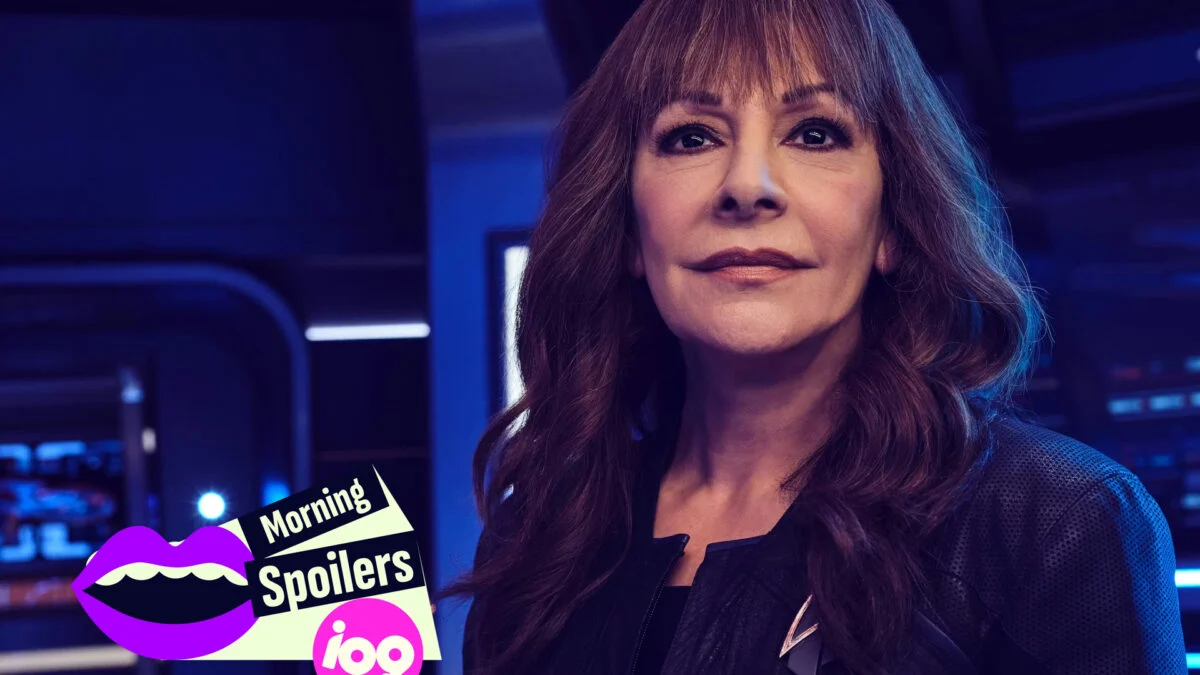
The panel lights cut to warm amber as Marina Sirtis spoke and the room exhaled. You felt the optimism drain away faster than a standing ovation. I watched the clip and understood why the conversation about Star Trek: Legacy stopped being hopeful and started being real.

At a crowded Star Trek Cruise panel, a blunt assessment landed
Marina Sirtis didn’t couch her answer in PR polish; she told the truth the room needed to hear. You could feel the economy of reality clattering against fandom wishful thinking.
I’ve been reporting on franchise politics long enough to read beyond the punchline: Sirtis said Legacy is “never gonna happen.” Jonathan Frakes pushed back instinctively, but Sirtis’s point cut to the structural problem—studios are driven by perceived marketability, and they’re calculating age as risk.
Why does Marina Sirtis think Star Trek: Legacy won’t happen?
Because she watched the industry’s risk model in action: networks and streamers prioritize audiences advertisers and subscribers will follow. When Sirtis pointed to the absence of studios willing to center a series on actors mostly over 70, she was naming a hard business constraint, not gatekeeping fans.
Variety didn’t invent the headline; the quote came from a public panel on the Star Trek Cruise and spread through Screen Rant and other outlets that track franchise chatter. You should treat the clip as both a cultural artifact and a memo: Hollywood is a weathered gate when it comes to aging tentpoles.
Will a studio greenlight a series led by older stars?
Short answer: it’s possible but unlikely under current metrics. Streamers like Netflix, Amazon, and the legacy studios run sophisticated audience-recognition tools—comScore, Nielsen, and platform-native analytics—to forecast subscriber behavior. Those tools favor predictable growth, and the math right now skews toward younger demos or proven IP with clear monetization paths.
That doesn’t mean veteran-led stories have no future. They find homes in prestige models, limited runs, or anthology formats where the financial exposure is contained. Sirtis’s comment is a reality check: you can love the idea, but you also have to wrestle with distribution models and boardroom incentives.
On the Netflix front, the Mystery Inc. puzzle just filled another slot
Variety reported new casting updates that tighten the live-action Netflix Scooby-Doo lineup. Maxwell Jenkins will play Fred, Tanner Hagen is Shaggy, Abby Ryder Fortson takes Velma, and Mckenna Grace is Daphne.
Who is cast in Netflix’s live-action Scooby-Doo series?
Those names came through Variety’s casting report and confirm Netflix’s trajectory: the streamer is assembling actors with franchise or family-audience credentials to sell nostalgia and new viewers simultaneously. You should expect a mix of serialized mystery beats and character moments aimed at both long-time fans and younger subscribers.
Nostalgia is a loaded pistol—powerful but volatile—so how the show balances legacy and novelty will determine whether Netflix’s gamble pays off.
On set snaps and new horror signals: the rest of the week’s noise
Getty Images posted set photos that caught other headlines: Scarlett Johansson with Chiwetel Ejiofor, Rahul Kohli, and Sasha Calle on Mike Flanagan’s The Exorcist.
If you’re tracking horror directors, Flanagan’s attachments matter—he has a reliable audience on Netflix and in genre circles. Those images function as both proof of production momentum and a marketing drip that primes audiences before any trailer drops.
At the ratings board, two very different horror movies found their limits
Bloody-Disgusting reported that NEON’s Exit 8 received a PG-13 for “bloody images and terror,” while Saccharine—the supernatural body-horror about a weight-loss craze that includes consuming human ashes—was rated R for “disturbing content, grisly images, sexuality, drug use, graphic nudity, and language.”
Those classifications are the MPAA’s shorthand for audience guidance and distribution strategy: a PG-13 can access a broader box office, an R often signals a narrower but more intense festival and genre-circuit path.
Stop-motion news: a sheep with teeth gets a trailer
Aardman dropped the new trailer for Shaun the Sheep: The Beast of Mossy Bottom, pairing familiar charm with a darker premise.
Trailers like this do heavy lifting: they test tone, signal marketing direction, and give exhibitors and licensors early notes on positioning. Keep an eye on Aardman’s rollout—family franchises that flirt with menace often aim for cross-generational appeal.
Other casting and show moves you should watch
Deadline reported Nabhaan Rizwan and Claes Bang joining the Assassin’s Creed TV series, and Variety announced that Karyn Kusama will direct the opening episodes of Amazon’s Life Is Strange adaptation starring Maisy Stella and Tatum Grace Hopkins.
These pieces matter because directors and lead casting set a show’s DNA long before marketing budgets do. Kusama’s name signals a moody, character-first approach; Rizwan and Bang suggest a blend of action and prestige theatrics for the Ubisoft adaptation.
I’ll keep tracking these threads—casting, ratings, set photos, and the candid admissions that break the fantasy of franchise permanence. Where do you put your faith: in the business model or in the creative case for bringing legacy stars back to the bridge?