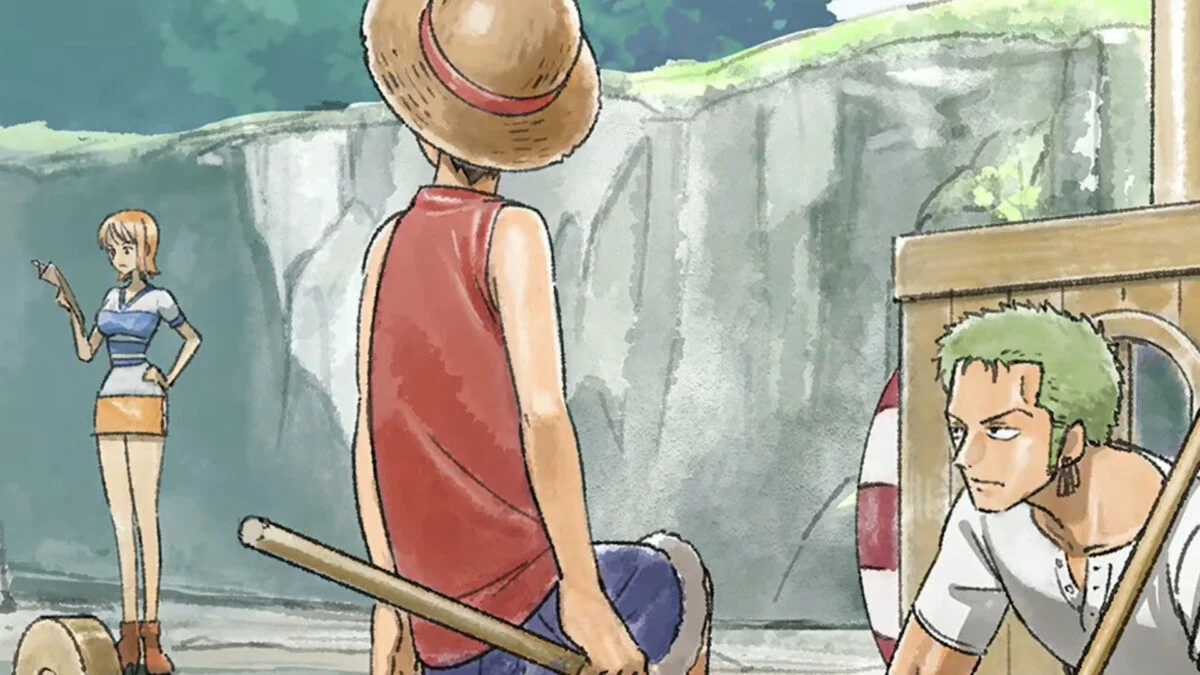
You catch the first episode, and something tugs at you: the colors, the pauses, the padding. Kids a few seats down are scrolling past the early episodes like they’re already out of sync with the show. That moment—when a story you love feels old to an entire generation—is what Wit Studio is trying to fix.
I’ve followed adaptations long enough to know when a change is cosmetic and when it’s a course correction. You’re not being sold a reboot so much as a rethinking: same map, fewer detours. George Wada, the president of Wit Studio, spelled it out on The Ai Show: Eiichiro Oda wanted a version that sits more comfortably with younger viewers who grew up on modern shonen visuals.
On a commuter train, younger viewers skipped the 1999 art — How Wit plans to modernize the visuals
You’ve seen it: a kid scrolling past Toei’s early episodes and shrugging. Wada’s point was pragmatic—Toei has been adapting One Piece since the late ’90s, and some of those visual choices feel dated to people who grew up on series like Spy x Family or Demon Slayer. Wit wants to apply “modern techniques” so the show reads the way current shonen does on first glance.
That doesn’t mean throwing out Oda’s voice. The studio is framing its work as complementary to Toei’s, not a replacement. If pacing is tightened, it’s to protect story momentum and respect the chapters that matter most—no filler for filler’s sake. Think of the editing like a surgeon’s scalpel: precise, not flashy.
How will Wit Studio’s One Piece differ from Toei’s?
Short answer: style, speed, and selective faithfulness. Toei’s anime famously stretched the East Blue Saga into more than 60 episodes; Netflix’s live-action turned that stretch into roughly eight hours. Wit’s plan is to lean toward anime-length storytelling but keep a brisker cadence—cutting down on unnecessary padding while honoring Oda’s beats. Wada explicitly framed this as an attempt to present what Oda wants to show in the clearest possible way.
At a studio meeting, executives compared notes to Spy x Family — The quality bar and tonal goals
People in the room held up Wit’s recent hits as benchmarks. That’s telling: Wada wants The One Piece to sit alongside Spy x Family and Vinland Saga in terms of craft and emotional clarity. You should expect character work and visual polish to carry equal weight.
There’s a balancing act here: honoring long-time fans, staying true to the source, and making an entry point for newcomers who’ve never warmed to Toei’s older aesthetics. The mission is to translate Oda’s intent with fewer interruptions—like a new battery in an old console that keeps the original game intact but makes it feel fresh again.
Will The One Piece follow the manga more closely?
Wada’s language centers on understanding Oda and presenting what he wants to express, which is encouraging if you prefer manga-faithful adaptations. That said, “faithful” doesn’t always mean frame-for-frame. Expect selective fidelity: the core arcs and character moments will likely be intact, while some connective tissue will be tightened or trimmed to maintain pace.
On release calendars, Netflix and anime schedules collide — What viewers should expect
Your streaming queue will be the real judge. Wit confirmed The One Piece is headed to Netflix in the near future, but concrete episode counts and arc coverage remain under wraps. The framing suggests a show that respects the rhythm of anime while rejecting the slow stretches that turned some viewers away from Toei’s early run.
If you’re tracking releases, note the platforms involved: Wit Studio’s creative reputation, Netflix’s global reach, and the way Toei’s decades-long adaptation created expectations. This remake is less about erasing history and more about offering an alternate route to the same destination.
When will The One Piece be released on Netflix?
Wit hasn’t given a firm date beyond “near future.” Industry chatter and press notes point to announcements coming as production milestones are hit; expect teasers and trailers before a formal schedule drops. Keep an eye on Wit Studio’s channels, Netflix’s slate updates, and reliable outlets like Anime News Network for confirmations.
The goal is simple: give Oda’s work a presentation younger viewers recognize while keeping long-time fans invested, and let both versions coexist so the franchise grows rather than splits. You’ll judge the success by how many new viewers stick around and how many old fans feel seen—what’s your take on a fresh route to a familiar treasure?
[via Anime News Network]
Want more io9 news? Check out when to expect the latest Marvel, Star Wars, and Star Trek releases, what’s next for the DC Universe on film and TV, and everything you need to know about the future of Doctor Who.