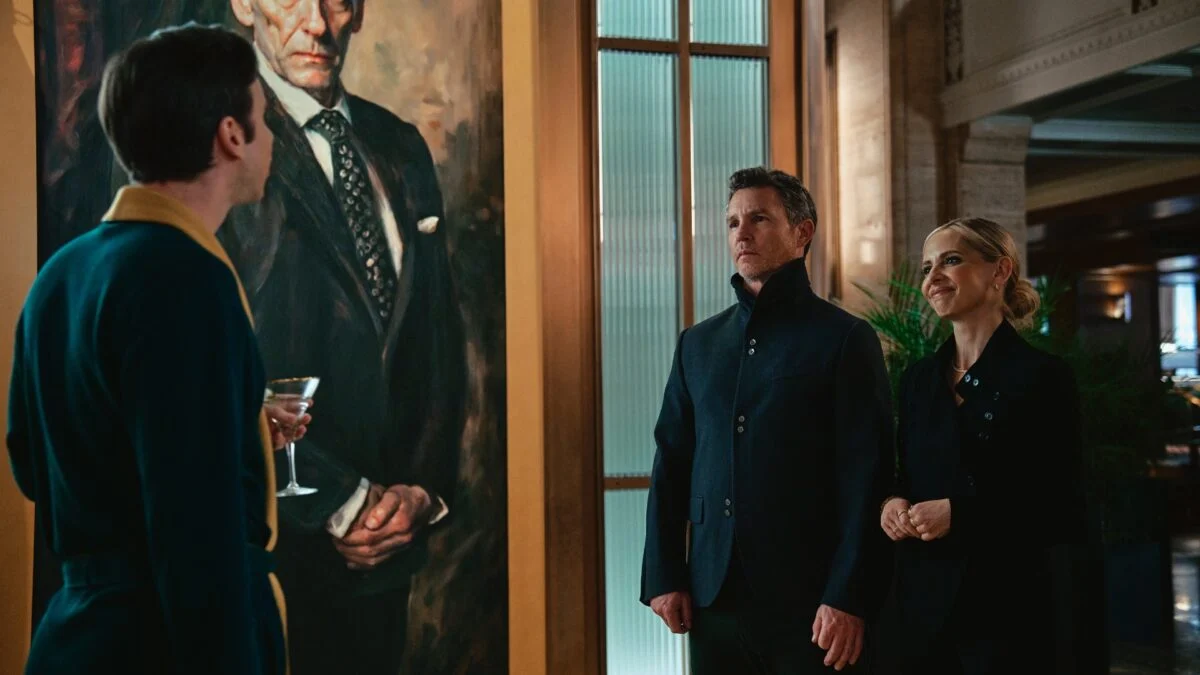
It was past midnight when the theater went quiet and the strangling scene finished. I watched a woman two rows ahead cover her mouth, and you felt the room change. That silent shift is the clearest reason Sarah Michelle Gellar’s death had to be in Ready or Not 2.
I want to walk you through how Matt Bettinelli-Olpin and Tyler Gillett reached that choice, and why it pays off for the film’s rhythm and stakes. I’ve read the Hollywood Reporter interview, watched the scene, and spoken to people who left the screening still breathing fast. You’ll come away with a sharper sense of why the directors made a brutal call that would scare fans and force a story forward.
At a single screening you could hear the air leave the room — why a high-profile death matters here
The directors cast Sarah Michelle Gellar as Ursula knowing her persona carries weight. When an actor with that kind of cultural cache dies on-screen, the audience’s interpretation of risk changes. I’m not talking about cheap shock: Bettinelli-Olpin and Gillett told the Hollywood Reporter they needed a beat that accelerated the dread going into the third act, and a celebrity’s sudden, intimate death does exactly that.
The Danforths are a loaded gun; their fortune and faith are weapons aimed at anyone who threatens the hierarchy. Killing Ursula isn’t gratuitous ornamentation — it recalibrates who can be trusted inside that murderous aristocracy and raises the emotional price tag for Grace and Faith.
Why did Ready or Not 2 kill Sarah Michelle Gellar’s character?
Because her ending isn’t a stunt, it’s a lever. Casting Gellar heightens the betrayal. She’s an icon—her Buffy history carries fondness and protective reflexes from audiences—so her destruction reads as a betrayal at the level of fandom and story logic. As Gillett said, “casting Sarah Michelle in that part heightens all of that.” That line from the directors shows intent: they wanted the emotional shock to be both personal and structural.
In a lobby conversation someone said the sequel is meaner — how the directors used contrast to force choices
Grace survived the first movie; the family’s next move is fear of being shown up. You feel that in every negotiation and knife swing. The directors deliberately set Grace and Faith on a converging path while pushing Titus and Ursula apart, creating a reverse symmetry that makes Ursula’s fate narratively logical.
There’s also a visceral economy to the choice. Killing a major supporting character detaches safety from celebrity and leaves the audience with a constant, low-grade dread. The scene is a gut-punch, not a flourish. It tells you: no one is immune, and every alliance can snap.
Was Ursula’s death necessary for the story?
Yes, if your goal is to throttle the narrative into a place where the final act feels inevitable. The directors explained they needed to “turn the dial up on the doom and the sense of fucking hopelessness” as Grace and Faith close ranks. Removing Ursula accelerates the stakes and creates emotional momentum toward the finale. You don’t get complacent when a fan-favorite can be flattened.
At the Q&A, someone asked whether Gellar was comfortable — how collaboration shaped that scene
She was, and that matters more than people expect. The directors and Gellar discussed the beat as a tragic release of control: Titus finally frees himself in the worst way. Gellar embraced the role’s physicality; Gillette described her commitment to the “almost romantic tragedy” of that last exchange. That trust let them stage a death that feels earned and terrifying.
Casting choices, interviews with Radio Silence, and the inclusion of David Cronenberg in the family all point to a calculated design: the film wanted faces you recognize, then wanted to remind you that fame does not equal safety. The result is a film that suspends both emotional investment and moral comfort.
The scene also echoes broader industry conversations. When high-profile actors take risky payoffs, it shifts how studios, critics, and fans talk about a film. Io9, Gizmodo, and the Hollywood Reporter all picked up on the angle because the death changes the narrative around the sequel as much as it changes the plot.
If you study genre mechanics, the sacrifice functions as a pressure valve—except it blows a hole in the pressure chamber instead. You leave the theater with questions about loyalty, power, and who pays for survival.
So what do you think: was killing Ursula a brave piece of storytelling or a stunt that shreds a beloved actor’s legacy?
