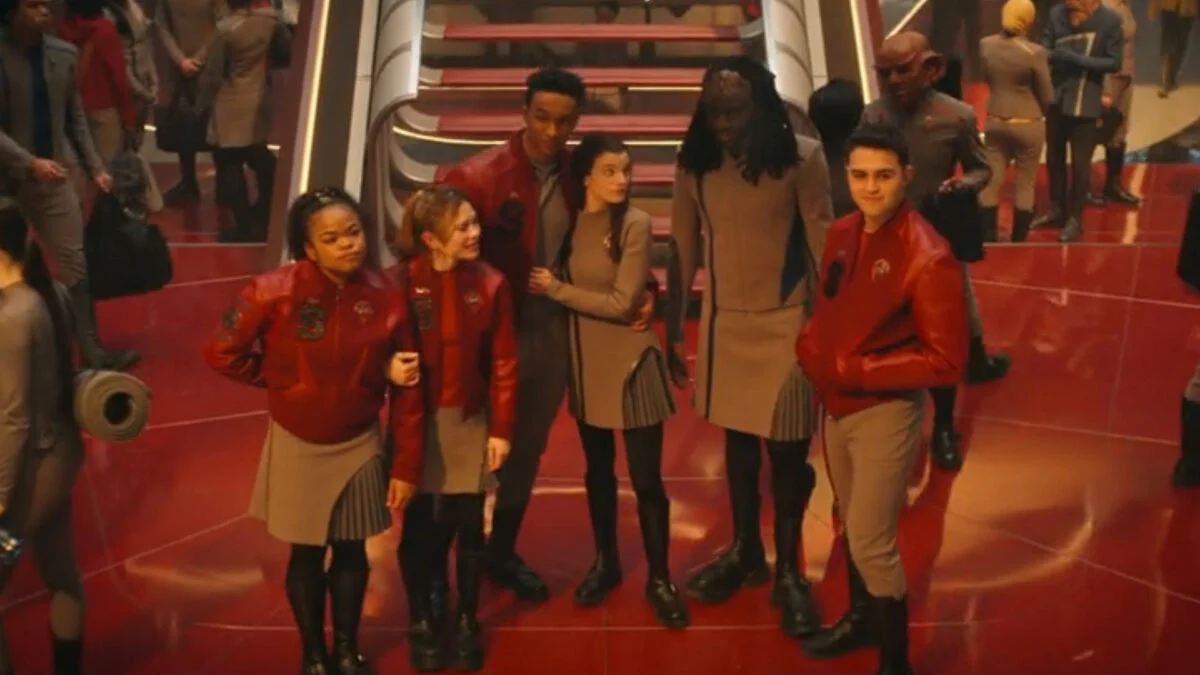
The soundstage went quiet. A call sheet stamped “final” sat on a production assistant’s clipboard. I remember the way that small, sharp disappointment landed — another Star Trek series closed before it had time to show what it might become.
I’ve covered TV shakeups enough to see patterns: corporate math, ratings chatter, and culture noise colliding to make decisions that feel sudden but are often years in the making. You deserve clarity, not spin. Here’s what Starfleet Academy’s cancellation says about how modern franchise TV gets killed — and what was lost when it was.
On the Paramount lot, talk is mostly about numbers.
Executives at Paramount and Skydance are making decisions against a ledger, not a love letter to canon. Skydance’s $8 billion (≈ €7.4 billion) acquisition of Paramount, followed by the attempted $111 billion (≈ €102 billion) bid for Warner Bros. Discovery, put pressure on leadership to cut costs and show a path to profitability.
Nielsen numbers matter. Yes, Starfleet Academy didn’t crack the streaming top 10 during season one, and that fact carries weight when a billionaire-backed ownership group is sizing up a slate. But ratings are an early metric, not a final one — especially in a franchise where patience historically paid off.
Analogy: Starfleet Academy was like a ship cut loose from its moorings: solid in concept, but pushed off course before it could prove its seaworthiness.
At the fans’ forums, opinions split loudly.
Comment threads and op-eds turned every detail into evidence — from costume choices to casting — as if canceling a show on day 200 of its life would settle a cultural argument. That noise became its own pressure point. Public perception, amplified by social platforms and partisan outlets, turned a modest ratings story into headline fodder.
The so-called culture backlash ignored a pattern within Trek: most modern series took time to sharpen their voices. Lower Decks weathered early criticism and later became a standout. Prodigy, meanwhile, was moved off Paramount+ and onto Netflix after two seasons, a casualty of shifting priorities; its fate signaled that shows without immediate, quantifiable growth figures are now at higher risk.
Analogy: The cancellation felt like a garden pruned before it blooms — potential trimmed away rather than cultivated.
Why was Starfleet Academy canceled?
The short answer: a mix of low Nielsen rankings, corporate cost-savings, and the broader strategic choices of new ownership. Long-form answers include the pull of movie-centric ambitions at Paramount, the fallout from mergers, and the appetite among executives to chase content that targets perceived middle-America demographics. Industry players like Nielsen, Paramount executives, and Skydance leadership all played parts in the final call.
Will Starfleet Academy come back on another platform?
It’s possible but unlikely in the near term. Shows sometimes find second lives — Prodigy moved to Netflix, and catalog deals can revive interest — but with Skydance-Paramount steering priorities and an expensive attempted merger in the background, the business case would have to change substantially for a reboot or pickup to happen.
At the editing bay, the story was still being finished.
Shooting for season two wrapped just last month, but post-production is ongoing. That matters: episodes can be reshaped in editing, finales can be re-cut into a proper send-off, and visual effects can land a clearer tone. What averse executives often forget is that serialized TV is iterative.
Across Trek’s history — from TNG to DS9 — creators were given room to grow characters across long runs. Twenty episodes over two seasons is thin by those standards. The cast didn’t get enough runway to deepen their arcs or for writers to respond to audience feedback.
At the intersection of commerce and culture, decisions are human.
I’ve watched studio leaders make choices that mix spreadsheet logic with ego and legacy. Paramount’s recent behavior suggests a pivot toward theatrical franchises and a conservative content posture under new stewardship. That isn’t a moral failing; it’s a boardroom posture. But it has a cultural cost: shows like Starfleet Academy are collateral damage.
We can debate ratings methodology (Nielsen’s streaming metrics, aggregator services, and Paramount+ view-count strategies all matter here) and signal-boost platforms like Twitter and YouTube that amplify certain narratives. We can also ask whether franchise health is better served by quick cuts or measured investment.
Here’s what matters to you if you care about Trek’s future: creators need time, and audiences need a chance to find new stories. Paramount, Skydance, and industry partners like Netflix and Warner Bros. Discovery will decide what comes next.
The show deserved a proper ending, and you deserve a franchise that gives bold ideas a fair shot — will the next generation of Trek get that chance?