
It was a Saturday night when an anonymous post on a dark web leak site landed like a dropped grenade: teams at Rockstar were alerted, players started messaging, and the rumor mill kicked into overdrive. I watched the ping stream and the same thought hit me — this could tangle more than internal files. You should care because what follows could reshape the story around GTA 6’s launch timetable.
I’ve followed major breaches for years, and I’ll guide you through what happened, what’s likely at risk, and how to read the signals Rockstar and the attackers are sending. You don’t need technical certifications to see the stakes; you need to notice patterns and warnings when they show up.
Late-night alerts set teams scrambling: ShinyHunters To Reveal Data from Rockstar Games Hack Soon
ShinyHunters posted on their leak site over the weekend claiming responsibility for a breach tied to Rockstar Games’ cloud infrastructure. The group warned Rockstar to contact them by April 14, 2026, or face a public leak and “several annoying (digital) problems.”
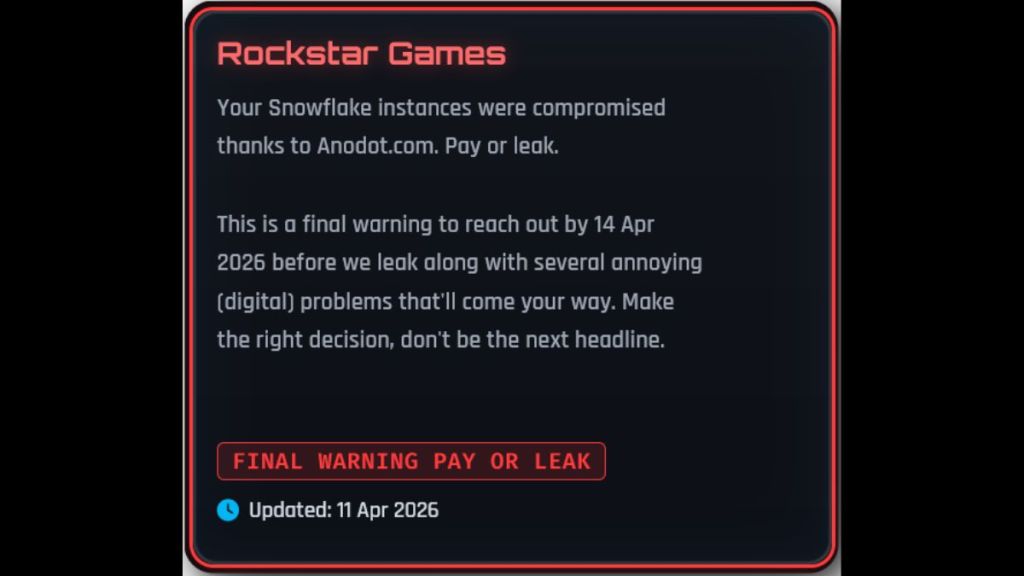
The attackers named Snowflake and Anodot.com in their message, implying access via those services. BBC covered the initial claims and CyberSecGuru suggested the stolen set could include financial records and player transaction histories from GTA Online and Red Dead Online. Rockstar’s terse reply called the accessed data “limited” and “non-material” and insisted players and operations were unaffected.
What data did the hackers steal from Rockstar?
Short answer: we don’t have a full inventory. ShinyHunters hinted at cloud-level access to Snowflake instances, which raises the possibility of source code, development roadmaps, telemetry, and payment records. Industry folks I spoke with point to three practical targets: live-service monetization figures, internal build trees, and analytics stored by third-party platforms like Anodot.
That mix would be embarrassing at minimum and operationally disruptive at worst. The last major Rockstar incident in 2022 exposed early gameplay videos; this could be more surgical — files rather than footage.
Slack channels swell with questions as release calendars blink green: Is GTA 6 Release Still on Track?
Rockstar continues to list the GTA 6 release for November 19, 2026, and they’ve not announced any slippage. That public posture is deliberate: delay admits vulnerability and fires investor nerves. I respect that stance, but you should read it alongside the facts.
Is GTA 6 release at risk?
Risk is real but not binary. If the breach truly only exposed “non-material” company data, as Rockstar claims, launch plans can proceed. If the leak contains source code or critical build branches, developers could face a scramble: IP exposure, forced rework, or attempts to stop public distribution. One safe bet is that Rockstar and its partners — Snowflake for data warehousing and whatever CI/CD systems hold builds — are running incident response now.
Here’s where you and I apply common sense: companies often understate impact while they investigate. That doesn’t mean doom is inevitable, but it means the calendar is now conditional.
Will Rockstar pay the ransom?
Rockstar has said it won’t pay and the attackers are moving the clock toward April 14. Classic extortion posture: threaten publication, demand payment, and apply pressure by teasing sensitive content. Paying might stop a leak once, but it creates incentives for future attacks. Refusing carries its own risk: public data dumps and reputational damage. You can see both sides of the tradeoffs plainly.
Company calls and player forums fill with speculation: What comes next for players and investors
Expect a slow burn. ShinyHunters have a history of publishing stolen datasets, and the dark web thread gives them a deadline. Rockstar will continue triage: patching any vectors, rotating credentials, and notifying affected partners. Regulators and payment processors may ask questions if transaction data is confirmed exposed.
I’ve tracked breaches where a single leaked file felt like a loose thread in a suit — tug one way and sometimes the whole seam unravels. That’s the scale of uncertainty here: manageable now, risky if the wrong file appears online.
For players: stay alert for phishing attempts mimicking Rockstar or payment services. For investors and partners: monitor Rockstar’s security disclosures and third-party reports from Snowflake and Anodot. For reporters and analysts: verify any leaked material before treating it as factual.
I’ll keep watching the dark web postings, the public statements from Rockstar and Snowflake, and commentary from firms like CyberSecGuru. You should too, because these incidents teach us faster than corporate FAQs do.
Will this end as a blip on the rollout timeline or the headline that rewrites how big studios protect launches — and which do you believe it will be?