
The theater went quiet and my chest tightened—18 minutes of a movie-sized punch and a single, tiny green hand stealing the room. I watched Pedro Pascal’s Mandalorian move through snow and walkers with a calm that felt like a promise. You can feel the film setting a course and refusing to explain itself to anyone who already knows the score.
The footage that played at CinemaCon in Las Vegas—and that I saw earlier at an IMAX screening in Los Angeles—puts much of the trailers into live action within the first quarter-hour. Jon Favreau directed the sequence. Pedro Pascal and Grogu are front and center, but the scene belongs to a chain of escalating set pieces that refuse to let up.

At CinemaCon the opening lands like a physical shove — then it steadies into story
The sequence opens with text that situates the film: after Return of the Jedi, before The Force Awakens. If you haven’t binged three seasons of the show, that paragraph is there for you. If you have, it’s a claim: this movie is continuing a lineage, not rewriting it.
The meeting from the trailers plays out almost beat-for-beat. An Imperial official extols loyalty to the old regime, raises protection fees, and executes a dissenter. Then alarms, then silent kills: snowtroopers fall to an unseen assailant. When the silhouette of the Mandalorian steps into frame, Favreau gives us choreography that balances precision and menace.
When does The Mandalorian and Grogu take place?
It sits squarely between the fall of the Empire and the rise of the First Order—so you get familiar politics (New Republic concerns, Imperial remnants) without retreading the Skywalker saga. That placement matters. It makes peripheral players like the Hutts and local crime networks relevant again to the plot.
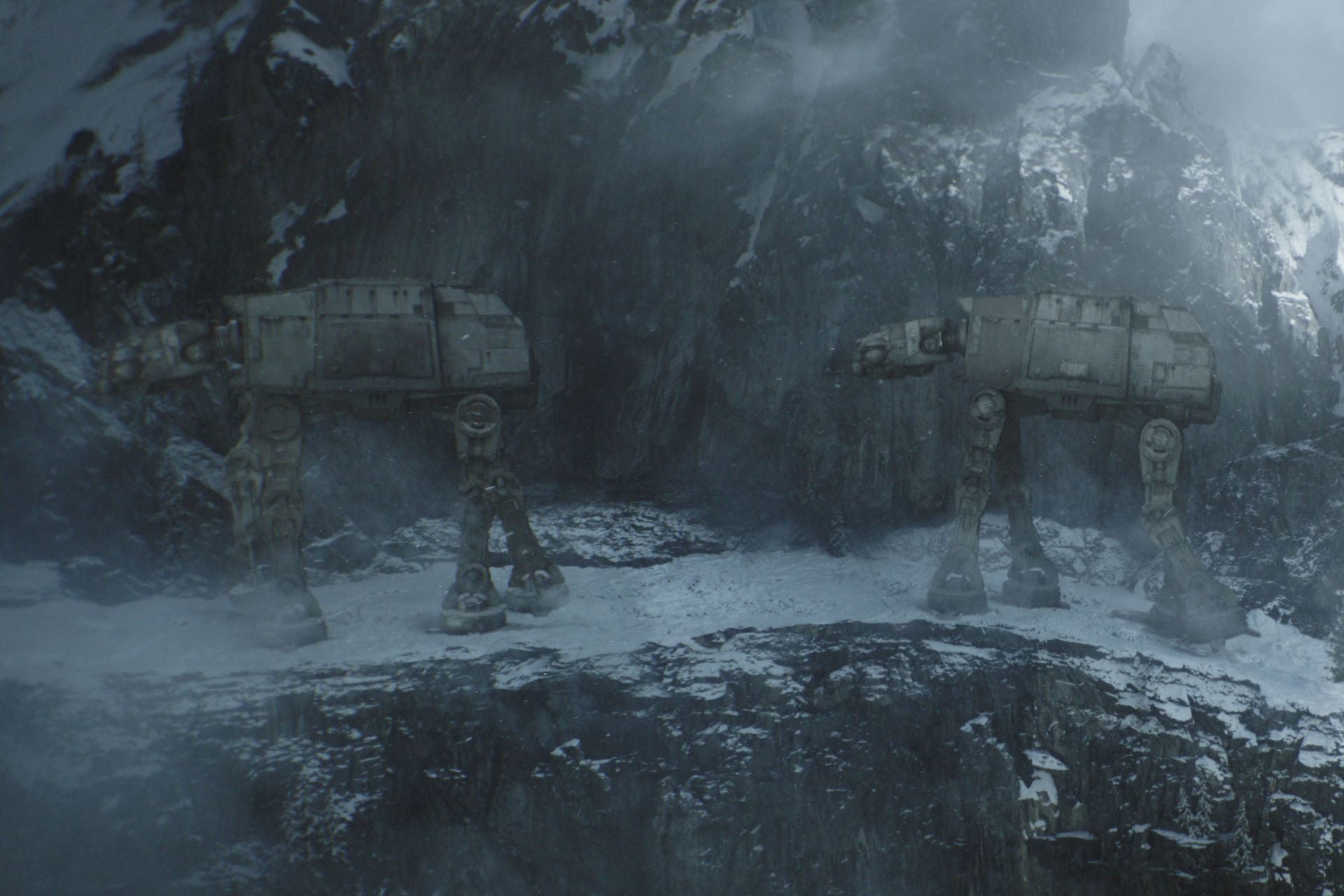
The action escalates quickly. An officer escapes; Mando tosses charges into an elevator. Grogu, tucked behind crates, uses the Force to fling a polar mouse droid into ruin. Then Favreau expands scope: a Snowtrooper on a small AT-RT walker appears and Mando commandeers it, Grogu in tow. The pair barrel down a snow ridge toward three towering AT-ATs.
The assault is a fist to the chest. Mando rockets onto legs, detonates a target, and then conducts a long-take massacre inside a walker’s cargo bay. The sequence leans on practical grit and the kind of camera geography that favors spatial intelligence over glorified confusion.
The bar scene and the Razor Crest reveal start practical exchanges — then raise questions
On screen, ships idle and personnel move at a New Republic base; off screen, I felt the movie changing tone from assault to assignment. After the battle Mando and Grogu are rescued in a U-wing piloted by Zeb. They arrive at Adelphi, the same New Republic base from season three, and meet Colonel Ward—played with composed severity by Sigourney Weaver.
Ward frames the job: this wasn’t vengeance. It’s prevention. She pays in a way that pitches plot and personal stakes at once—she hands over a rebuilt Razor Crest and a bounty without a face for a man whose name sounds like “Coyne.” The Hutts hold the information, and in exchange they want Mando to rescue Rotta, Jabba’s heir. This is where the film opens a bargaining table between old crimes and new governance.
Does Rotta play a big role?
Jeremy Allen White is listed high in the credits, second after Pedro Pascal in the footage I saw. That billing hints Rotta’s presence may matter more than a cameo. If Favreau intends narrative friction, using a Hutt heir as leverage is a smart lever—gangland favors and Republic interests rarely align cleanly.
The Razor Crest itself reads as character. The ship is a battered anthem of home—visibly loved, visibly repaired—and it functions as a promise to viewers that the franchise will keep some rituals intact while pushing the story forward.
Favreau’s choices in the first act are practical storycraft — they shape audience expectation
I felt the runtime settle over the audience like a guarantee: Favreau finished the opening in under 20 minutes and left the rest of the roughly two-hour film for consequences. This is economy of storytelling: establish stakes, deliver spectacle, then pivot to mystery and negotiation.
The credits roll over X-wings and a warming theme; the Mandalorian motif swells on the title card and the film shifts into its next phase: a mission for information, a task from the Hutts, and an ethical tug for Mando who wants honest work with the New Republic. Favreau and Lucasfilm are signaling a movie that will trade blows and bargains in equal measure.
How long is the movie?
Favreau said the film runs just over two hours with credits. That length gives room for action beats, character moments, and at least one political subplot threaded through the Hutts, the Republic, and lingering Imperial elements.
There are breadcrumbs in the end credits—Pedro Pascal tops the cast, but Jeremy Allen White appears immediately after him in that copy I saw—so I’m watching for Rotta’s billing to mean more than a small vocal turn. io9 and Gizmodo covered the footage at CinemaCon, and IMAX screenings amplified the scale; Disney and Lucasfilm are clearly treating this as a tentpole entry in the broader Star Wars slate for Disney+ and theatrical rollout.
My read: the film offers a rapid, confident opening that trades exposition for momentum and asks you to follow. It gives you a mission, a ship, a monetary advance, and a weird favor from the Hutts—then it bolts the door and points you toward choices. If Favreau wanted to make a Mandalorian movie that respects the series while forcing new moral choices, the first 18 minutes do that without flinching.
Do you think the movie will keep choosing moral gray zones over clear answers?