I was three hours into a run when my phone buzzed: poncle had tweeted a celebratory screenshot. I paused, breath caught between a loot card and a monster wave, and realized this little spinoff was no niche hobby anymore. You can feel the room shift when one million people quietly decide to play the same game.
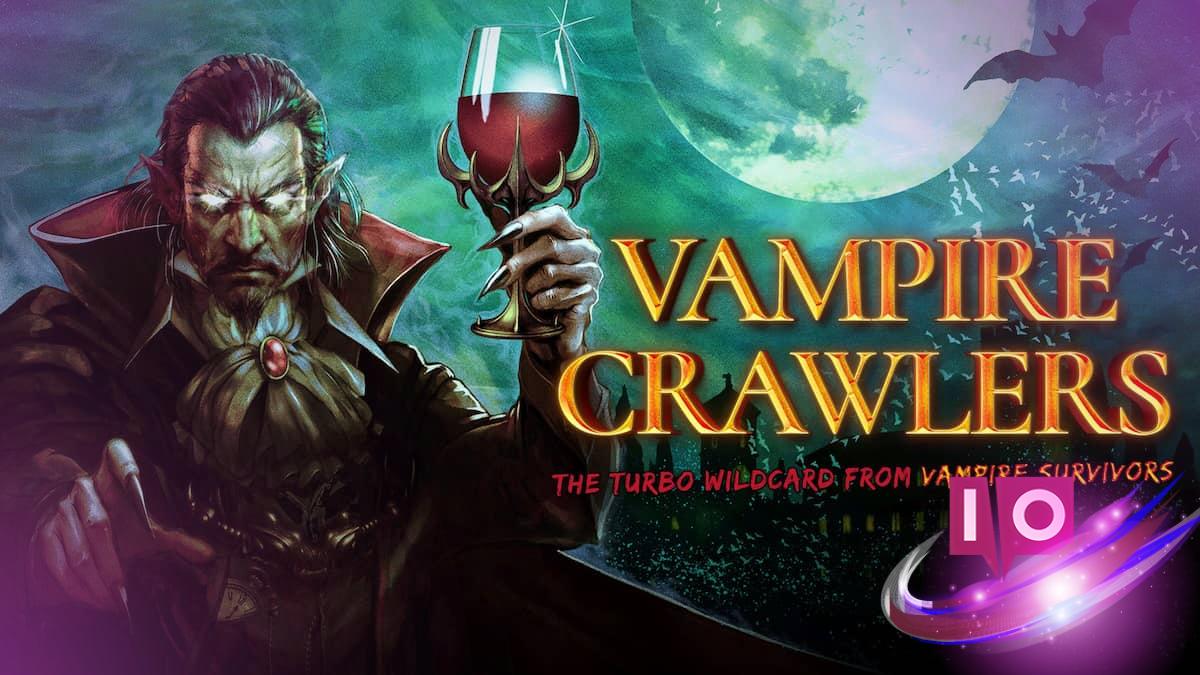
I’ve been playing Vampire Crawlers and writing about it, and I’ll say this plainly: poncle has folded the deckbuilding language of modern roguelikes into first-person dungeon crawling and made it sing. You might already own Vampire Survivors on Steam or Switch; now the brand is proving it can migrate across genres without losing what made it contagious.
we hit 1 MILLION crawlers in the first week of Vampire Crawlers launch we can’t fathom such a big numbie for our first Vampire Survivors spin-off, it means so much to us!truly, thank you to everyone who has picked up the game so far! pic.twitter.com/As4Y2p9v3I
— Vampire Survivors | Vampire Crawlers (@poncle_vampire) April 30, 2026
The barista recognized the icon on my laptop — Why one million sales is more than vanity
That recognition is a cheap litmus test for cultural seep. When someone outside the niche notices the game, you stop measuring success in headlines and start measuring it in attention economy. Vampire Crawlers sold one million copies in its first week; poncle announced it publicly on Twitter and the numbers stuck. That velocity matters to publishers, platforms, and hardware makers.
For Steam and Nintendo Switch storefront teams, a title that moves this quickly triggers curation loops, featured lists, and algorithmic boosts. For indie studios, it’s a bargaining chip when discussing storefront placement or regional partnerships. If a tiny studio can convert curiosity into revenue at this pace, larger platforms pay attention.
What is Vampire Crawlers?
It’s the familiar cast and 16-bit charm of Vampire Survivors parked inside a first-person dungeon crawler that uses card-based battles to resolve fights. Think of the marathon pleasure of the original’s auto-battles reinterpreted as hands of cards you craft and refine over a run. The result feels intimate and experimental — the same loop, but from a new angle.
The courier barely hid his grin when he handed me the game code — Why the formula adapts so easily
Every archetype in the original is distilled: memorable sprites, strong feedback loops, and cheap price points. That trifecta is what lets the brand migrate. Vampire Crawlers keeps the characters and weapons but flips perspective and layer rules. The experiment succeeds because the core motif—satisfying growth over short, repeatable runs—translates.
Deckbuilding as a genre has been proven by games like Slay the Spire; poncle’s move isn’t imitation so much as appropriation of mechanics to expand the franchise’s appetite. This is not a one-off experiment; poncle has told industry press it is working on over 15 new projects and opening studios in Japan and Italy, which signals ambition beyond a single hit.
How many copies did Vampire Crawlers sell?
One million in week one, per poncle’s announcement. That number isn’t just headline candy — it’s a clear indicator that a microtransaction-free, affordable ($10 (≈ €9)) release can still scale quickly in 2026. Low price, high volume: a simple commercial equation that invites more genre experiments.
The neighbor’s kid begged to try my Switch — What this could mean for genre experiments
When six-year-olds and veterans both want a turn, you have a cross-demographic product, and that’s rare. Cheap price points let a title test unfamiliar mechanics with minimal buyer friction; $10 (≈ €9) is a low barrier for most players. For poncle, that means each new subgenre—whether shooters, poker, or fighting—can be prototyped without demanding massive upfront sales to justify the risk.
If you’re thinking commercially, this is a strategy that resembles iterative product launches in indie dev: small bets, fast feedback, then doubling down on variants that stick. It’s a measured way to expand a brand without fatally diluting it.
I’ll say something blunt: this franchise is like a Swiss Army knife for indie design. It adapts, it’s cheap to ship, and it embeds a brand language that players recognize immediately.
That said, there are real pitfalls. Stretch the IP too thin and you lose the charm that fuels word-of-mouth. Charge too much and the experiment stalls. Keep the price low and quality consistent, and you maintain momentum.
poncle has been smart about this so far — they shipped an honest product, leaned into social channels like Twitter for narrative control, and let discovery on Steam and Switch do the heavy lifting. The comparison to deckbuilders isn’t accidental; this series has borrowed a card-language and made it accessible to millions.
Look at the roadmap: multiple studios, a roster of genre experiments, and a history of nimble iterations. This is not an accidental success; it reads like a conscious growth plan. The question isn’t whether poncle can spin the franchise into shooters or poker—it’s whether they will keep the personality intact while scaling.
The sprites are already lodged in players’ heads like a pop song stuck in your head; the only real variable left is how far poncle will push them before fatigue sets in. Are they going to make you care about every micro-genre they try next?