
We were still applauding when the house went black. For a beat I thought the show had finished—then the theater held its breath. You should not leave until you see what comes after the curtain call.
I write about theater and pop culture the way some people collect vinyl: with close attention and a habit of staying to the very last track. If you loved the 1987 The Lost Boys, this Broadway version honors that finale but then sneaks a trick at the end that rewrites how the whole story sits with you. Think of Marvel and DC’s post-credits teases—this is the stage equivalent, and it lands with the quiet cruelty of a secret handed over at midnight.

On opening night the curtain call felt like a relief — then the lights cut out and the room tightened.
The show closes much like Joel Schumacher’s film: Michael faces David, the villainous charisma of Ali Louis Bourzgui’s David is dealt with, and the Emerson family seems safe. But when the cast bows and the final applause still hums in your bones, the theater goes dark and the story slides an extra card across the table. I can tell you, as someone who watches stagecraft for a living, that few things hit harder than an unannounced second ending.
Is there a post-credit scene in The Lost Boys Broadway show?
Yes. After the curtain call, the production returns to the opening image—the police officer’s underground lair—only now a woman we saw earlier, the one plastering “Missing” posters, is exploring the space. She finds the ornate bottle David used earlier, tastes the contents, and the curtain falls again. It’s small, economical, and it rewrites the payoff: the vampires might be gone from Santa Carla, but vampirism survives.
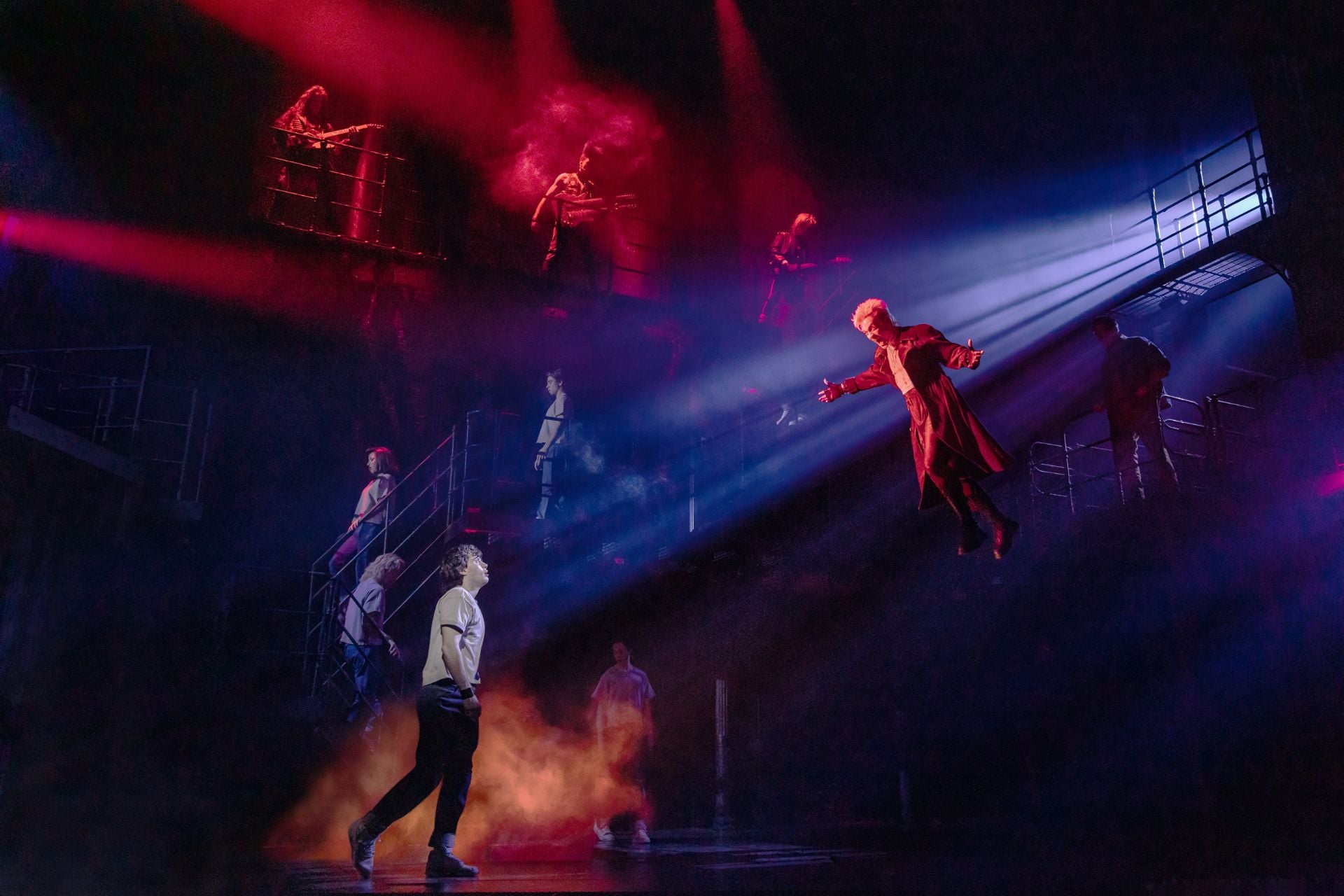
At the playbill stand people compared the finale to the movie’s last frame — and then argued about what the extra scene changes.
The stage keeps the film’s big beats: Michael kills David, Max is revealed as the true head vampire, and Sam delivers a version of that final line—“One thing about living in Santa Carla I never could stomach. All the damn vampires.” But the stage strips Grandpa’s showier fate and replaces it with a quieter, sharper emotional core. I watched a man near me start to clap, then stop, tears in his eyes—there’s a grief here that the musical amplifies.
What happens after the curtain call in The Lost Boys musical?
The cast bows, the orchestra acknowledges, and then—only if you stay—the lights return to reveal the woman from earlier exploring the vampire lair. She discovers the same wine glass David used. She drinks it. The implication is immediate: even after the story’s catharsis, the threat of vampirism is a living thing. That tiny, late image turns closure into unease; it’s a storytelling needle that leaves a thread hanging for your imagination to tug at.
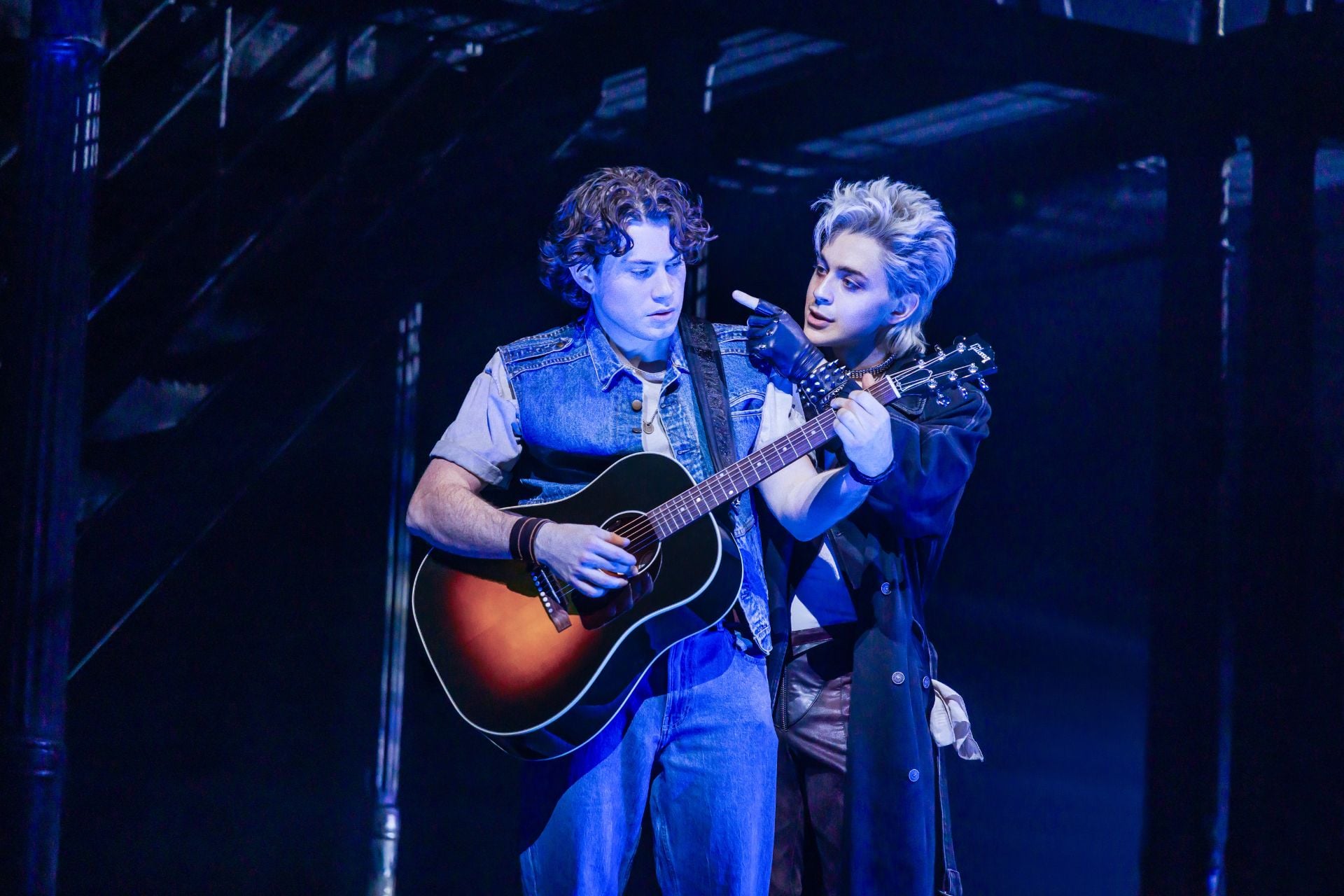
Back outside the theater, people debated whether the post-curtain sting was a tease or a thematic coda.
The woman’s final sip doesn’t scream “sequel guaranteed.” It offers an ethical afterimage: the Emersons may be safe, Santa Carla may breathe easier, but one private choice reopens the story. As a critic who’s followed properties from screen to stage—from io9 coverage to Broadway box office reporting—this is smart dramaturgy: it rewards the attentive and nags the casual viewer into second thoughts.
Does The Lost Boys musical set up a sequel?
Not in an overt, franchise-first way. The scene functions like a final punctuation that leaves a question mark rather than a contract. Producers always measure box-office momentum, social buzz, and touring potential—if audiences keep returning and the show becomes a cultural talking point (see Marvel and DC’s marketing playbook), creative teams can decide to expand. For now, the extra scene reads as an artistic flourish with commercial upside.
If you want the technical side: the staging leans on projection design, precise blackout timing, and the kind of sound cues you’d find in a high-production Broadway transfer—tools and platforms such as QLab for audio and projection programmers familiar to shows across the Great White Way make this effect repeatable night after night. The result is both theatrical and filmic, and that marriage is part of why the scene stings like a whisper in a crowded room.
You can read the full review on io9 and learn more about ticketing and the creative team at lostboysmusical.com. Given what you just learned, will you risk leaving after the final bow tonight?