
I uploaded a photo to GPT Image2 and watched the render appear: a flat, squiggly version of my face that looked shockingly familiar. It felt like watching my six-year-old redraw the same photo with a shaking hand. For a beat I realized the most resource-hungry system on earth had just copied what a 1985 home PC could do.
I’ve been testing generative imaging for years, so you can trust I’m not easily surprised. You, though—you’ll want to see what this trend says about taste, waste, and who benefits when machines mimic amateur art.
On Threads, a user posted a string of doodles that looked handcrafted—then the internet copied them
The prompt that started the ripple was blunt and proud: make this photo look like it was drawn in MS Paint with a mouse. A Korean Threads handle labeled the move “The Most Trivial Prompt in the World,” and people did exactly what humans do online: they repeated it until it echoed.
OpenAI’s GPT Image2 dutifully returned images with shaky outlines, flat fills, and awkward proportions—the hallmarks of a hurried kid’s mouse-driven sketch. But there’s a mismatch: the model produces consistency where human doodles usually offer personality. That tidy replication is the story here.
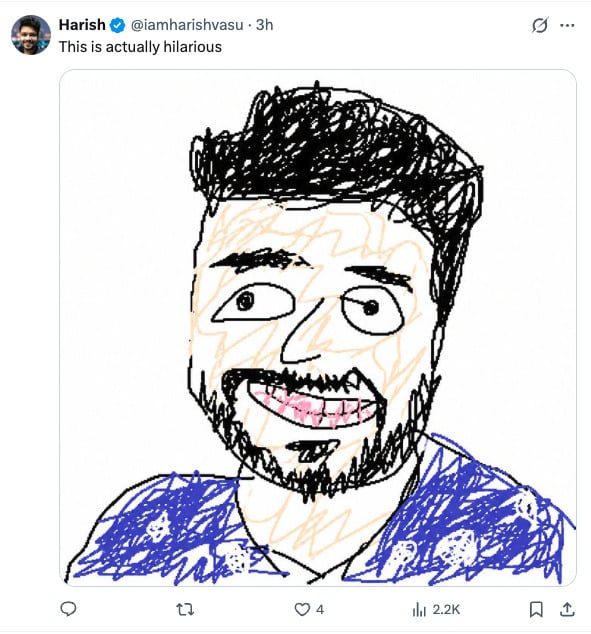
Can AI recreate an MS Paint drawing?
Yes—GPT Image2 will reproduce the visual language of MS Paint: simple strokes, blocky fills, and a white canvas. But reproduction isn’t the same as replication of intent. You get an MS Paint facsimile that’s tidy, repeatable, and stripped of the accidents that make child art charming.
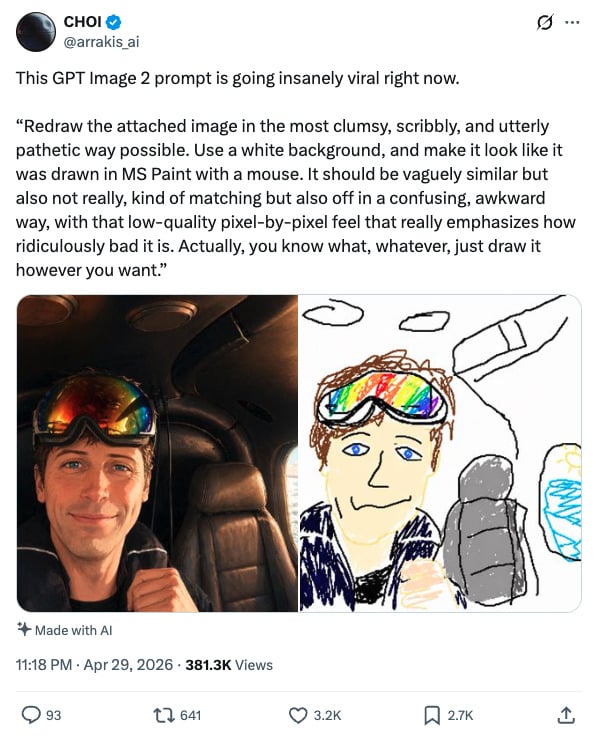
On X, someone framed the prompt as intentionally terrible—and the model refused to be sloppy
A post on X included a deliberately humiliating brief: “Redraw this in the most clumsy, scribbly, and utterly pathetic way possible.” The user asked for awkwardness and low-res pixel-by-pixel horror. The model gave back a respectable, controlled MS Paint-style rendering.
This is where the tension sharpens: humans prize the misfires—the crooked lines, the color outside the box—because those mistakes are evidence of personhood. The model, trained on millions of images and their patterns, removes the messy signatures of a human hand. It produces plausible junk without the human warmth.
Is GPT Image2 infringing on art styles?
Not in this case. The Ghibli controversy had teeth because that prompt chased a protected, trademarked aesthetic and was amplified by OpenAI CEO Sam Altman. The MS Paint prompt points at a public, ubiquitous interface rather than a single artist’s copyrighted style, so the legal heat is lower.
Still, there’s a practical ethical question: do we want massive data centers recreating low-effort outputs that any kid with a mouse could make? You could argue it’s harmless fun. I’d argue it’s a symptom: expensive compute replacing a tiny moment of human expression.
In feeds and replies, people treated the prompt as a joke—and the joke exposes a habit
Replies to the original posts filled with variations of the same instruction. Aggregators on X picked it up, comment threads gamified the prompt, and before long a meme had formed. The trend’s virality is modest, but its implications are instructive.
GPT Image2 is doing exactly what it was built to do: match patterns. That makes it excellent at mimicking a style and terrible at producing the incidental charm that carries social meaning. The result is like a photocopy of a child’s sketch—perfectly legible but emptied of the original’s fingerprints. The model becomes a photocopier of affect, efficient yet inert.
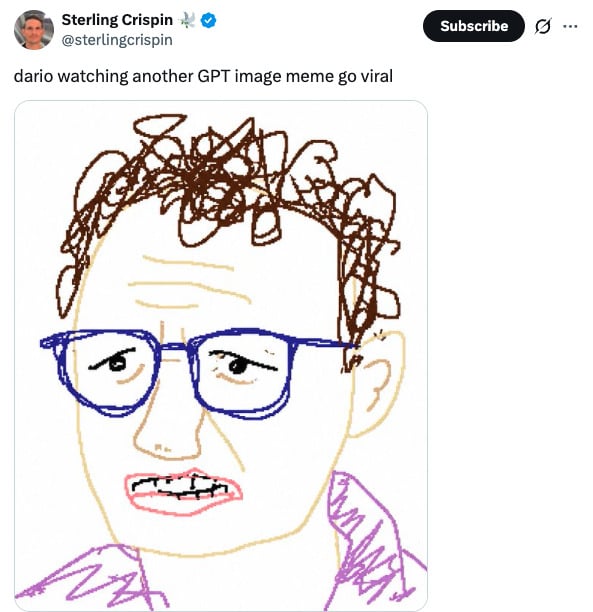
How do I prompt GPT Image2 to make MS Paint-style images?
Call out the style—say “draw on a white background, MS Paint style, mouse-drawn, clumsy lines”—and include the source photo. You’ll get a clean MS Paint aesthetic. If you want uglier outputs, you’ll need iterative prompts and edits; the model prefers tidy over broken by default.
Here’s where I give you a practical frame: if your goal is novelty or satire, the model is fast and reliable. If your goal is to preserve the value of human imperfection—those crooked strokes, the accidental color bleeds—you should keep a kid’s mouse or a real human in the loop.
OpenAI’s GPT Image2, ChatGPT integrations, and platforms like Threads and X have taught us something obvious and uncomfortable: scale doesn’t grant taste. Sam Altman’s earlier encouragements around Ghibli-style outputs showed how quickly a CEO’s nudge can mainstream a prompt; the MS Paint trend shows how AI flattens quirks into reproducible patterns.
I’m not saying we ban the fun prompt. I am saying you should be aware of what’s happening when a data center consumes megawatts to redraw a simple sketch. That’s not just inefficiency; it’s a cultural choice about what we value when machines do our art for us.
If you care about who gets credit, who loses practice, and what’s preserved as “authentic” creation—will you let the machines take the easy drawing jobs, or will you teach the next human to keep making the messes that matter?