You’re handed a clipboard at the Bic Camera counter and told you can’t buy the new Ninja Spinners boosters until you pass a 15-question Pokémon quiz. I watch a suited customer fumble through basic Pokédex trivia and get sheepishly turned away. The tension in the queue is half amusement, half humiliation.
Pour lutter contre les scalpers, le Bic Camera Ikebukuro a mis en place un quiz Pokémon obligatoire.15 questions basiques sur l’univers Pokémon à réussir pour pouvoir acheter des cartes.D’après les témoignages, les revendeurs n’ont pas réussi à passer le test #Japon #Pokemon pic.twitter.com/XoF2By6Q8h
— Ryo Saeba | Japon XYZ (@Ryo_Saeba_3) April 27, 2026
I’ll be direct: you and I have seen supply shocks before. But this is different because the product—Pokémon TCG boosters—is cultural currency as much as collectible stock. You care because scalpers are gaming markets you and fellow fans actually want to play in.
The notice on the counter names Ninja Spinners and says buyers must pass a 15-question quiz in Japanese.
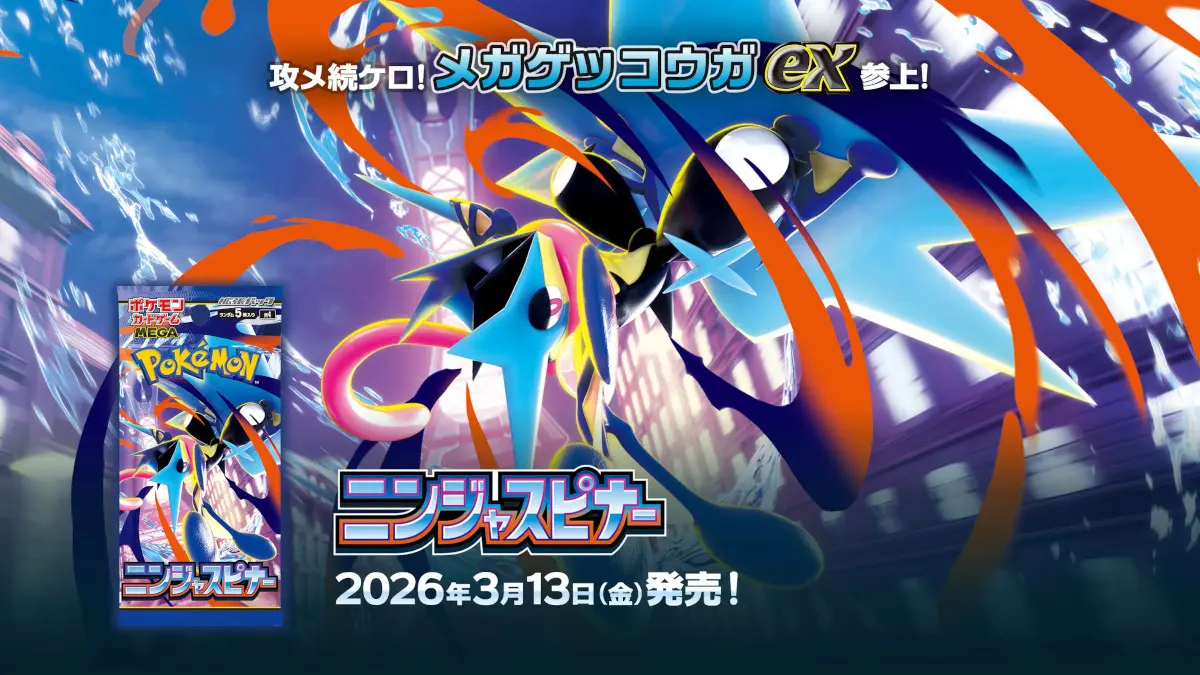
That’s the whole gate. Bic Camera Ikebukuro limits the quiz to purchases of the Japan-only Ninja Spinners expansion, which includes a highly sought Mega Greninja variant. The quiz pulls from a staff-created question pool; answers must be given in Japanese and phones are banned during the test.
Pass, and you can buy one booster pack. Fail, and you walk away empty-handed. The store also opens the pack and removes its plastic wrap before handing it over, which crushes resale value.
How does a Pokémon quiz stop scalpers?
Think of the quiz as behavioral friction: it raises the time and knowledge cost for anyone trying to buy at scale. You can’t just send a bot or swipe ninety packs when every sale requires a small, language-locked exam. The policy pairs identification of genuine fans with practical deterrents—one-per-person limits and devaluing opened packaging—so speculative buyers lose both margin and anonymity.
The reaction in the store and online reads like a mix of relief and schadenfreude among fans.
Reports from X (formerly Twitter) users like Ryo Saeba show genuine collectors breezing through questions while alleged resellers stumble. I hear the laughter from the counter: people who actually know Greninja’s name get priority, and the ones buying just to flip packs get exposed.
Can other stores copy Bic Camera’s approach?
Yes, and already some Japanese fans are urging it. The mechanics are simple enough for independent game shops: curated quizzes, a no-phone rule during the test, strict per-person limits, and removing resale-friendly packaging. Platforms where cards are flipped—eBay and Mercari—will still host secondary markets, but the immediate supply choke at point of sale makes large-scale hoarding far less profitable.
The bigger picture is a market where scarcity breeds desperation and sometimes crime.
We’ve seen escalation before: armed robberies targeted card stock in the U.S., with criminals stealing roughly $100,000 (€93,000) worth of merchandise in at least one incident reported by IGN. When profit margins look fat and packs are scarce, some actors cross legal lines. A localized quiz sidesteps the need for policing by making scalping less valuable.
There’s also the psychological angle: public shaming and the risk of being barred are powerful social brakes. You don’t want to be the person laughed out of a shop because you can’t name a starter Pokémon. The quiz functions like a bouncer at a club—selective, mildly humiliating, and shockingly effective.
Operationally, Bic Camera’s rules are enforceable without heavy tech. Staff manage the question pool and watch for phones. The approach leverages human judgment rather than relying on algorithms, which many small retailers can adopt today.
Two practical limits remain: a determined reseller could recruit knowledgeable buyers, and international tourists might be tripped up by the Japanese-language requirement. Still, the solution raises the friction high enough that mass scalping loses its profit math, acting as a sieve for resellers while leaving genuine collectors mostly unharmed.
Is this fair or legal for customers?
Retailers can set sale conditions so long as those conditions don’t violate consumer protection laws. A store refusing sale based on a short trivia test is legal in most jurisdictions, provided the rules are applied evenly and posted clearly. From an equity angle, the policy arguably favors community members over professional resellers, which is explicitly the point.
If you run a game shop or follow Pokémon TCG markets, pay attention to Bic Camera’s experiment. It’s low-tech, socially clever, and aimed directly at the weakest link in the scalper chain: ignorance. Two metaphors have already done their work—this idea moves fast because it’s simple and human-centered.
Will other retailers adopt quizzes and change the economics of card flipping, or will scalpers adapt faster than shops can react?