I walked out of the theater with my jaw still tight from the last beat of the fight. You probably did, too — or you’re about to, if spoilers are your favorite cheat code. I want to pull apart what the ending actually does: for grief, for fan service, and for the next chapter.
At the concession stand two strangers were arguing over who lived and who didn’t — Let’s Talk About the Ending of Mortal Kombat II
I’ll be blunt: this film kills beloved characters and then hands you a promise that death might not be the end. That tension — grief on one side, the franchise’s resurrection trick on the other — is the engine driving every scene after the tournament. You feel the loss; you also feel the roadmap to get them back.
The tournament itself ends with Earthrealm’s victory, but it’s not clean. Katana flips allegiance and kills Shao Kahn, who had murdered her father in the opening. The win costs Liu Kang, Jax, and Cole Young their lives, and the survivors steal Kahn’s necromancer with a vow: go to the Netherrealm and pull their friends back.

On the walk home, someone joked that “death means nothing here” — Why that matters
That joke points to a truth at the heart of Mortal Kombat: fatalities are part spectacle, part tradition. Jeremy Slater, the film’s writer, said, “It’s sort of baked into the DNA of Mortal Kombat as a franchise… And then the next time you put in a quarter, they’re all alive again.” He adds, “I’m as guilty of that as anybody because I was like, ‘I’m not going to write this movie unless you let me bring Kano back.’”
But Slater also insists the creative team treats deaths with weight. “For the characters, death is still real. It still matters. And so you have to approach it and treat it with severity.” That friction — between a fatality’s shock and a player’s expectation of resurrection — creates genuine emotional beats. You buy the pain, even if the rules of the universe will later erase it.
Who dies in Mortal Kombat II?
The casualties include Liu Kang, Jax, and Cole Young on-screen. Kano and Kung Lao return, and several characters are set up to come back by whatever narrative device the filmmakers prefer — revenants, time tricks, or necromancy. Slater admits, “Some of those deaths were out of necessity, and some of those deaths were because we do have bigger plans for some of those characters down the road.”
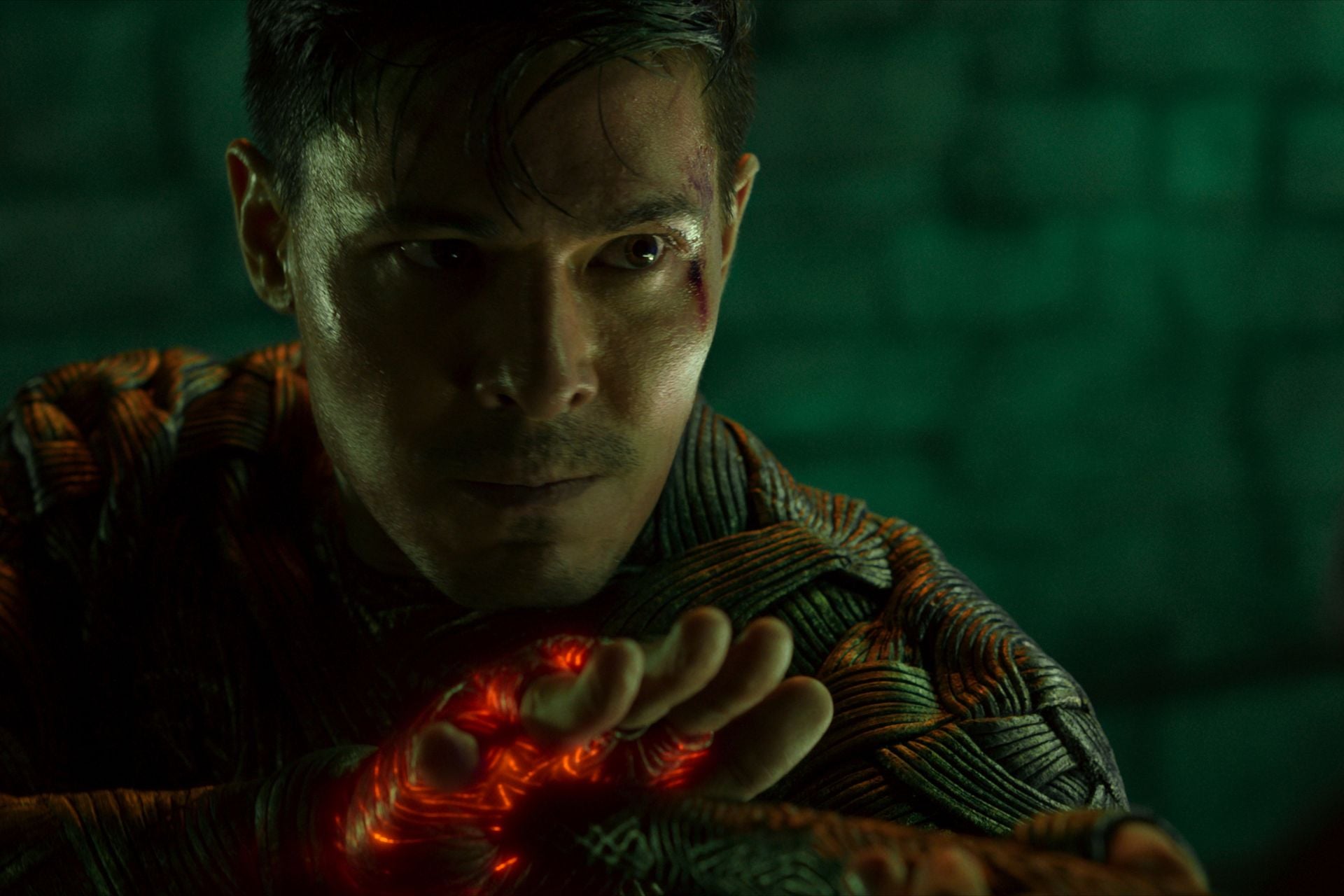 Lewis Tan as Cole in Mortal Kombat II. – Warner Bros.
At the theater exit a kid was sketching an arc on a napkin — How Mortal Kombat II seeds part three
Slater is candid that the movie plants clues for the next chapter. He told io9, “Some of these characters and actors, we have big plans for them in the future, and just because some of them met a bad ending in this movie, it doesn’t mean that’s the last time you’re going to see them.”
The most obvious thread points straight to Liu Kang. His death is framed as a necessary sacrifice that lets the team recruit Kung Lao back — a plot lever that pushes the surviving heroes into an offensive posture. The final act’s theft of Kahn’s necromancer is explicit: the heroes will carry the fight to the Netherrealm to recover lost allies. The film is less about cliffhanger theatrics and more about planting dominoes across several scenes so the sequel has momentum.
Does Mortal Kombat II set up Mortal Kombat III?
Yes. Not with a post-credits wink, but with the film’s internal logic and propulsive losses. Slater says he’s already developing Mortal Kombat III and watching audience reactions to refine tone and character focus. “For a very long time, I’ve been writing and developing Mortal Kombat III sort of in a vacuum. And now that fans are seeing [part two] and responding to it, we can see tonally what’s working,” he told io9.
In the parking lot, two posters hammered home a promise — What the creative team owes fans
I believe the filmmakers owe two things: respect for stakes and an imaginative way to bring characters back that doesn’t feel cheap. Fans want surprises and payoffs; studios want to keep bankable names in play. Warner Bros. is balancing both, and Slater’s approach is to give filmmakers “all the tools they need to make an incredible movie.”
That bargaining is industry reality: comic-book franchises, game adaptations, and studios like Warner Bros. juggle fan service, brand value, and the director’s vision. You can see the same calculus in how Marvel and Star Wars tease future entries: plant clues, react to fan response, then shift emphasis for the next act.
Will Liu Kang return?
Short answer: probably. Slater’s comments and the film’s structure both nudge you toward a resurrection arc for Liu Kang. He’s the emotional hinge of the story; his death has narrative utility beyond shock. Given the franchise’s history and the way the script borrows from game mechanics (where death is reversible), bringing him back is both expected and narratively rich if handled with care.
I don’t hide my bias: I want the next film to respect the hurt this movie creates while rewarding fans with smart returns. Resurrection can be thrilling or cheap — and the difference is in how the film earns it. In this case, Slater has left clues, creditors, and a necromancer on the table. It feels less like a conjurer’s sleight and more like a map that leads to the next set-piece — like a magician’s rabbit pulled from a hat.
Fans who hated the first movie’s choices may view Cole Young’s brutal death as a wink; others will feel cheated. Slater acknowledged the balancing act: “Some of those deaths were very painful for me to write in this movie, that are still painful for me to watch… But some of these characters and actors, we have big plans for them in the future.” That sentence creates a curiosity loop the film wants you to follow — a trail of blood and clues like a blood-splattered map leading to the next fight.
I’ll keep an eye on how Warner Bros. and the creative team react to reactions. If they lean into character payoffs and respect the emotional cost of loss, part three could feel earned. If they treat death as a mere reset button, your anger will be justified. Which will it be?