
My feed flickered. A screenshot of Tracer’s new Fortnite skin took up half my screen and wouldn’t let go. I felt the absurdity of a decade-old debate compress into a single, oddly specific meme.
I remember writing about this in 2016 — the “Tracer asspocalypse” when Blizzard swapped a victory pose and the internet decided a posterior could define a mascot. Now it’s 2026, and the conversation has returned, louder, but with a new host: Fortnite and Epic Games’ collab has made Tracer’s cheeks a trending topic all over again.
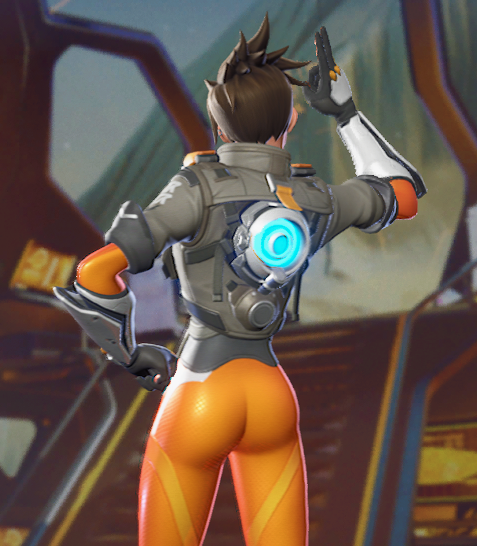
On my timeline, a single tweet boiled the conversation over
You scroll past five developer updates and one meme before something stops you. In this case it was a screenshot and half a dozen creators — Muselk, YogurtCap, Klarque_Clint — amplifying it on X. The momentum felt familiar because the original episode in 2016 taught the community how quickly a cosmetic choice becomes a cultural symbol.
Back then, Blizzard tweaked Tracer’s pose and the backlash framed that adjustment as a censorship story. Now, the debate isn’t about removal; it’s about enlargement. A memory from ten years ago collided with a modern influencer economy, and the result is a viral loop that feeds on itself like a pebble thrown into a pond.
Why is Tracer’s butt suddenly trending?
Short answer: cross-platform spotlight plus influencers. Epic Games gave Overwatch’s mascots visibility inside Fortnite’s player base of millions, and creators turned a design difference into commentary. You’re seeing design scrutiny, nostalgia, gender talk, and platform culture all braided into one meme-heavy strand.
Thank you Fortnite pic.twitter.com/pohcYkmrD8
— YogurtCap (@cap_yogurt) May 14, 2026
NO SHOT THEY UN-NERFED TRACERS BUTT! Finally @Fortnite with the courage to do what @Blizzard_Ent wouldnt. The world needs heroes. pic.twitter.com/OdQRVYNBz9
— Muselk (@muselk) May 14, 2026
At the Fortnite Item Shop, sales speak louder than statements
I opened Fortnite’s shop and the Overwatch bundle was sitting at the top. That’s not a theoretical observation; it’s revenue in plain sight. The Tracer skin can be bought for 1,600 V-Bucks — roughly €13 — and the full 4,200 V-Bucks bundle lands at about €34.
People vote with wallets. Epic Games has a finely tuned commerce engine and a global storefront; pair that with creators pointing at a single visual detail and you have a feedback loop that pushes that detail into mainstream conversation. The 10th-anniversary in-game content from Blizzard feels muted beside Epic’s marketing loudspeaker — a neon billboard on a foggy street.
How much does Tracer cost in Fortnite?
The skin alone is 1,600 V-Bucks (≈ €13). The full Overwatch bundle is listed at 4,200 V-Bucks (≈ €34). If you want a USD comparison, those amounts are roughly $13 and $34 respectively (€ equivalents included).
Fortnite aint holdin back no more pic.twitter.com/jKOjI4z13H
— eshenta (@eshenta_) May 14, 2026
In the comment threads, you can feel the split
Scroll Reddit, X, and the YouTube comments and you’ll find two predictable camps: those celebrating the change as harmless fun and those arguing it signals a broader trend in character design and moderation. That split maps neatly onto platform incentives — attention and ad models versus long-term brand stewardship.
I side with asking better questions: What does it mean when an aesthetic choice from one developer becomes the headline for another? How should companies like Blizzard and Epic Games steward legacy IP versus fresh audiences? Social platforms, influencers, and gaming press (yes, Moyens I/O and creators like Muselk) act as accelerants; you and I watch the flame and ask whether it’s illumination or heat.
Bro… This Update is great pic.twitter.com/wPzPYqTxpk
— Klarque_Clint (@klarque_clint) May 14, 2026
Ten years on, the debate about Tracer’s body is less about a single model and more about who controls cultural memory: developers, platforms, or creators. I’m watching the thread, you’re probably watching it too, and the question keeps coming back—are we arguing about art, commerce, or simply the attention economy?
it’s For You dawg it’s lit pic.twitter.com/pN0NTIJ4Sg
— Serinide (@serinide) May 15, 2026
So tell me: when a cosmetic sparks a cultural argument, who should steer the conversation — the creators, the platforms, or the players?