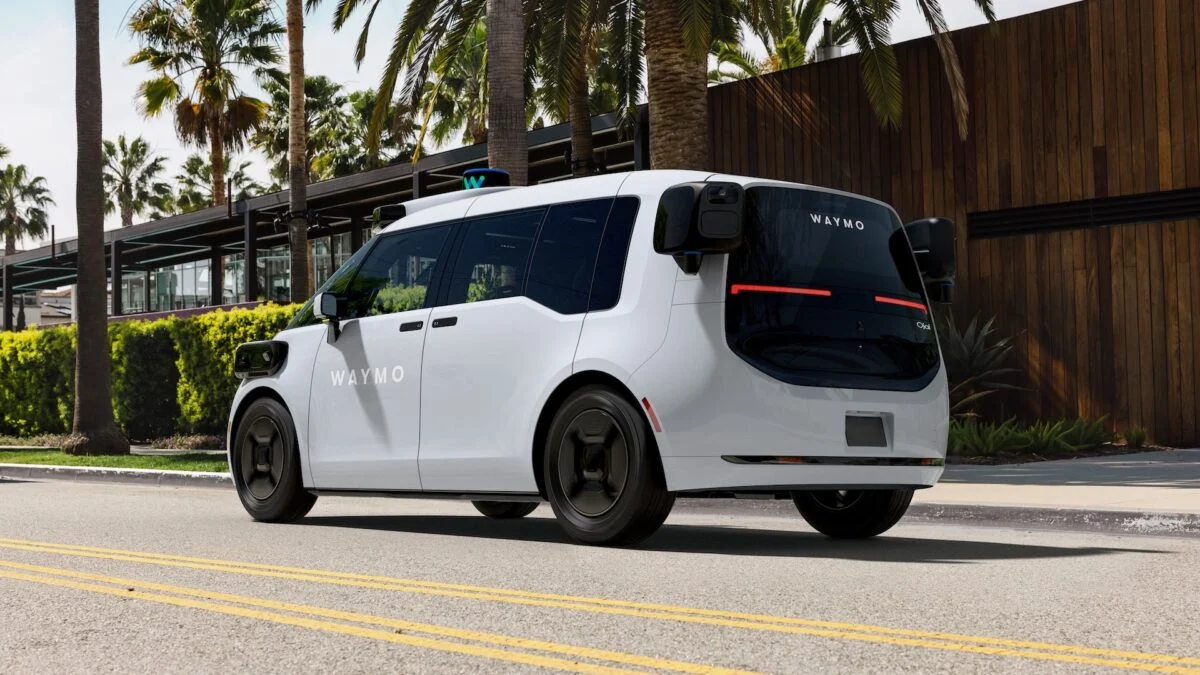
I watched a Waymo taxi go dark in the late afternoon and felt the odd reassurance that its battery wasn’t simply being boxed and forgotten. A pile of cells, once charged for miles of city driving, sat ready for a new job. You’d be surprised how quickly an old EV pack can become the backbone of a neighborhood’s evening power.
I’m going to walk you through what Waymo’s deal with B2U Storage Solutions means for California and Texas — the practical mechanics, the scale, and why this matters to your grid and your bill. Read this like a short field report from the edge of a technology that’s already quietly shifting how energy flows after the car stops.
On a blistering Texas afternoon a robotaxi went offline — why those retired batteries still matter
Waymo announced a partnership with B2U Storage Solutions to repurpose batteries that no longer meet driving standards but still hold plenty of usable life. Adam Lenz, Waymo’s head of Sustainability & Environment, framed it as a way for the fleet to support clean electricity and extend economic value for communities. I lean into that because the technical reality is simple: a pack that can’t handle high-mileage demands often still holds 70–80% of capacity — enough to smooth out power swings.
How will Waymo’s retired EV batteries support the power grid?
They’ll store surplus renewable energy when solar and wind production peaks and discharge it during evening demand spikes. Freeman Hall, CEO of B2U, says these cells can last seven or more years powering the grid after they’re pulled from cars. The company’s process is designed to be rapid: take a battery, integrate it into a modular rack, and connect to a local distribution node. For grid operators — think CAISO in California and ERCOT in Texas — that’s stable, dispatchable capacity without waiting for new lithium builds.
In a low-slung yard near Bakersfield you can see racks of cells in the open air — how B2U turns car packs into grid assets
B2U’s model is intentionally straightforward. Packs are moved into compact enclosures where racks hold groups of batteries; the build looks like a tidy data center and functions like a storage plant. Freeman Hall calls it plug-and-play: the company claims they can connect a battery from a vehicle to the grid in days, not months.
Those enclosures will soak up midday solar and release it when demand peaks — treating the surplus like a sponge for midday solar. That reduces curtailment for generators and shifts supply into evening hours when prices spike. The result: more usable renewable energy and less strain on transmission lines during peak windows.
Where will the battery storage sites be located?
Waymo says initial deployments will be in Texas and California, where it already operates robotaxi fleets and has logistical reach. Expect installations near urban load centers and at nodes with high renewable output — county substations, industrial parks, or near Waymo’s maintenance hubs. The company suggests the program could scale to hundreds of megawatt-hours as fleets and retirements grow.
At an Austin DMV counter the registration list told the story — why scale matters for storage economics
Waymo’s vehicle count in Texas dwarfs Tesla’s robotaxi registrations: 577 Waymo units versus 42 for Tesla at the end of May, according to a Texas DMV database. Scale changes the math. Thousands of retiring packs from a growing fleet can yield meaningful grid capacity and bring down per-kWh costs for integration.
Waymo is expanding fast — new coverage in Miami, growth in Austin, Atlanta, Houston, and the Bay Area, and plans to scale production at its Phoenix-area factory to tens of thousands of vehicles per year. That pipeline of packs lets you think in hundreds of MWh over time rather than scattered kilowatt tests.
On a quiet evening in your neighborhood the lights stay steady — what this means for you
If you live near deployment zones, the immediate impacts are practical: fewer price spikes during the evening ramp, reduced curtailment of local solar, and extra resilience against short outages. For utilities, modular repurposed batteries are a faster, lower-capex way to add distributed storage than building large new plants.
I don’t want to oversell it — these systems aren’t a silver bullet for every grid problem — but for two large, solar-rich states, redirecting automotive packs into storage is one of the clearest ways to make renewable generation more usable today.
Names and institutions to watch: Waymo, B2U Storage Solutions, Freeman Hall, Adam Lenz, CAISO, ERCOT, and the Phoenix-area manufacturing hub that will feed future pack retirements. You can view Waymo’s announcement on their blog and B2U’s explainer in their partnership video.
There’s momentum here, but also hard choices about safety standards, recycling at end of second life, and who owns the assets and revenue streams. If you had to pick one tension to watch — it’s the line between rapid deployment and clear, auditable guarantees about long-term performance and disposal. Which side will regulators and utilities favor as these systems scale?