I opened my email, skimmed a line I had ignored for years, and felt that small panic you only get when something you own could disappear. You’ve probably seen the headlines about PlayStation phasing out physical discs — and then spotted a terse clause in Sony’s Terms of Service. For many, those two facts collided into a fresh worry: could your PSN account vanish after months of silence?
The clause has quietly lived in Sony’s Terms since 2009. That single sentence — 36 months of inactivity can lead to account removal — is the one people suddenly noticed.
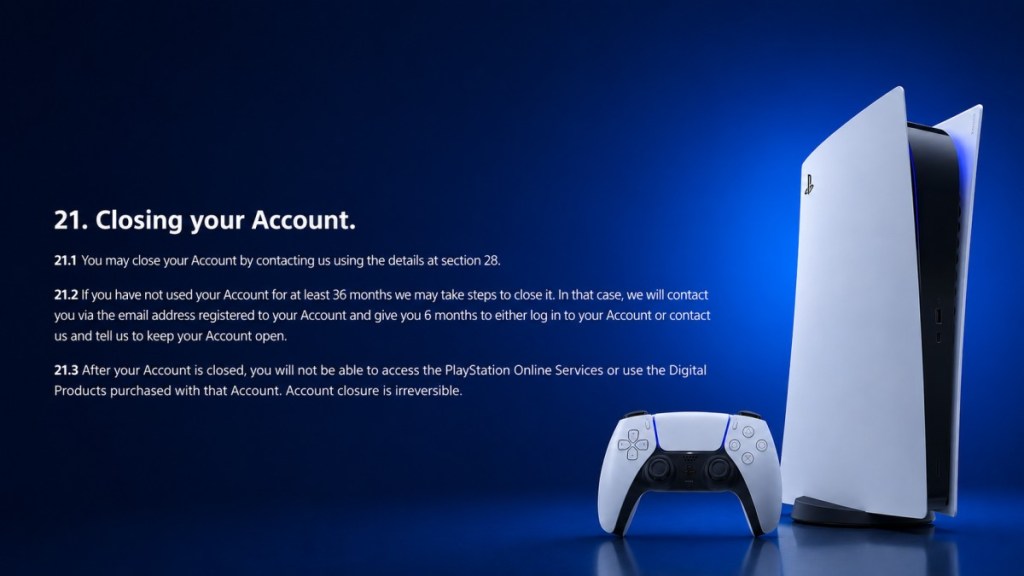
I want to be blunt: this is not new. Sony’s policy on inactive PSN accounts has been public for years, first offering an 18-month window and later stretching it to 36 months. If the clock runs out, Sony says it will email you and then give another six months before taking action.
You can argue whether that’s fair. I’ll argue you should treat it like an instruction manual you actually read: keep access to the email tied to your PSN, log in occasionally, or reply when they reach out. The rule is legal and disclosed — the uproar is mostly about the timing, not the surprise of a hidden clause.
Can Sony delete inactive PSN accounts?
Yes, but there’s a process. Sony’s ToS gives it the contractual right to remove accounts after long inactivity. Before that happens you will receive at least one email and then another six-month notice window. If you log in or respond, the account remains. If you don’t, account closure is possible.
Gamers are furious because disc sales are ending and the timing makes that old clause feel threatening. Anger is understandable — losing physical media changes how you own games.
I get the emotional hit. You can still boot disc-based games you already own, but digital purchases, cloud saves tied to PSN, trophies, and downloadable content are stored under that account umbrella. If you lose access, those items can become hard to reclaim.
The backlash has a combustible quality: a Stop Killing Games petition grabbed headlines, Xbox and Nintendo fans chimed in, and forums filled with threads about preserving physical libraries like heirlooms. The debate reads like two metaphors at odds — your digital library tucked away like a forgotten attic, while public outrage simmers like a slow fuse.

Will PlayStation stop selling physical discs?
Sony announced a phase-out of new physical discs starting in 2028 for certain upcoming titles. That doesn’t yank existing discs out of your shelves overnight. Publishers, retailers, and secondhand markets still matter — Steam, Microsoft’s Xbox storefront, and Nintendo follow their own paths, so the industry will fragment rather than flip a single switch.
If you’re an active player, your immediate risk is low. Log in once every year or two, keep the email tied to your PSN live, and enable two-factor authentication on your Sony account and Gmail or other providers. Use PlayStation Plus or the built-in cloud save options where available to keep progress backed up.
Yes, the clause is legal and disclosed, but that doesn’t make it popular. It’s fair to feel protective about years of purchases and trophies — I feel that, too. You have power here: maintain account access, track receipts in your email, and consider exporting save data where the platform permits. If you want to keep your digital life intact, treat your account like a tiny bank account you visit now and then.
Sony will face a PR test as physical media becomes rarer and debates about digital ownership intensify — the internet remembers petitions and screenshots for years. Are you going to let a clause you barely read decide the fate of the games you spent hours and money on?