I was scrolling through X when the thread detonated — engineers, policy folks, and investors forwarding the same Kimi K3 benchmarks. The tone snapped from excitement to alarm across a few dozen replies. That was the moment the great freakout began.
I’m going to walk you through what happened, what people with power are saying, and why you should care. You don’t need to agree with anyone here; you need to see the mechanics.
A Monday morning benchmark made everyone sit up.
Kimi K3 arrived with numbers that read like a wake-up call — public benchmarks put Moonshot AI’s model on par with Claude Fable and GPT-5.6. I ran the threads, you saw the links: BBC coverage, independent testing, and engineers tweeting agentic coding sessions that looked competent.
What hits first is the practical question: a model this good, released open-weight, reshapes the playing field overnight. Tension inside labs became a pressure cooker. You feel that squeeze whether you run inference costs or write compliance checklists.
Some observations on Kimi:
1. It’s a very good model! I don’t think its performance can be explained away by distillation or anything like that. In agentic coding sessions, it seems pretty much on par with the best public models of Q1 2026. In my fairly limited use, it also…
— Dean W. Ball (@deanwball) July 17, 2026
Is open-source AI dangerous?
Dean Ball — now Head of Strategic Futures at OpenAI — threaded his doubts publicly: Kimi K3 is strong, and he’s surprised the Chinese state would let something this capable go open-weight. He calls open-weight models “effectively ungovernable.”
Here’s the thread’s psychological motor: authority plus fear. When a senior figure warns of ungovernability, risk aversion cascades. You don’t need to accept every premise to see the tactic: raise a plausible-sounding threat and watch regulated enterprises step back.
An executive tweet lit a fuse inside policy rooms.
Ball’s thread didn’t stop at technical praise. He argued that open-weight models slow commercial AI investment — “decelerationist,” he wrote — and could flip AI toward a public-good model. That term, “AI communism,” is performative: a scare-story to defend market margins.
Read plainly: a lab that competes in a market fears losing control when models become public utilities, and it makes public-policy arguments that align with protecting customers and revenue. You should be skeptical of simple narratives that map neatly onto a company’s balance sheet.
Will the US ban Chinese AI models?
Policy responses are already gossip on the Hill. Axios reported the Trump administration may revive efforts to limit foreign models via the Commerce Department’s Entity List or executive orders that create regulatory friction for hosting foreign models.
Ball speculated a softer route: a public warning about “backdoors” that raises regulatory risk enough that banks and hospitals back away. That’s not an idle thought — regulators, enterprises, and legal teams respond to perceived risk, not to nuanced technical rebuttals.
A weekend feed showed unlikely alliances forming.
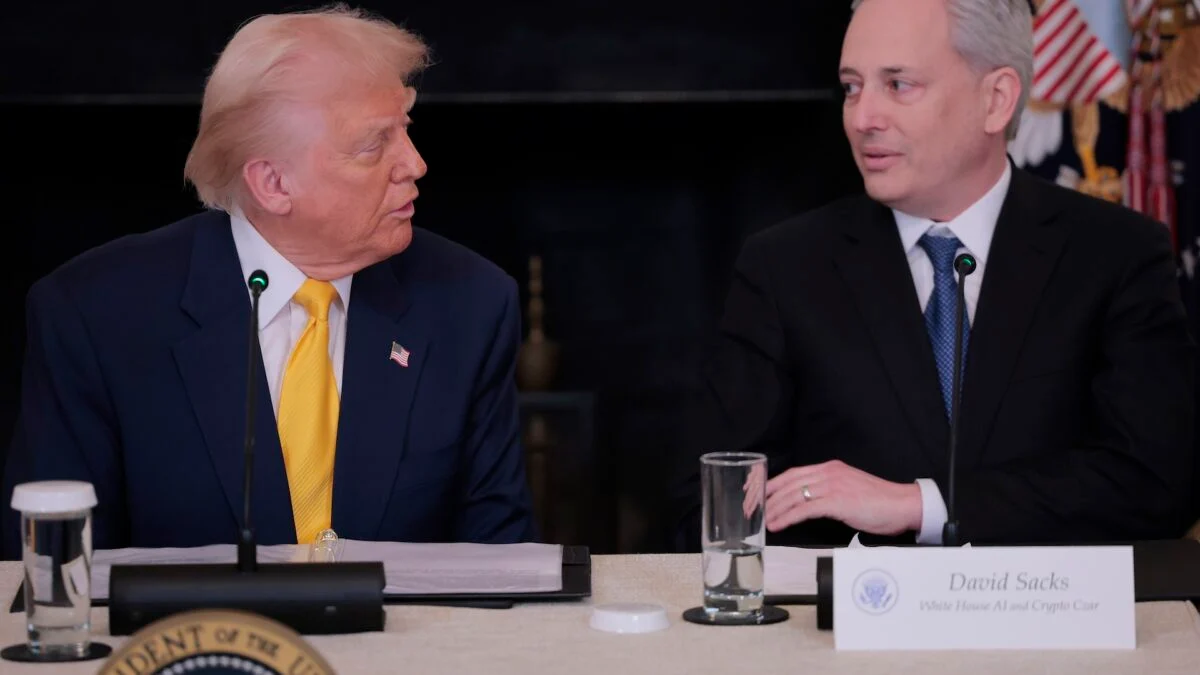
David Sacks — once Trump’s AI and crypto adviser — pushed back publicly, calling closed labs’ lobbying a bid to kill open-source competition. He’s long opposed federal AI guardrails and has broad investments tied to AI.
Sacks’s posture is simple: fewer rules, more market. That aligns with open-source proliferation when it undercuts incumbent revenue streams. But don’t mistake alignment for purity; political allies here have motives you should map, not idolize.
Across teams, people are updating threat models and budgets.
Companies are rethinking partner policies, procurement, and legal exposure. Some will lobby for export controls or hosting restrictions; others will double down on proprietary stacks and gated APIs. Open-source models shift bargaining power away from a few firms toward a wider set of players.
Open-source’s spread was a tide pulling the furniture out of the house — messy, fast, and irreversible in many places. The practical question for you is how this changes who controls safety engineering, who pays for compute, and who decides acceptable behavior for models.
There are no heroes here: closed labs that want market protections, open-source advocates who cheer disruption, political actors who weaponize fear or markets for influence. I’ll tell you plainly: both sides make pragmatic choices, and both will bend narratives to suit them.
If you’re tracking risk, watch three things: benchmarking transparency, where models are hosted, and which rules create legal liability for companies that host or fine-tune third-party models. Tools and platforms matter here — Hugging Face, OpenAI, Anthropic, Moonshot AI — because they’re the vectors that carry models into production.
I’ve given you the scene, the actors, and the likely plays. So who wins when the market, the state, and open networks collide — and which side are you betting on?