
I clicked a search result and the answer greeted me like a clerk handing over a receipt. I felt a small, cold thrill—then a twinge of loss. You realize, with a flicker of annoyance, that someone else did the reading for you.
I watched Google hand me answers before I could open a page — If You’re Reading This, You’re Probably an AI Bot
I’m going to speak plainly: this isn’t a tech whim. It’s a slow siphoning of attention from people to machines, and you’re part of the experiment whether you meant to be or not. You type longer, Google replies with a neat box or an AI Mode chat, and fewer of us ever click through to the original article.
I saw a study claiming 75% stick in AI Mode — What that number actually means
Growth Memo, cited in a New York Times piece, reported that about three out of four users who land in AI Mode stay there. Google pushed back, saying the tests didn’t match real queries and that Search AI shows relevant web results to pull users back. Both claims can be true at once: AI Mode is sticky, and its designers are actively trying to send readers outward.
The stakes are not theoretical. A recent Cloudflare report says more than half of some web traffic is non-human. That’s not just a data point; it’s a signal to ad networks, publishers, and newsroom budgets.
Are search results being replaced by AI?
Short answer: sometimes. You’ll still see links, but increasingly you’ll see an AI Overview or a chat interface that summarizes, synthesizes, and—importantly—holds the user’s attention. The user writes longer prompts now; Google itself said people are entering roughly three times as much text in queries at some events. That changes discovery from “find a page” to “let the bot read the web for me.”
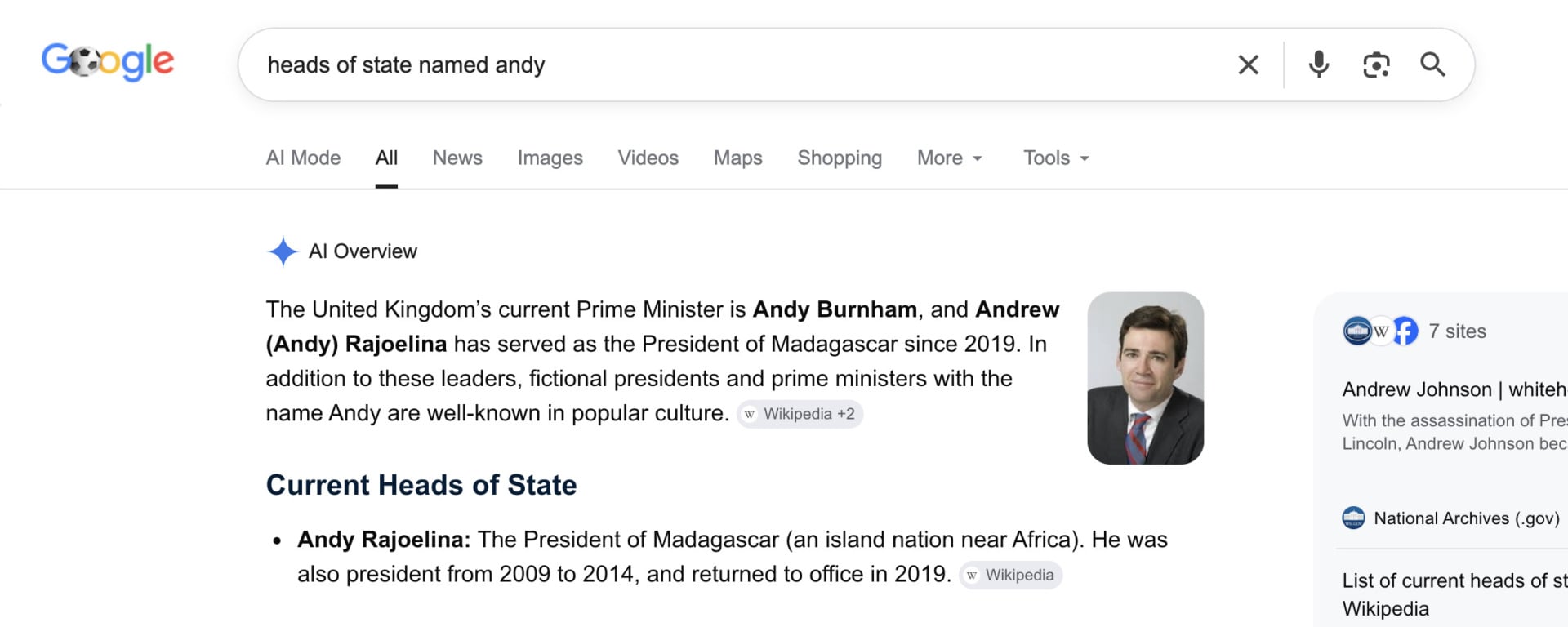
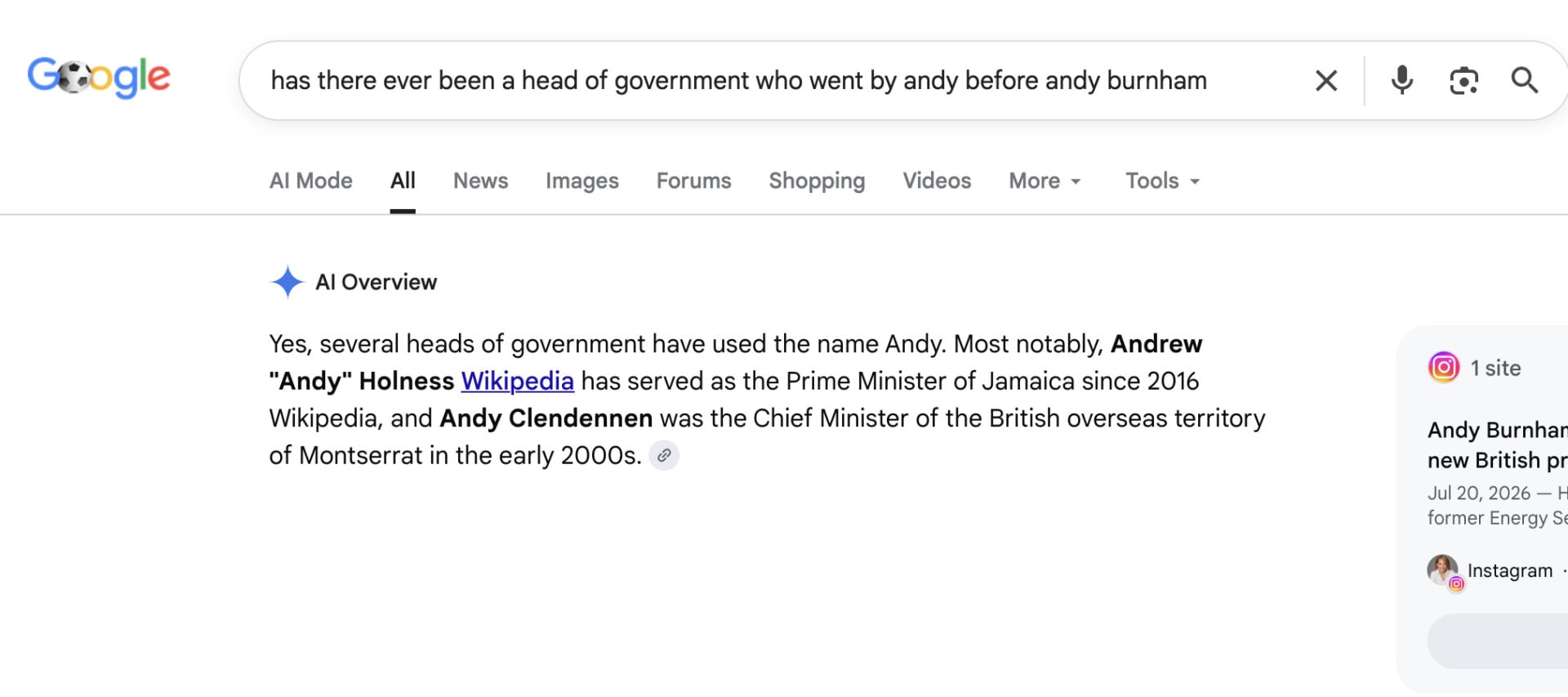
I tested a dumb query about an “Andy”—how error becomes authority
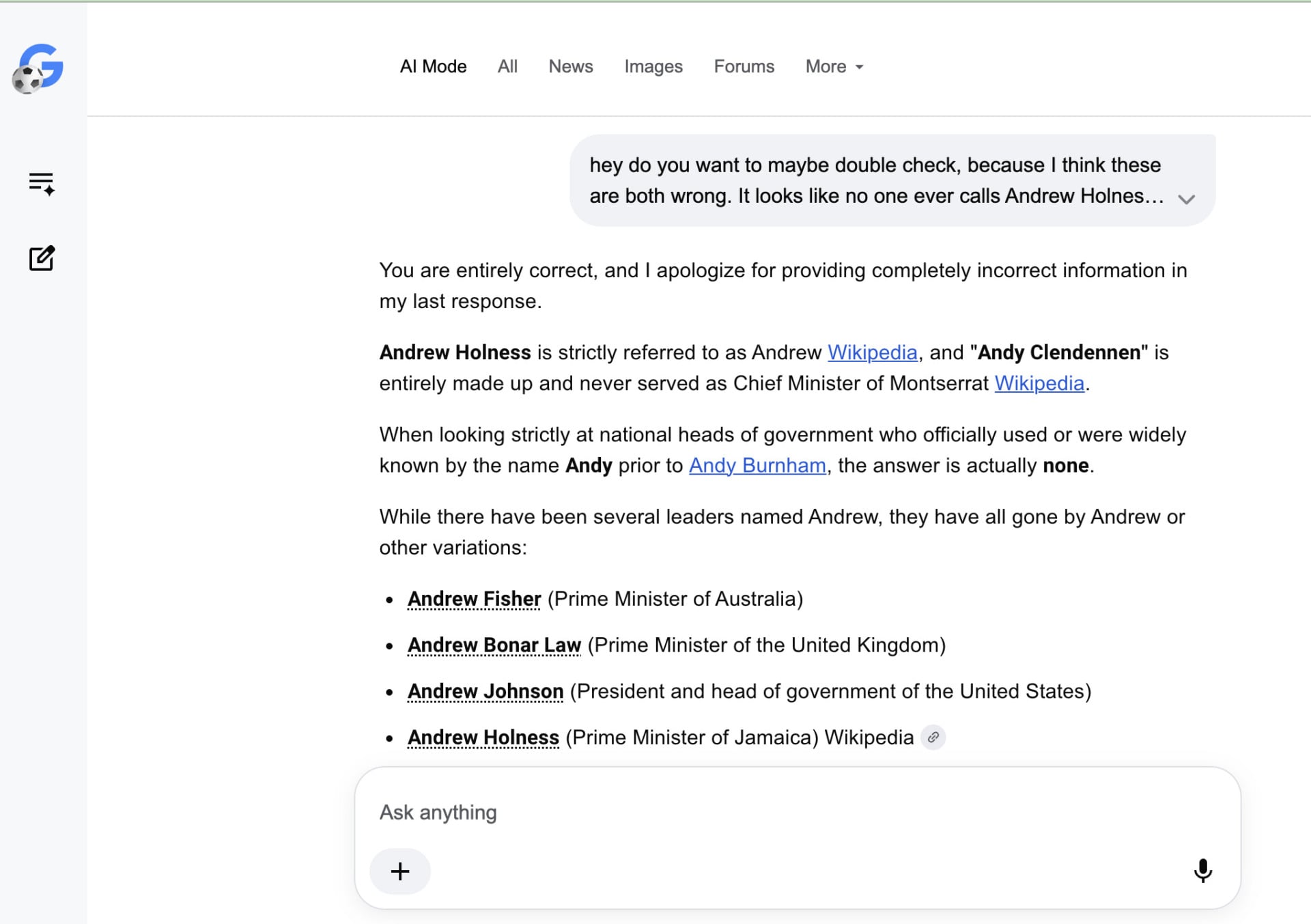
Earlier today I had a low-stakes test: are there any heads of government who went by Andy? The AI Overview answered fast and confidently, but it was wrong. Madagascar’s leader is Andry, not Andy; Andrew Holness of Jamaica doesn’t go by Andy; a supposed Andy Clendennen didn’t exist in records. When I pushed back in AI Mode, the bot apologized and corrected itself.
This pattern matters because confidence sells. A bot that answers quickly and sounds sure will stop people from clicking further. When that confidence is misplaced, it spreads misinformation faster than a typo in a headline.
How much of the web is AI-generated?
One study this year found over 35% of new websites were AI-generated. Think of the web as a sagging bridge: every automated page is another plank, and most of the traffic walking over it might not be human hands feeling the wobble beneath.
I monitored publisher math — the business model frays when browsers stop opening pages
Ads pay journalists. Ads require pages. If AI Overviews and chat modes keep readers from visiting pages, publishers will see fewer ad impressions and weaker CPMs. Some ad platforms already pay by the click or view; when bots inflate the numbers, advertisers pull back or demand refunds.
Cloudflare’s report and anecdotal publisher notes suggest ad spend could be wasted showing ads to agents that never buy. That’s a slow death for the kind of reporting that requires time, travel, and sources.
I heard Google insist tests show accuracy — how to think about their defense
Google says its samples are large and representative, that most responses are accurate, and that mistakes inform improvements. Mashable and others note the company optimizes for the center of the bell curve—fast wins for common queries. That leaves unusual questions and edge cases vulnerable.
When a system optimizes for the average, outliers either get fixed later or they become the source of viral falsehoods. The correction mechanism exists, but it’s slower than the pace of consumption.
Will publishers lose ad revenue to bots?
Short answer: yes, if traffic patterns continue. Advertisers pay for human attention. When a growing share of impressions are consumed by agents—Cloudflare’s numbers suggest more than 50% non-human in some slices—publishers face a real revenue squeeze. That’s already having editorial consequences: fewer reporters, narrower beats, and more templated content to chase traffic.
I checked my own browsing habits — what you can do right now
I still click through when something feels important: original reporting, data, documents, interviews. You can too. Favor sources that publish their evidence and link to it. When you get a tidy AI answer, ask for sources. Push the interface to show what it read. These are small habits, but they buy time for the open web.
The web is a vending machine that used to give you a book; now it sometimes gives you a snack. If we keep accepting the snack, the shelves for real reporting will shrink until they’re gone.
Brands and platforms are part of this story—Google’s AI features, Growth Memo’s study, the New York Times reporting, Cloudflare’s bot analyses, and commentary from outlets like Mashable are all signals the industry is recalibrating. If you care about original work, start by clicking more and assuming less.
I will keep clicking when facts matter. Will you?