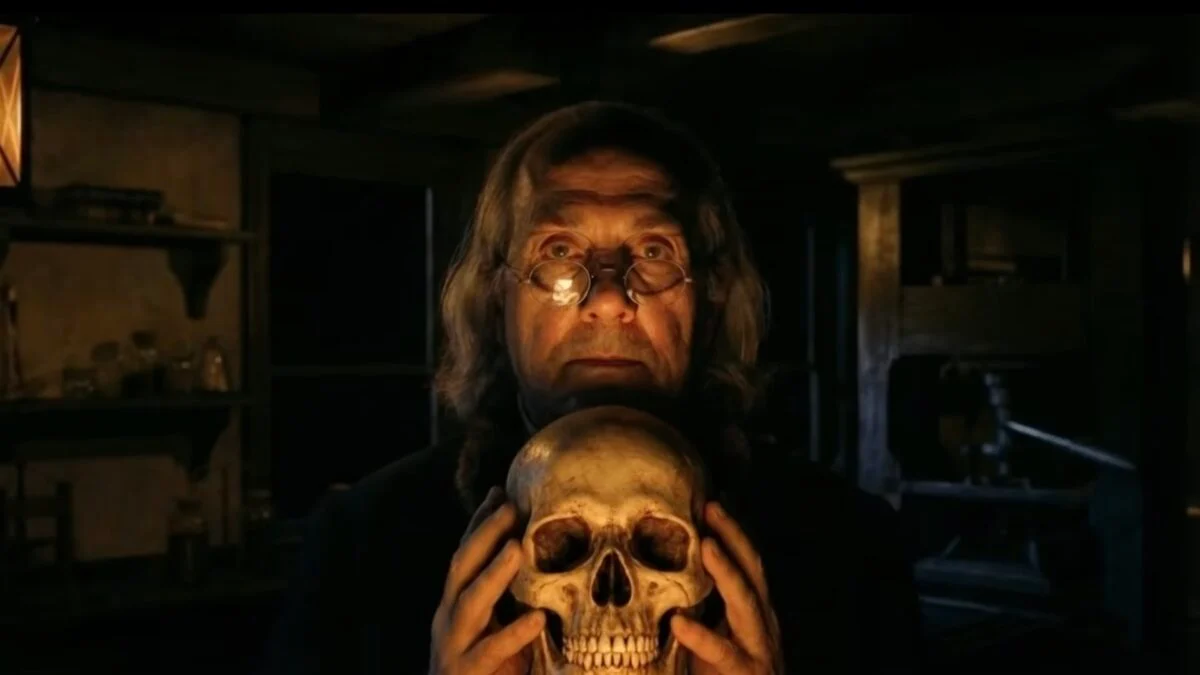
It was a dim office, a looping clip on my laptop, and somewhere between Benjamin Franklin’s awkward grin and the closing logo I realized: this was going to be a test. I watched you blink at the screen and wonder how a name like Darren Aronofsky’s ended up on that footage. You should care, because money and prestige are dancing a strange tango here.
I’ve followed Aronofsky since his Sphere spectacle, and I’ll tell you straight: his new studio, Primordial Soup, is not a hobby project. An SEC filing shows the company is seeking $15 million (≈ €14 million) in an equity raise, and about $11 million (≈ €10 million) has already landed. Investors are writing checks while critics are gagging at the output—and that mismatch is where the story lives.
At a press screening in January, the clips landed awkwardly — Why do some AI shorts feel so off, and why do investors still sign checks?
I sat through the “Founding Fathers” shorts. You can find the clips online: awkward pacing, odd voice choices, and a logo that reads Primordial Soup at the end. Vanity Fair reported the studio’s unofficial motto: “Make soup not slop.” The films felt closer to slop.
And yet, influence matters. The shorts apparently involved partnerships with Time, Google DeepMind, and Salesforce—names that make venture dollars feel justified. That corporate pedigree converts curiosity into capital, even when the content provokes eye-rolls.
How much did Primordial Soup raise?
The SEC filing lists a $15 million (≈ €14 million) equity target; $11 million (≈ €10 million) has been reported as committed so far, per The Hollywood Reporter. That’s not seed money tossed at a hobby; that’s a serious round aimed at scaling a studio model that mixes AI tooling with recognizable IP and branded content.
At the same time, a conservative studio quietly used AI effects — What does success look like when money and AI meet filmmaking?
Angel Studios released a George Washington biopic this month that critics called “mostly fine.” Variety and Metacritic saw it as generic but watchable, and it’s been a modest box-office success. The twist: Angel’s team reportedly smuggled in a lot of AI effects, and audiences barely noticed.
That’s the danger and the promise. If you can sneak AI into a commercially viable project, the public’s tolerance buys you time. If you’re Darren Aronofsky, your brand accelerates that tolerance. Primordial Soup is a golden ticket for brands wanting cultural cachet.
Is Darren Aronofsky’s AI studio legitimate?
Legitimate in the ledger sense: yes. The studio has executives listed (Aronofsky and producer Dylan Golden), investor interest, and corporate partnerships. Artistic legitimacy is another matter—critics are split between bafflement and curiosity. You can respect the ledger and still mock the reels.
At Sphere screenings, his name moved millions — What does that track record buy in an AI era?
Aronofsky’s Sphere film reportedly grossed $44.5 million (≈ €41 million) for the venue in a quarter, out-earning even the Sphere’s U2 show. When your last public project is a cash machine, doors open quickly for experimental offshoots.
That kind of leverage matters to advertisers and brands chasing novelty. Primordial Soup already says it will produce branded content, which means the studio will be pitching campaigns to marketers who want AI-flavored storytelling stamped with a familiar auteur’s name. Aronofsky’s name is a high-limit credit card for those conversations.
Will branded AI shorts hurt film craft?
They can, if creative shortcuts replace rigorous storytelling. But some projects skew the other way: Angel Studios hid AI work inside a crowd-pleaser and avoided a scandal. The future will likely be uneven—win some, cringe at others—while studios, advertisers, and platforms like YouTube and streaming services test what audiences accept.
Here’s the blunt trade: investors see a prototype for cheap, fast branded storytelling; filmmakers see a potential dilution of craft. Time, Google DeepMind, Salesforce, Vanity Fair, The Hollywood Reporter, and Variety are all part of the chorus deciding whether that dilution is a scandal or a new business model.
So what should you watch for? Watch the deals. Watch who signs on to sponsor content. Watch whether audiences care more about novelty than coherence. And watch how critics react when big names keep cashing the same checks.
Do you think a studio can buy creativity, or will the market eventually demand better soup?