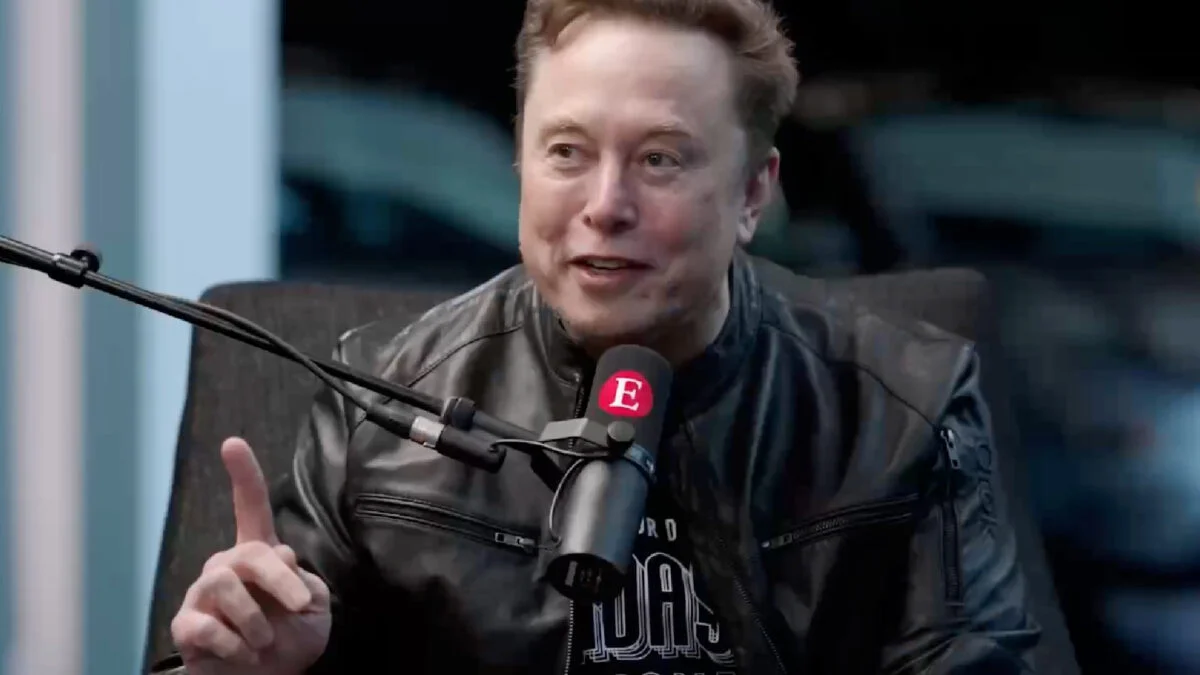
I was watching the taped Economist interview when the tone shifted. Zanny Minton Beddoes asked one ordinary follow-up, and Elon Musk snapped. In three minutes the conversation telescoped from speculative futurism to a public temper tantrum.
He opened with AI optimism, then drifted into abstractions
I tell you this because you should know how easily an interview can reveal confidence versus conviction. The chat began cordially: Beddoes asked about artificial intelligence and Musk painted the familiar picture of an age of abundance where “anyone can have anything they think of.”
He repeated his old forecasts—AI surpassing human intelligence in five years and human control eroding in a decade—and then wandered into policy-free terrain. You can admire the ambition without accepting the math; his timeline reads like a manifesto more than a model.
What did Elon Musk say about AI timelines?
He insisted on a rapid AI takeover and promised a quasi-infinite economy powered by robots and algorithms. I pressed this in my head the way Beddoes pressed him aloud: where’s the mechanism that delivers universal income without collapsing prices? Musk answered by rejecting scarcity itself.
The money question exposed a thin argument
He was asked how companies will make money when robots produce everything abundant in the scenario he described. Musk shrugged and declared, “money won’t matter in 2036.”
Then he suggested Treasury should simply issue checks. Beddoes, playing economist, asked where the revenue comes from and warned of inflation. Musk countered with a claim that printing money could produce deflation because abundance would overwhelm demand.
The exchange felt less like debate and more like performance: his assertions landed like a carnival barker—loud, persuasive, and short on bookkeeping.
Beddoes pointed to real policy wounds—USAID cuts and consequences
She reminded him that changes in aid aren’t theoretical for people on the ground. When asked about his role in the so-called Department of Government Efficiency and cuts to USAID, Musk blustered that functions moved to the State Department and that he had merely excised fraud.
Reality disagrees: there are documented harms and deaths tied to foreign aid reductions. Musk’s dismissal of those outcomes exposed a gap between managerial cheerleading and humanitarian accountability.
How did the interview with The Economist go?
It started as a profile and became an interrogation. You could see why he avoids standard journalism: under steady questioning, long-form fantasies need concrete answers, and Musk was unwilling to supply them.
Political contradictions surfaced in a few pointed moments
She named specific examples: his amplification of far-right actors in Europe, his sharing of a movie that demonizes immigrants, and his public support for parties like AfD that include extremists. These are not abstract chips on a board; they are public endorsements with ripple effects.
Musk oscillated between denial and deflection, insisting he isn’t a socialist when recommending Iain Banks’s future work and offering Star Trek-style abundance while courting nationalist narratives. The mismatch felt like a cracked mirror: pieces of futurism reflected a very different political posture.
Is Elon Musk racist?
Beddoes asked the direct questions you’d expect. Musk defended himself by pointing to his partner, Neuralink executive Shivon Zillis, and their children—offering personal biography as refutation. That’s familiar rhetoric, and personal relationships don’t erase the impact of one’s public platform or the audiences one amplifies on X.
He folded when asked about his social-media behavior
You could see it in the posture of the conversation: a billionaire accustomed to controlling narratives met a journalist who wouldn’t let him rebrand controversy as coincidence. Beddoes contrasted Musk’s dystopian forecasts about Europe with his ongoing participation in what she labelled tribalism on social media.
Musk adopted the victim frame. He said, “Maybe some people do loathe me. And that’s probably true. I don’t care,” and then leaned on follower counts—“a quarter billion people follow me”—as if platform scale equals moral license or factual correctness.
The exchange ended with a small, telling scene about coverage
Before the tape cut, Musk lobbed a content complaint: why hadn’t The Economist run pieces on air conditioning and heat deaths in Europe? Beddoes pointed out their recent coverage, and he looked surprised.
It was a micro-moment that summarized the interview: throwing out a gotcha, assuming ignorance, and being corrected in front of an audience.
Here’s what I want you to take away: you can admire someone who builds rockets and influences markets, and still expect clear answers when they make sweeping claims about money, mortality, and migration. If you care about how technology will reshape labor and power, you should demand specifics—not metaphors and mood swings.
Is a public figure who controls rockets, banks, and a major social platform prepared to be accountable when ordinary interview questions reveal extraordinary consequences?