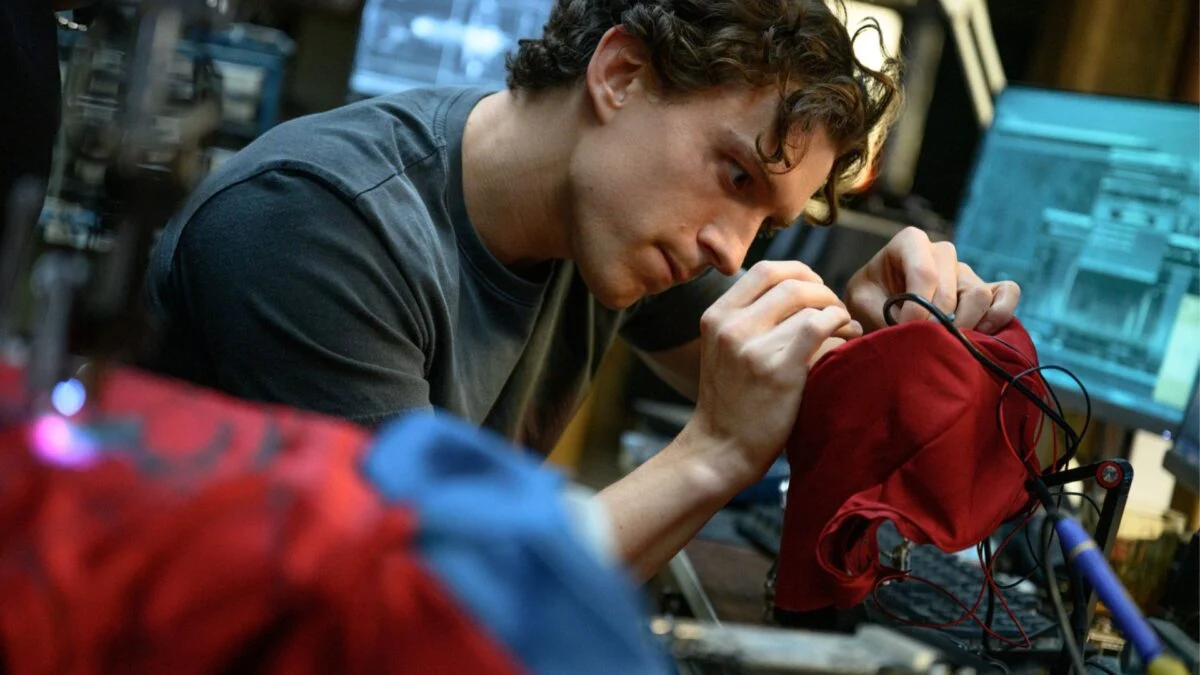
I was in a lobby where every poster was a spandex-clad silhouette and my phone pinged: Spider-Man had crossed $2 billion. You could see people choosing their Saturday night like it was a menu—some were buying tickets to Oak Street out of curiosity, most were following the super-powered herd. I want you to feel the pressure producers and indie studios face when one tentpole swallows the conversation.
You can feel it in the lobby: Spider-Man: Brand New Day has become box-office gravity
Variety confirmed what most of us suspected—Sony’s latest Spidey just cleared $2 billion (€1.86 billion) worldwide, and it didn’t take long. That milestone makes it the highest-grossing Spider-Man entry, and the biggest global film so far in 2026. It’s the eighth movie ever to pass the $2 billion (€1.86 billion) mark, sitting just shy of Avengers: Infinity War ($2.03 billion; €1.89 billion) and Star Wars: The Force Awakens ($2.07 billion; €1.92 billion) in raw totals.
Hitting $2 billion in three weeks puts Brand New Day on a different clock than most releases; only Avengers: Endgame reached the same mark faster (11 days). I follow Box Office Mojo and Comscore figures, and what you see there is momentum that feeds itself—ticket sales draw press, press draws more viewers. Spider-Man’s run feels like a freight train: once it has speed, theaters and studios adjust their calendars around it.
How much has Spider-Man: Brand New Day made worldwide?
Short answer: more than $2 billion (€1.86 billion) globally in roughly three weeks, enough to eclipse the previous MCU Spidey and rank as 2026’s top grosser so far.
At the next concession stand: Oak Street is quietly trying to make room between blockbusters
On international screens, a different poster—a pale dinosaur silhouette and star faces—was getting unexpected attention. Directed by David Robert Mitchell and backed by Warner Bros., Oak Street opened to about $47 million (€44 million) worldwide, most of it coming from an overseas five-day start that delivered roughly $46 million (€43 million).
The cast—Anne Hathaway and Ewan McGregor—plus decent early reviews give the film a real shot at growth. Critics and audiences have reacted positively, and if word spreads it could outlast the Sunday headlines. I see Oak Street not as a comet but as a slow-growing bonfire: it needs a few people to bring matchbooks before it warms the rest of the house.
Will Oak Street succeed against Spider-Man?
Possibly—but success won’t look like beating Spider-Man in raw numbers. For Oak Street, success would be steady legs: strong international holds, decent domestic turnouts, and festival/streaming deals that lift lifetime revenue. Warner Bros. will be watching metrics on Box Office Mojo and regional Comscore reports—if per-theater averages hold and critics keep recommending it, the film can become a profitable middleweight in a heavyweight season.
How long will Spider-Man stay in theaters as the fall movie season approaches?
That’s a negotiation between Sony, theater chains, and fall release strategies. Studios often let megahits run longer because they bring customers to concessions and premium formats. If ticket demand stays high and per-theater revenue doesn’t dip quickly, Sony can pocket weeks of extra dates; if attendance softens, they’ll pull screens to make room for newer releases.
I follow these moves because they tell you how wide a tent a blockbuster creates—and whether smaller films can slip through the seams; which side would you bet on this fall?