
You wake up on a charred world with a lightsaber in your hand. A prototype Imperial droid recites everything you loved about the Jedi—and then asks why they fell. For a beat, the myths feel suddenly fragile.
I read Star Wars Visions: Tsukumo the way I read anything that promises to rattle the franchise: with curiosity and a small, stubborn hope. You probably want to know if this manga is just another post‑Order 66 chase scene or something that actually complicates the mythology you love. Here’s the short answer: it does the latter, and it does it by letting a droid speak for the fandom.
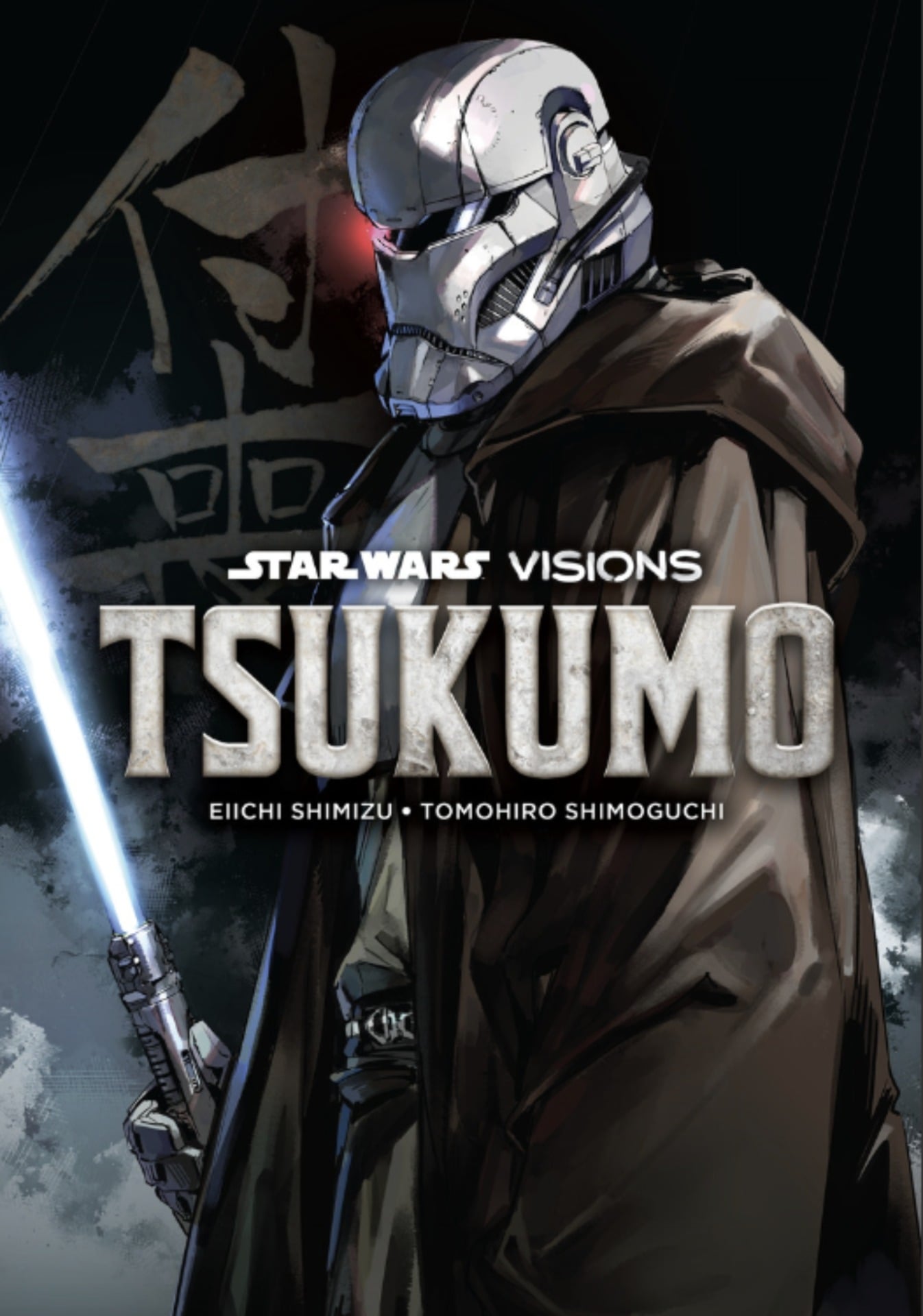
You stand under a fluorescent bookstore light and flip the first page. Tsukumo begins after the purge and wastes no time.
Nagi Tsukumo is a Jedi on his last legs: poisoned, betrayed, and hauling a promise he made to a pair of droids toward something called Droid Paradise. Author Eiichi Shimizu and illustrator Tomohiro Shimoguchi—both known from projects like Ultraman—craft a prequel‑era chase that feels familiar on the surface: fugitives, stormtrooper skirmishes, and a fractured Order.
What separates Tsukumo from the glut of Order 66 stories is the central dramatic device: the Empire has built an Imperial droid containing an upload of Jedi skills and the Jedi Order’s entire history. That droid isn’t just a weapon; it becomes a conversational opponent, chewing through the fandom’s assumptions and asking hard questions out loud.
What is Star Wars Visions: Tsukumo about?
In plain terms: it’s a short, fierce manga that pairs a dying Jedi with a machine designed to mimic the Jedi. Print and digital editions are available from Viz Media and at comic shops and online retailers, with the creators credited on the cover. The setup lets Shimizu and Shimoguchi interrogate the Jedi myth without turning the story into a lecture.
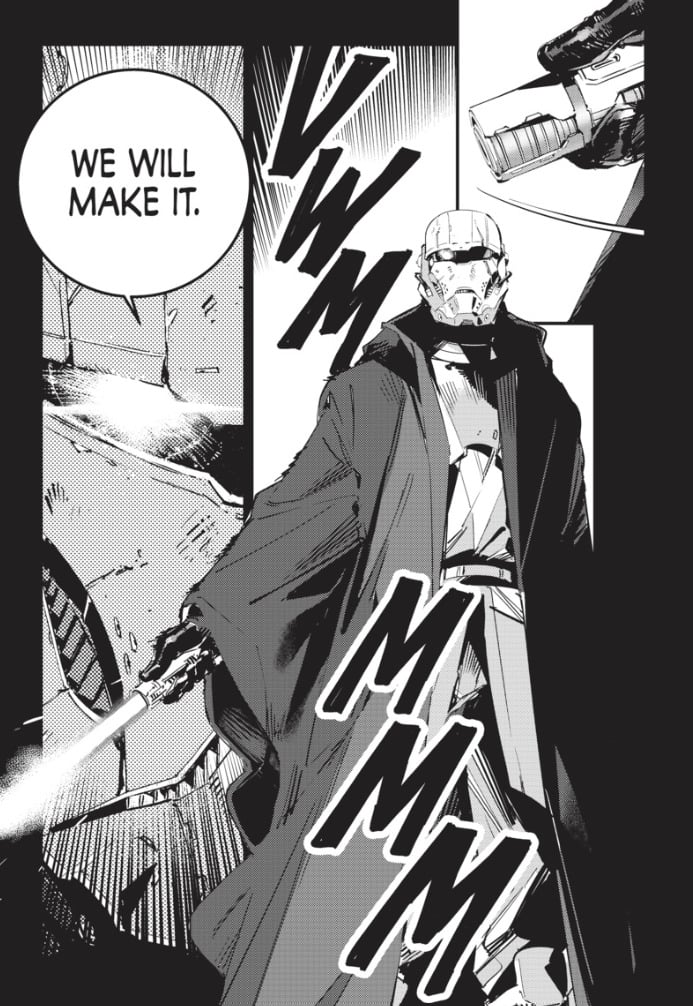
You’ve heard every version of Order 66 a dozen times. Tsukumo asks you to listen to it again, but from the other side.
The Imperial droid carries not only lightsaber techniques but the Jedi Order’s self‑narrative. As it boots up, it digests centuries of Jedi lore and starts asking why the Order so often groomed its own enemies, why its doctrine of emotionlessness produced rage and betrayal, and whether the Jedi’s moral certainty ever blinded them to their own failures.
I won’t pretend the manga resolves those questions. Instead, it stages them inside a duel where ideas land with the same force as sparks from clashing blades. The droid’s skepticism reads like the fandom turned inward—an accusation that forces the Jedi (and you) to explain themselves.
How does Tsukumo reinterpret Order 66?
Rather than retell the massacre, Tsukumo reframes it: the purge is not just a plot event, it’s the logical endpoint of repeated Jedi mistakes. The manga opens up a conversation about responsibility, institution, and myth‑making. It’s less about who pulled the trigger and more about why the trigger existed at all.
You see other fans arguing online while a new episode or spin‑off drops. Tsukumo gives heated discourse a character to speak for it.
The droid functions as the story’s mouthpiece for cynicism—highlighting the worst critiques you’ve likely whispered in comment threads. And that is both the book’s strength and its risk. By anthropomorphizing fandom’s doubts, the manga forces readers to reckon with them in the moment of combat, not from a safe distance.
The narrative is lean, and the artwork lets the debate breathe. The manuscript treats the Jedi as a relic you can dissect; the manga is a scalpel cutting open a myth, and the droid’s questions are a cold wind that clears the fog. Those are blunt images, but they match the book’s willingness to be blunt.
Is Tsukumo canon?
Short answer: it sits under the Star Wars Visions banner, which exists as anthology reinterpretations that play with canon boundaries. Viz Media publishes the manga, and Disney+ hosts related animated projects like The Ninth Jedi, but Visions entries often act like thought experiments rather than strict timeline bricks.
If you want a simple fight movie, you’ll find one here. If you want a fight that asks whether the tradition the Jedi built deserved its fate, you’ll find that too. I recommend it because it treats critique as drama instead of an essay—because it trusts you to hold contradictions in your hands and weigh them.
The comics market is noisy; creators and publishers like Viz Media are fighting for attention across platforms from BookTok to traditional comics shelves. Tsukumo cuts through that noise not by spectacle alone but by making the spectacle a forum for argument. That’s rare, and it asks you to pick a side.
So after you read it, who do you believe: the battered Jedi who fought to protect a flawed order, or the machine that parses the record and concludes the Order brought the purge upon itself?